Hezbollah’s Strategic Moves Intensify Lebanon’s Military and Political Turmoil
DID Press – International Desk: Lebanon stands at a critical juncture of military tension and political crises, revealing that the battlefield and domestic power struggles in this Middle Eastern nation are more intertwined than ever. In this context, Hezbollah’s renewed role and structural changes in its military deployment have emerged as one of Israel’s primary concerns in the ongoing conflict.
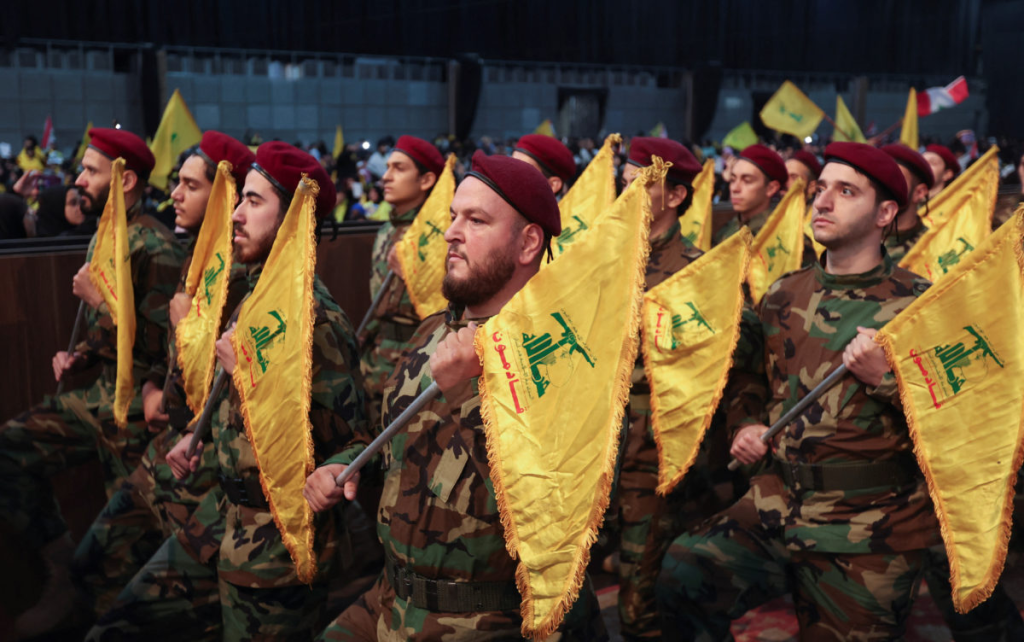
In recent months, Hezbollah has undergone extensive restructuring of its military apparatus, ranging from upgrading communication systems and deploying advanced equipment to adjusting camouflage tactics and repositioning forces. The most significant change involves relocating a substantial portion of its launch sites, command centers, and weapons depots from south to north of the Litani River. This move aims to create deeper defensive layers and safeguard its missile arsenal against preemptive strikes.
Politically, Lebanon remains highly charged. The controversial decision to expel the Iranian ambassador from Beirut, orchestrated by right-wing Christian parties, is interpreted by analysts as an attempt to provoke Hezbollah into an expensive reaction or to coerce it into a silence perceived as weakness. Hezbollah and the Amal Movement have acknowledged this scenario and stood firm in response.
Strategically, the two sides pursue divergent approaches. Israel, relying on the “Dahiya Doctrine” and air superiority, seeks to degrade military infrastructure and exert pressure on Lebanese society. Hezbollah, in contrast, focuses on a war of attrition and maintaining continuous strike capability. The goal is not conventional victory but preventing defeat while establishing a new deterrence equation.
Beyond domestic dynamics, Hezbollah’s regional standing plays a decisive role in shaping its behavior. Over the past two decades, Hezbollah has evolved from a purely Lebanese actor into a key force within the Resistance Axis, capable of influencing regional crises. This position not only enhances Hezbollah’s bargaining power within Lebanon but also renders it a central deterrent against Israeli strategies across the region. Its regional role ensures that any conflict in Lebanon carries repercussions beyond national borders, factoring into the calculations of regional and international powers.
Domestically, Hezbollah remains one of Lebanon’s political pillars; without its participation or consent, forming a government, electing a president, or managing security crises becomes virtually impossible. This political weight, combined with military strength, allows Hezbollah greater resilience against internal and external pressures, aiming to preserve an equilibrium that ensures its survival while preventing Lebanon from descending into full-scale war.
Overall, Lebanon today is a landscape where military conflict and political rivalry are inseparably entwined. Hezbollah’s military reorganization and the pressures of internal politics have complicated prospects for resolving the crisis, placing the country in a survival-mode scenario—a struggle whose outcome could shape Lebanon’s future for years to come.