DID Press: In one of the deadliest days of the war, Iran significantly raised the cost of Washington’s military presence in the region by downing an F-15 fighter jet and an A-10 attack aircraft, while also targeting U.S. rescue helicopters. At the same time, fighting on the Lebanon front and missile strikes deep into Israeli territory intensified pressure on both the United States and Israel.
Reports from multiple fronts of the Iran–U.S. conflict indicate that the United States Air Force experienced one of its most difficult 24-hour periods. The NBC News and other U.S. media outlets reported that an McDonnell Douglas F-15E Strike Eagle was shot down over Iranian territory. Of the two pilots aboard, one was rescued while search operations continued for the second. American sources confirmed that the aircraft was struck by Iranian air defense fire.
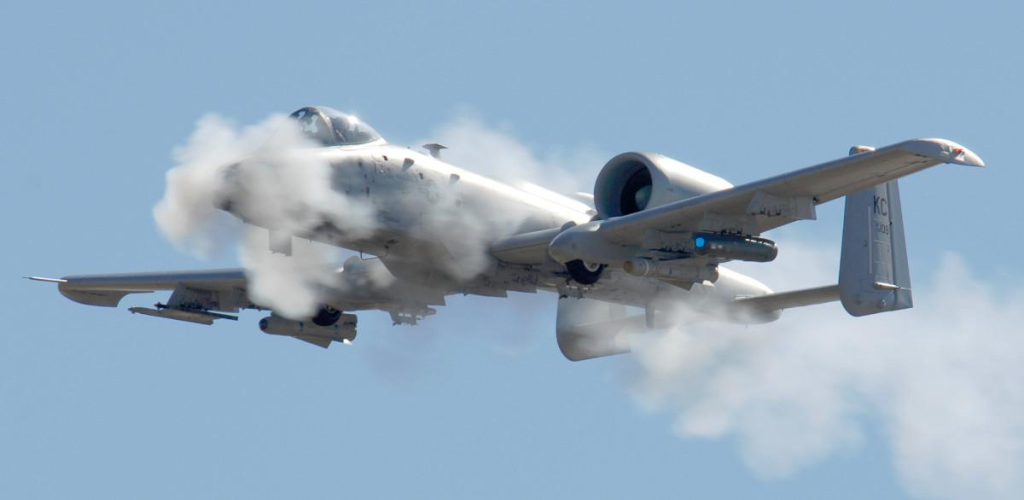
Simultaneously, an Fairchild Republic A-10 Thunderbolt II deployed to support search-and-rescue operations was reportedly damaged by Iranian fire and crashed near Kuwait or over the waters of the Strait of Hormuz. Officials stated that the pilot successfully ejected and survived.
Military sources speaking to specialized aviation publications said both aircraft—the F-15E and the A-10—were hit by Iranian fire, marking the first officially acknowledged loss of manned U.S. combat aircraft in direct engagement with Iran during this war.
During rescue operations for the downed F-15 crew, two U.S. rescue helicopters—Sikorsky HH-60 Pave Hawk—also came under Iranian fire. According to American media reports, the helicopters were struck, but their crews survived, with several personnel reportedly wounded. Videos verified by NBC showed armed Iranian individuals firing at low-flying U.S. helicopters.
On the Iranian side, the public relations offices of the Iranian Army and the Islamic Revolutionary Guard Corps declared that Iran’s “defenders of the sky” had delivered a “dark day” for U.S. and Israeli air forces by downing aircraft in what they described as a “historic battle.” Iranian media also reported that an A-10 aircraft was hit in southern waters near the Strait of Hormuz, that a U.S. helicopter was damaged or crashed, and that an oil tanker near the strait was struck by an Iranian drone. These developments occurred in a region where the Wall Street Journal noted that control of the Strait of Hormuz could determine the eventual winner of the war.
On the Israeli front, local media reported the activation of air-raid sirens in several cities following missile launches from Lebanon, along with impacts of munitions and warheads at 17 locations across seven cities in central Israel after Iranian missile attacks. At the same time, the Hezbollah announced that it had conducted dozens of operations against Israeli positions over the past 24 hours, including clashes with Israeli forces near the Tahrir Triangle and strikes using missiles and suicide drones against sites such as the Liman Brigade and helicopter evacuation zones near the Maroun al-Ras border area.
At the political and strategic level, tensions were also reported in Washington and other Western capitals. Some American analysts, including Fareed Zakaria, argued that contrary to Washington’s claims, Iran was not an “imminent threat,” asserting that the Israeli prime minister had portrayed Iran’s alleged “unprecedented weakness” as an opportunity for regime change and presented that narrative to the administration of Donald Trump.
Meanwhile, a former U.S. State Department official, posting images of downed aircraft over Iran, wrote that the public had been promised “strength,” but that the United States now stood on the brink of its “greatest decline in history.”
Signs of internal strain were also visible within the U.S. military structure. Only hours after announcing his resignation, the U.S. Army Chief of Staff issued an unusually stark warning, stating that “a madman will lead the great American army to destruction.” In addition, John Bolton said that Trump was seeking to “declare victory and exit the war,” a move interpreted as evidence of mounting pressure on the White House.
At the diplomatic level, the The Wall Street Journal reported that new regional efforts led by Pakistan to secure a ceasefire between Iran and the United States had reached a deadlock. According to the report, Iran officially informed mediators that it was not prepared to meet U.S. representatives in Islamabad in the coming days, describing Washington’s demands as “unacceptable.” Meanwhile, Turkey and Egypt are reportedly seeking alternative venues such as Doha or Istanbul for potential negotiations.
The economic and military dimensions of the conflict have also become more apparent. Bloomberg reported that Japan’s order to purchase 400 Tomahawk cruise missile units worth $2.35 billion has been delayed because the United States has consumed a significant portion of its missile stockpiles during the war with Iran.
This issue—combined with the loss of expensive aircraft and equipment—presents a clearer picture of the heavy costs the war is imposing on Washington.
In the realm of public opinion and media analysis, several American outlets, including Fox News, warned audiences with headlines such as: “Danger in the Skies: Two U.S. Warplanes Downed as Search Continues for Missing Pilot,” suggesting that regional airspace is no longer safe for American aircraft.
The magazine Time also reported that the U.S. Secretary of Defense was “surprised” by the strength and intensity of Iran’s retaliatory strikes against American and Israeli targets in the Middle East.
Analysts such as Ethan Levins emphasized that after five weeks of war, the United States has still failed to achieve air superiority, warning that “fighter jets are being shot down one after another.”
Taken together, these developments—from the downing of F-15 and A-10 aircraft and attacks on rescue helicopters, to intensified Hezbollah operations, missile strikes deep into Israeli territory, stalled ceasefire efforts, and the depletion of U.S. weapons stockpiles—indicate that the war has entered a phase in which the costs of continued conflict for Washington and its allies are rising sharply. According to some analysts, this stage could significantly reshape the balance of power and political calculations on both sides of the Atlantic.