DID Press: Early this morning, Sunday, informed sources reported explosions involving two U.S. heavy transport aircraft in western Iran. The incident comes amid a powerful wave of missile and drone attacks carried out since last night by Iran and allied resistance groups across multiple fronts, placing the region under an extraordinary security situation.
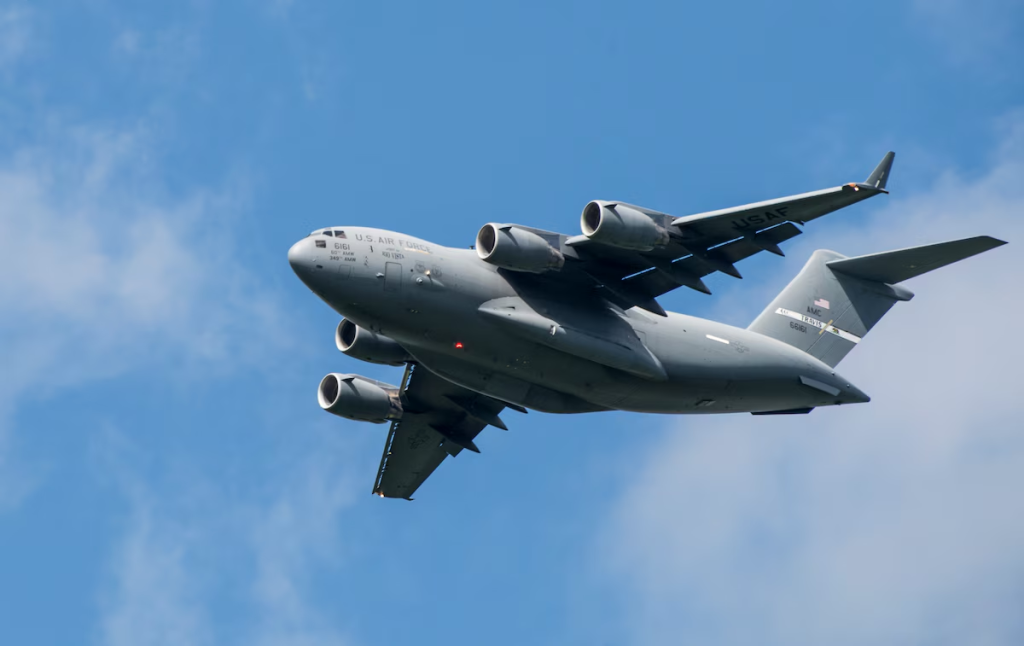
According to knowledgeable sources, the two American cargo aircraft, which were operating as part of logistical support and equipment transfer missions in the region, exploded in western Iran in the early hours today. No official details have yet been released, but security sources confirmed that preliminary investigations into the cause of the explosions are underway. The incident follows a chain of events that escalated tensions across the region from last night into this morning.
Hours before the explosions, the public relations office of the Islamic Revolutionary Guard Corps announced that it had destroyed an advanced U.S. MQ-9 Reaper drone in southern Isfahan while it was searching for the pilot of a downed American fighter jet.
The Islamic Republic of Iran Army also stated in communiqué No. 55 that during the second phase of drone operations, targets including a missile and combat drone detection radar belonging to the U.S. military, aluminum industry facilities in the United Arab Emirates, and the command headquarters of U.S. mechanized and armored battalions in Kuwait were struck using Arash-2 drone drones. Arab media outlets also reported hearing explosions in Kuwait and the UAE overnight.
Simultaneously, waves 93 to 95 of the military campaign known as Operation True Promise 4 were carried out from Friday afternoon until early this morning against targets in the north, center, and south of Israeli territory. Assembly and combat support centers in areas including Western Galilee, Haifa, Dimona, Negev, Beersheba, and Ramat Gan were reportedly targeted, while the Al-Adiri base was also struck. A commercial vessel linked to Israel was also targeted at the Khalifa Bin Salman Port.
In Iraq, the Islamic Resistance announced that it had carried out 19 operations against U.S. targets within the past 24 hours. Armed forces in Yemen also reported conducting their fifth joint operation with Iran and Hezbollah, targeting Ben Gurion Airport and other strategic sites in southern Israel. Meanwhile, Hezbollah announced a drone strike on the artillery command headquarters of Israel’s 146th Division in the town of Kabri, along with dozens of additional operations over the past day.
Within Israeli territory, air-raid sirens were activated from midnight until early morning in areas including the Galilee, Dimona, and Beersheba. Israel’s Channel 15 reported that an Iranian missile struck the Central Court building in Tel Aviv. Hebrew-language sources also stated that Hezbollah possesses the capability to conduct approximately 200 attacks per day for up to five months.
During the same period, Western media outlets extensively covered the overnight developments. The The New York Times reported that former U.S. President Donald Trump had lost control of developments related to Iran and could not exit the conflict without accepting defeat. The The Wall Street Journal described Iran as the primary challenge to U.S. and Israeli influence in the region, while Sputnik stated that the United States is incapable of reopening the Strait of Hormuz through military force.
The French newspaper Le Monde reported a “command crisis” within the U.S. military following the downing of an American fighter jet in Iran, and Foreign Policy wrote that U.S. intelligence assessments do not align with White House claims regarding the weakening of Iran’s defensive capabilities.
Overall, the cumulative developments from last night to this morning indicate that the region has entered a new phase of confrontation. Given the scale and breadth of the active fronts, analysts believe that even a potential ceasefire between Iran and Israel may not be sufficient to halt tensions in the short term.