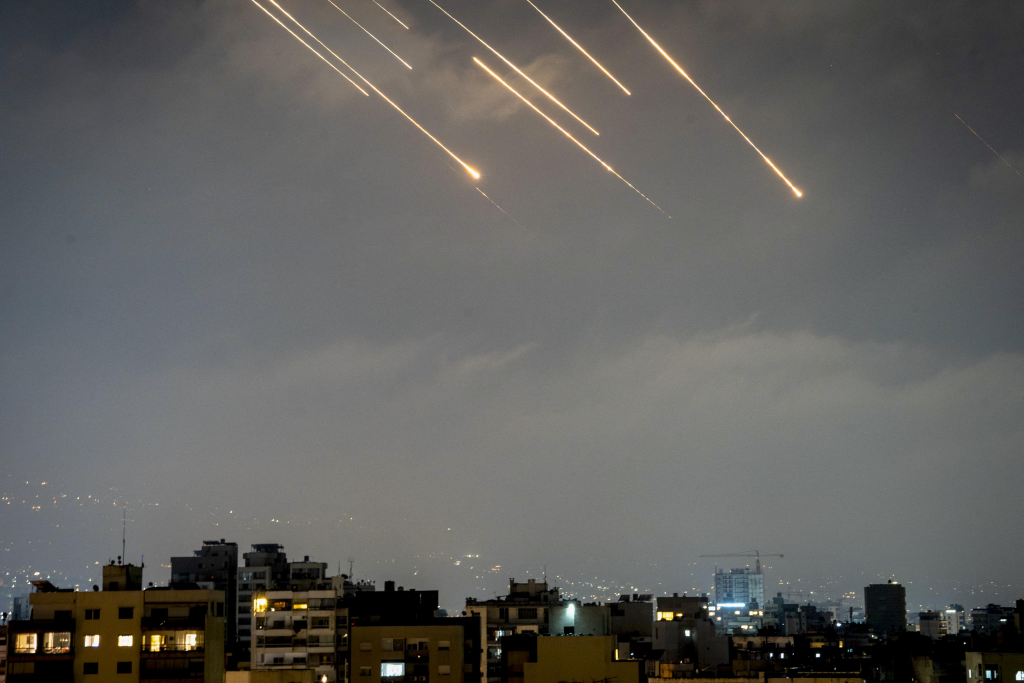
DID Press: In the early hours of Wednesday, simultaneous Iranian missile attacks on central and southern Israeli cities, alongside reports of explosions at U.S. and allied bases in the region, led the United States to accept Tehran’s proposed two-week ceasefire, acknowledging defeat in the Ramadan conflict.
The decision has sparked political reactions across the U.S., Israel, and other countries, many describing the agreement as a “major turning point” in the crisis and even a “strategic defeat” for Washington.
Early Wednesday, Israeli sources and regional media reported sirens in Beersheba, Dimona, Arad, Tel Aviv, and central Israel. The Israeli Home Front Command confirmed Iranian missile launches toward central areas, with explosions reported in Jerusalem and Tel Aviv. Israeli radio reported “severe blasts” at multiple locations.
Simultaneously, Arab sources reported explosions shaking Prince Sultan Air Base in Saudi Arabia, with regional media noting U.S. interests in Saudi Arabia, the UAE, Bahrain, and Kuwait targeted by missile and drone attacks.
Politically, the U.S. witnessed a wave of responses: Senate Majority Leader Chuck Schumer spoke of “Trump’s retreat,” while Alexandria Ocasio-Cortez called for impeachment. Former Congressman Adam Kinzinger labeled the potential agreement as “the greatest humiliation in U.S. history.” Analysts noted that Iran’s nuclear program remained untouched, while Washington had conceded significant leverage.
Associated Press reported that Iran and Oman intend to collect fees from vessels transiting the Strait of Hormuz under the ceasefire arrangement—signaling recognition of Iran’s role in managing the strait. Israeli media wrote, “Iranians got whatever they wanted from the Trump administration; this agreement is a major victory for Tehran.”
A U.S. official told Al Jazeera that all military operations against Iran have been halted. The White House claimed that “Operation Epic Fury” achieved its objectives. Meanwhile, Islamic Resistance in Iraq announced it would pause operations for two weeks in tandem with the U.S. withdrawal.
Benjamin Netanyahu, while supporting the suspension of U.S. attacks, clarified that the ceasefire does not cover Lebanon. Australia’s Prime Minister and Indonesia’s Foreign Ministry welcomed diplomatic efforts to reopen the Strait of Hormuz.
Media coverage highlighted the Persian version of the ceasefire, which explicitly included “acceptance of enrichment,” a term reportedly absent in the English version. Pakistani outlets noted, “Trump ultimately surrendered to Iran.”
In the U.S., former diplomat Richard Stengel emphasized that Trump failed to secure guarantees from Iran similar to those under the Obama administration. Democratic political activist Harry Seeson called the deal “terrible” and questioned: “If Iran controls the strait, sanctions are lifted, and its nuclear and missile programs remain, then what was the purpose of the war?”
Globally, Malaysia’s Prime Minister described Tehran’s 10-point plan as “promising peace and stability,” while a University of Chicago professor termed the agreement “the U.S.’s greatest defeat since Vietnam” and a signal of “Iran’s emergence as a global power.”
Donald Trump, in a social media post, called the day “a great day for global peace” and said the U.S. intends to participate in “managing maritime traffic in the Strait of Hormuz,” adding: “Significant funds will be generated, and Iran can begin reconstruction.”
With these positions released and military operations officially halted, numerous Israeli and U.S. media outlets have framed the developments as a strategic withdrawal by Washington and Tel Aviv, effectively acknowledging a defeat in the conflict.