Analysis: Israel’s Deadly Strikes on Lebanon and Implications for Iran–US Truce
DID Press: Following Israel’s extensive military attacks on Lebanon and their potential impact on the ongoing Iran–US Truce, multiple analyses have emerged on the motivations and consequences of these developments. In this context, Dr. Abdelrazak Makri published a detailed commentary examining the political and battlefield dimensions of the strikes, internal Israeli reactions, U.S. pressures, and possible effects on future negotiations. The Persian translation below is provided by Dr. Fazl-ul-Hadi Vazin.
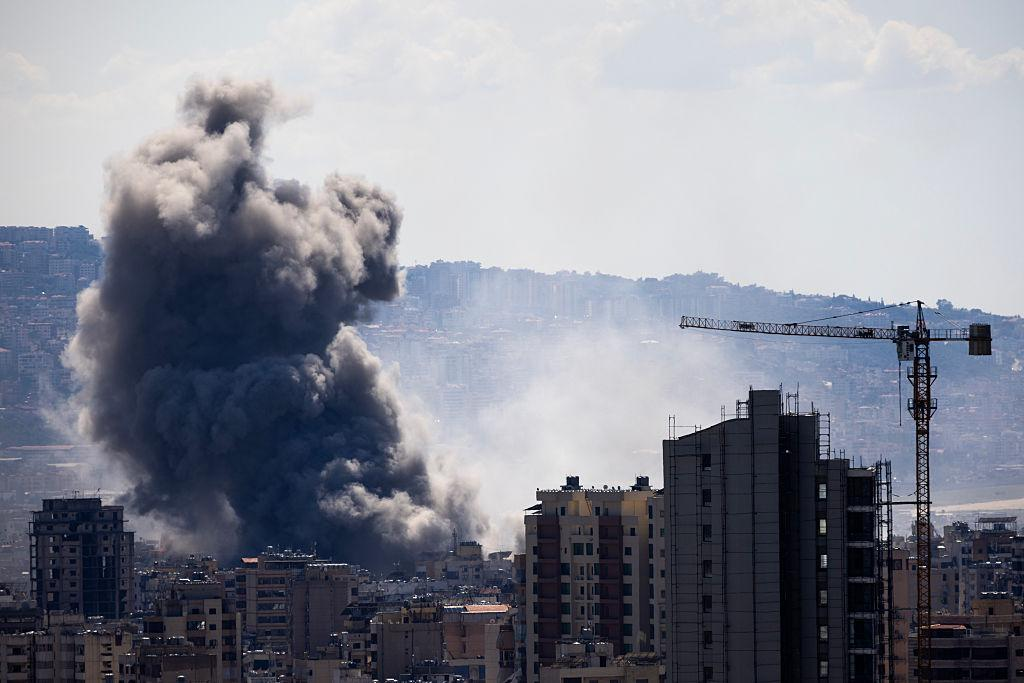
What Does the Lebanon Massacre Mean, and Does It Affect the Truce?
According to Dr. Makri, there is one clear answer: it reflects a sense of defeat.
When Israelis learned of the ceasefire, public anger surged against their prime minister, accusing him of rendering Israel politically and strategically weaker. Media coverage amplified this public outrage. In response, the prime minister unleashed his frustration on Lebanon, executing approximately 100 airstrikes within ten minutes, resulting in nearly 200 casualties. The goal was both to shift domestic public sentiment and to undermine a key clause in the negotiations—Lebanon’s inclusion in the ceasefire. Another objective was to provoke Iran, potentially derailing the broader Iran–U.S. agreement.
Does this endanger the ceasefire? Dr. Makri believes it will not. The reasoning is that the party most eager to halt the war is Donald Trump. Influential U.S. media have shown that he entered the conflict based on flawed assumptions, primarily promoted by pro-war factions in the White House, especially influenced by Israel. They believed that heavy strikes could trigger internal revolt in Iran and decapitate the regime. However, Iran’s remarkable resilience and ability to raise the costs of war for both the U.S. and the world upended those calculations.
U.S. security and military institutions, as well as strategic think tanks, had warned that victory over Iran was unlikely, especially considering prior U.S. failures in Iraq, Afghanistan, and Somalia. Trump ultimately faced opposition from his military commanders regarding both a ground invasion and the potential war crimes that could result from large-scale attacks on Iran.
In addition, his political base, which had been promised a “America First” approach avoiding foreign wars, was growing increasingly dissatisfied, especially with midterm elections approaching.
Therefore, Trump came under intense pressure and lost balance, showing less restraint even in public statements.
There is no doubt, according to Dr. Makri, that the Lebanon strikes occurred with U.S. approval—partly due to intense lobbying from Israel, partly to support the personal ally Benjamin Netanyahu (seen as the biggest loser in the conflict), and partly to pressure Iran during negotiations.
Trump and Netanyahu adopted a strategy of “adventurous escalation” to test Iran’s response, albeit with different objectives. Iran’s predictable response, including the potential closure of the Strait of Hormuz, was anticipated. If mediators fail to restrain Israel through Trump, the risk of renewed large-scale bombings is high.
Leaving Lebanon unprotected would constitute a major moral failure for Iran, even if it triggers renewed conflict. In such a scenario, Iran is expected to act gradually along several axes:
- Sustained heavy ballistic missile attacks on Israel.
- Reclosing the Strait of Hormuz.
- Targeting U.S. military bases and aircraft carriers.
- Avoiding attacks on Gulf facilities while engaging in dialogue to pressure Gulf states to support Iran’s position and enforce the ceasefire.
Dr. Makri predicts that Trump will seek to end the war and pressure Netanyahu to comply. Netanyahu’s adherence will depend on both the pressure exerted by Iran and the domestic pressures Trump faces within the U.S.
#Iran_Victory
#US_Defeat
By Dr. Abdelrazak Makri
Translate by Dr. Fazl-ul-Hadi Vazin — DID News Agency