Targeted Attacks on Shiites Reflect Longstanding Security Failures in Afghanistan
DID Press: Afghanistan is a country with deep ethnic and religious diversity, but over recent decades this diversity has rarely been treated as a national asset and has instead been framed through political and security rivalries. As a result, religious identities have at times shifted from coexistence into sources of tension, creating space for extremist groups to exploit existing divisions and carry out targeted violence.
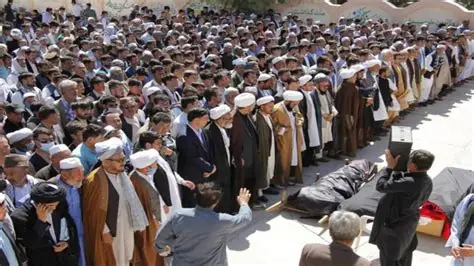
The recent attack in the Injil district of Herat province has once again drawn attention to a persistent and painful reality: members of the Shiite community have repeatedly been targeted in deadly attacks. This incident is not isolated but part of a long pattern of targeted violence that has continued both during the former republican government and under Taliban rule, raising serious questions about the capacity and will of successive authorities to ensure equal security for all citizens.
During the previous government, despite formal institutions, international support, and established security structures, attacks against Shiites occurred repeatedly. In particular, with the rise of ISIS in Afghanistan, mosques, educational centers, and religious gatherings of Shiites were targeted. This demonstrated that the former state failed to build an effective intelligence and security system capable of preventing targeted threats. Security at the time was largely defined in general terms, with limited attention to specific vulnerabilities, leaving certain groups—especially Shiites—consistently exposed.
After the collapse of the republican system and the Taliban takeover, hopes emerged for improved security conditions. The Taliban repeatedly claimed that nationwide security had been restored and that large-scale threats had ended. In some cases, a reduction in general conflict was observed. However, targeted attacks against Shiites in areas such as Herat have continued. The Taliban often attribute these incidents to groups such as ISIS, but the lack of transparency in investigations and accountability has made these explanations unconvincing for many observers, leaving a sense of insecurity largely unchanged among parts of the population.
Another key issue is that the problem is not limited to security alone. Social policies and approaches have also contributed to growing concerns. Reports of restrictions on religious ceremonies, pressure on certain religious activities, and the enforcement of laws based on a single jurisprudential interpretation have reinforced perceptions of inequality among religious groups. When a segment of society feels it is not fully accepted or its rights are not adequately protected, its social vulnerability increases.
At the same time, weaknesses in prevention and accountability mechanisms have played a major role in perpetuating the cycle of violence. In many cases, perpetrators are not identified, or there is little transparent information about investigations. This creates a sense of impunity, which in turn increases the likelihood of repeated attacks. Where the cost of violence remains low and punishment unclear, recurrence becomes more probable.
The issue also has broader historical and social dimensions. Afghanistan’s ethnic and religious diversity has often been treated not as an opportunity but as a source of political competition and security rivalry. This has allowed extremist actors to exploit existing fractures and intensify targeted violence.
What is happening today in Herat and other parts of the country reflects a deeper structural problem—one that is not confined to any single administration but relates to the broader framework of security governance and the approach toward religious diversity. A common pattern across both the republican era and the Taliban period has been the inability to ensure equal and sustainable security for all citizens.
Ultimately, without a comprehensive reassessment of these issues and without fundamental changes at both the security and political levels, the risk of repeated attacks will remain. Experience over the past years shows that reactive or temporary responses are insufficient, and Afghanistan requires a sustained approach to managing diversity and ensuring inclusive security for all citizens.
By Sayed Baqer Waezi – DID News Agency