DID Press: Iran is well aware that in asymmetric warfare it does not need to sink US warships; targeting a single Emirati or Qatari oil tanker would be enough for international insurers to label shipping routes as “high risk,” pushing oil prices beyond $150 per barrel. Such a reaction, in addition to escalating the Gulf crisis, would directly impact American voters through higher fuel costs.
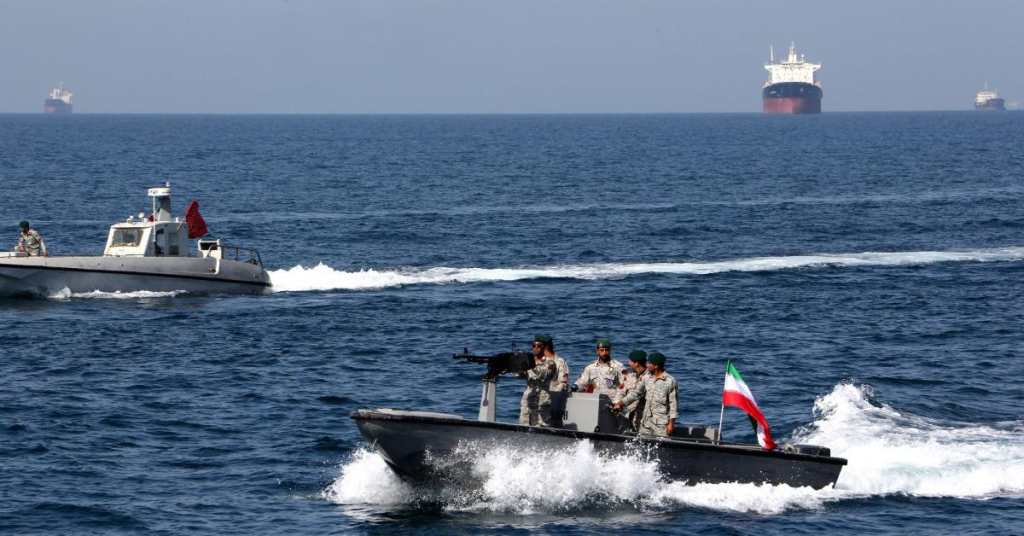
The declaration of a naval blockade on Iran by Donald Trump may appear, on the surface, as a decisive pressure tactic against Tehran, but in reality it reflects a test of the structural weaknesses of U.S. strategy in West Asia. The Strait of Hormuz has for five decades been a critical intersection of military power, diplomacy, and global economic vulnerability. However, Washington now faces a scenario in which traditional naval power tools are insufficient to manage the complexity of the crisis.
From a military perspective, a blockade on Iran is described as a “large, complex, and prolonged operation.” U.S. Central Command (CENTCOM) has stated that the blockade targets vessels linked to Iranian ports, not general transit through the strait. However, in practice, the distinction is narrow. Iran has made it clear that any interference with its affiliated shipping will be treated as hostile action. Experts such as retired Admiral Gary Roughead have warned that the U.S. Navy alone lacks the capacity to sustain such a blockade over time. Reinforcing naval presence in the Gulf would also require redeploying assets from other sensitive regions, including the South China Sea and the Black Sea, thereby weakening U.S. deterrence elsewhere.
The true test of American power, however, lies not in naval numbers but in the global oil and gasoline price equation. Since the beginning of the regional war, global oil prices have risen by roughly 50 percent. Economic logic suggests that blocking a major oil-exporting country would disrupt supply chains and sharply increase prices.
Senator Mark Warner has rightly asked: “How does this bring gasoline prices down?” The short answer is that it does not. Rising fuel inflation—one of the most politically sensitive issues in the United States—would worsen with every missile strike or mining incident in the Strait of Hormuz. Thus, the blockade neither eliminates Iran’s leverage nor benefits the American economy.
More concerning are Iran’s potential response options. Analysts identify three likely scenarios: attacks on military or commercial vessels, mining of shipping routes, and strikes on energy infrastructure in Gulf states. Iran understands that in asymmetric warfare it does not need to destroy U.S. carriers; targeting even one oil tanker from the UAE or Qatar could cause insurers to declare shipping lanes too risky, potentially driving oil prices above $150 per barrel. Such escalation would not only deepen the Gulf crisis but also directly impact American consumers.
Historical experience shows that no crisis in the Strait of Hormuz has been resolved through military means alone. The blockade on Iran appears less a coherent strategy and more a high-risk attempt to maximize pressure without international coalition support or diplomatic backing. The U.S. may control shipping lanes for weeks or even months, but it cannot remove Iran from the global oil equation nor shield its domestic economy from rising fuel prices.
Therefore, the Strait of Hormuz may ultimately serve not as a demonstration of power, but as another example of the limits of purely military approaches in the region. Long-term solutions, analysts argue, lie not in additional naval deployments but in diplomacy and international negotiation frameworks.
By Solaiman Saber – DID News Agency