Pakistan-Taliban Trade Agreement: Step Towards Legitimacy or Threat to Regional Security?
DID Press: In a recent development, Pakistan and the Afghan Taliban have signed a so-called “Preferential Trade Agreement” (PTA) that will significantly reduce customs tariffs, especially on agricultural items such as fruits. The move has been presented by both sides as a historic step in the field of trade development; but many analysts see it as a threat to regional security and weakening the global consensus against the Taliban government.
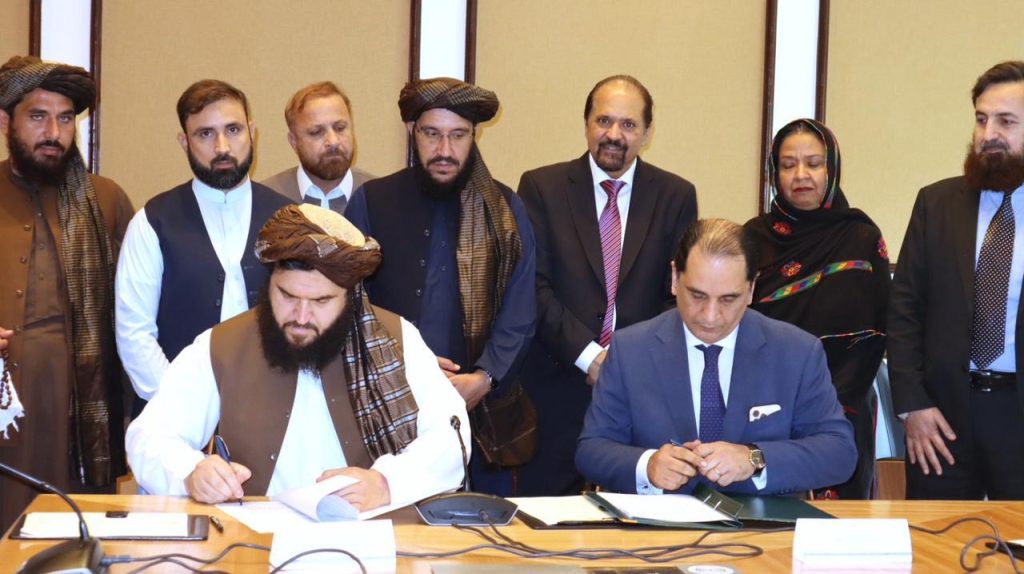
Dr. Usman Sahibzada, a Pakistani university professor and analyst, warned that the agreement in practice means giving economic legitimacy to the Taliban; a group that is still accused of violating human rights, suppressing women and supporting terrorist groups such as the TTP and al-Qaeda. There are concerns that the Taliban government will exploit the economic benefits of the agreement to consolidate its political and military dominance.
Experts have also emphasized that the agreement will serve the interests of the Taliban’s close associates more than the ordinary Afghanistan people. At the same time, Pakistan also gains limited benefits from this agreement, while its principled commitments in the field of combating terrorism and human rights are being questioned.
According to observers, signing such an agreement without preconditions such as respecting human rights, women’s participation and combating terrorism will not only not help the stability of the region, but could also accelerate the process of normalizing the power of the Taliban government.
It has been suggested that independent monitoring mechanisms be established to monitor the flow of goods and revenues to ensure that these resources are truly used for the benefit of the Afghanistan people, and not to strengthen repressive structures