DID Press: Four years after the fall of Kabul and the Taliban’s return to power, the group marked the anniversary of its takeover with markedly different celebrations. For the first time in years, the strategic Bagram Airbase — once a symbol of Taliban “Victory Day” parades — remained silent.
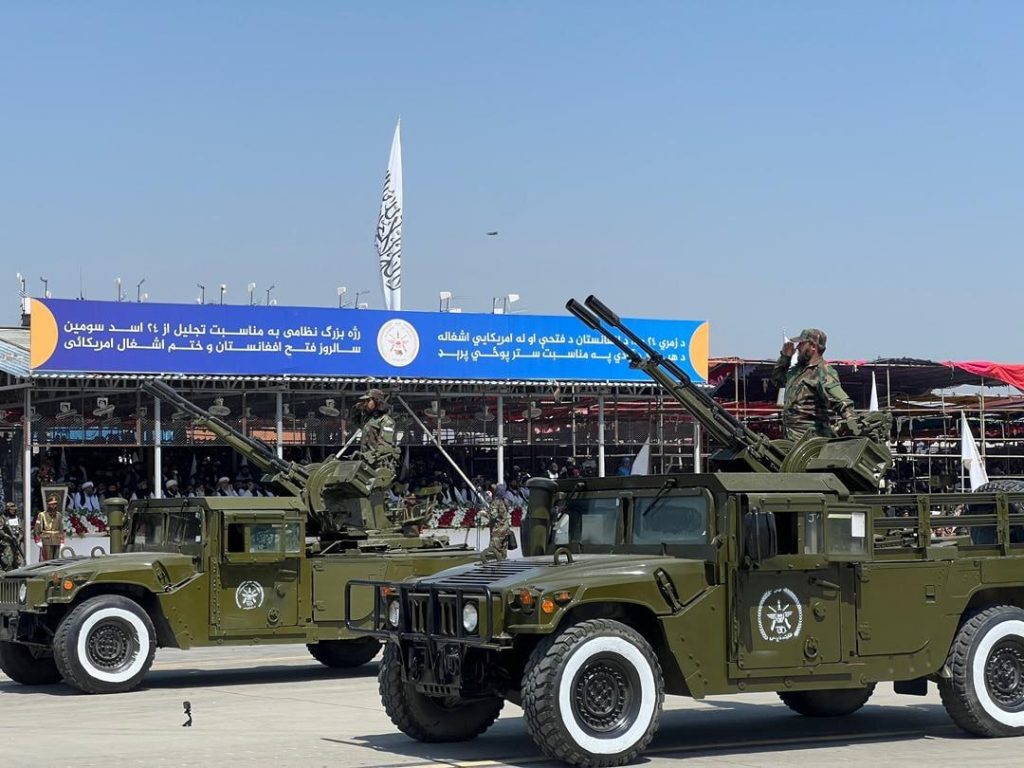
In previous commemorations, the Taliban’s interim government had turned Bagram into a showcase, parading American military equipment left behind after the war. This year, the focus shifted to the streets of Kabul. White Taliban flags were hoisted across the city, fighters marched along main routes, and flowers were scattered from the air at several points in the capital. Taliban slogans and emblems appeared on building walls, and flag vendors reported brisk sales.
Local sources say the shift reflects a deliberate strategy: concentrating propaganda in public spaces and drawing more media attention. In an unusual move, the Taliban invited journalists and social media influencers to cover the celebrations, a step not seen in previous years.
While some within the Taliban describe the change as a “gesture of de-escalation,” critics and online activists believe the decision to cancel the Bagram parade was motivated by concerns over pressure from U.S. President Donald Trump. Trump has repeatedly demanded the return of military hardware left in Afghanistan and has considered the Taliban’s public display of the equipment as a personal provocation.
CNN-News18 reports that Washington has asked Pakistan to help recover U.S. military equipment remaining in Afghanistan, valued at an estimated $7 billion.
By avoiding a show of force at Bagram — which served for two decades as the main U.S. military base in Afghanistan — the Taliban may be seeking to sidestep Trump’s ire. But analysts say that if the U.S. president is determined to reclaim the weapons, this symbolic shift in celebration will do little to change the outcome.
The move comes amid a flurry of regional developments. In the past week, Pakistan’s army chief visited Washington, signing a counterterrorism agreement targeting groups such as the Pakistani Taliban (TTP), Islamic State Khorasan (ISIS-K), and the Balochistan Liberation Army. The U.S. request for Pakistan’s cooperation on recovering the $7 billion in military equipment adds to signs of potentially significant regional changes — changes that could spell trouble for the Taliban’s interim government.
Some analysts argue that if a major shift does occur in Afghanistan, it will be driven less by the issue of abandoned U.S. weaponry and more by the Taliban’s foreign policy direction, particularly its growing alignment with America’s regional adversaries