Afghanistan’s Tough Test: From Quake to Government’s Illegitimacy and Lack of Trust
DID Press: Taliban caretaker government officials appealed to the international community for aid in the immediate aftermath of the earthquake, but the problem is that many countries, despite expressing condolences, are reluctant to provide direct assistance to the Taliban government.
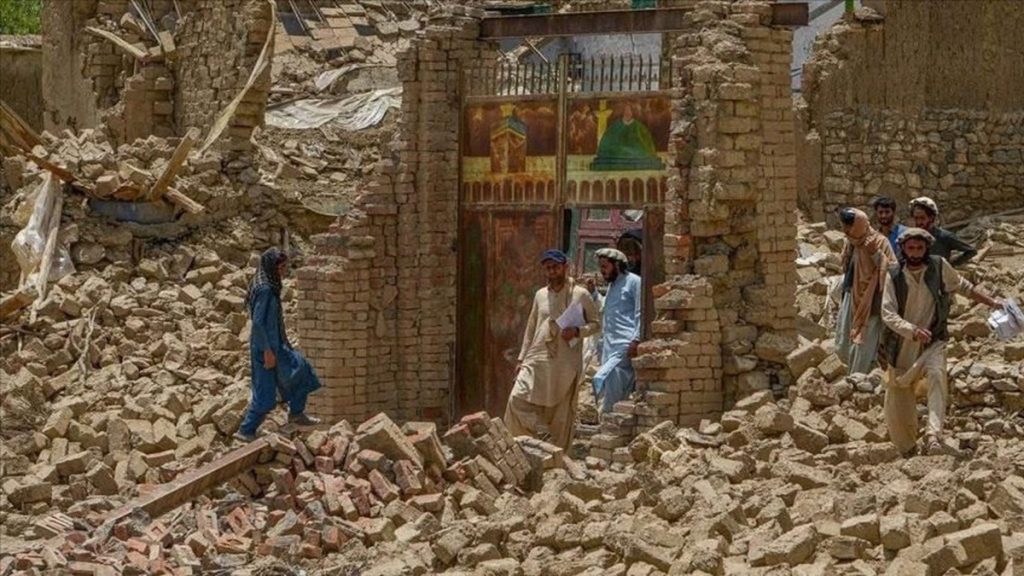
Late Sunday night, a powerful earthquake struck eastern Afghanistan, causing the heaviest damage in Kunar province. Dozens of villages in this mountainous region were completely destroyed, and thousands lost their lives or were injured. Once again, the primary victims of this natural disaster are poor, defenseless rural residents whose homes and livelihoods collapsed while they were asleep.
The eastern region is now engulfed in death, devastation, and ruin. Landslides and blocked roads have made access to affected areas extremely difficult, while insufficient infrastructure further slows relief efforts. Thousands of families in remote regions remain in urgent need of aid, which is arriving slowly due to challenging geography and lack of effective planning.
Adding to the suffering is the absence of a responsible, capable government to manage the crisis. Taliban officials sought international assistance immediately after the earthquake, yet many countries, despite expressing sympathy, are hesitant to provide direct support. This reluctance stems not only from the Taliban government’s lack of political legitimacy but also from its track record of diverting humanitarian aid for ideological purposes or to allied militant groups.
Some countries that have sent limited aid have explicitly warned that it should not fall into Taliban hands. This lack of trust directly affects the fate of disaster survivors, restricting their access to immediate relief.
Critics argue that the Taliban not only lack the capacity to establish a regional or international aid network but also seek to exploit the crisis for propaganda purposes. Through emergency meetings, symbolic official visits to affected areas, and extensive media coverage, the group attempts to present itself as a responsible and compassionate government. However, past experience shows that these efforts are largely performative.
A stark example is last year’s earthquake in Herat, which left thousands dead. The Taliban collected extensive domestic and international aid, yet many survivors remain in temporary shelters as fundamental problems unresolved.
There are fears that Kunar’s disaster may meet a similar fate. With destroyed homes, blocked roads, and harsh mountain conditions, life for survivors is difficult, and observers worry that the Taliban may once again exploit a humanitarian crisis for political and financial gain.
Thus, the recent eastern Afghanistan earthquake is not merely a natural disaster; it reflects structural weaknesses, international distrust, and mismanagement, with the most vulnerable Afghans bearing the brunt.
By Mohsen Mowahed