Pakistan’s Strategic Dilemma: Afghanistani Refugees as Political Lever
DID Press: Pakistan’s growing strategic constraints have forced Islamabad to use Afghanistani refugees as a last resort to pressure Kabul—an approach that violates international and Islamic norms and risks long-term damage to bilateral relations.
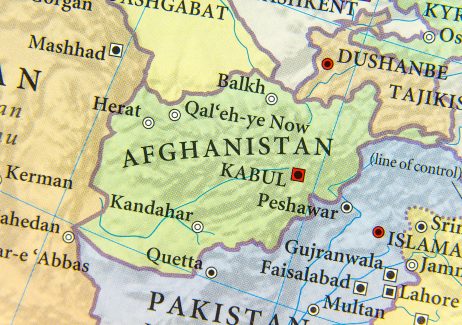
Recent remarks by Pakistan’s Defense Minister Khawaja Muhammad Asif, calling for the return of all Afghanistan refugees, reflect the continuation of Islamabad’s coercive policy toward displaced Afghanistanis. Over the past three years, mass expulsions have marked a shift in Pakistan’s foreign policy strategy.
These pressures on Afghanistani refugees escalated in parallel with heightened political tensions following the Taliban’s return to power. Border disputes and the rise of Tehrik-i-Taliban Pakistan (TTP) have further strained ties, leaving vulnerable refugees caught in the middle of geopolitical calculations.
Analysts argue that Pakistan’s refugee policy also serves a domestic purpose—diverting public attention from the country’s severe economic and political crises and channeling social frustrations toward migration.
Historically, despite tensions with Kabul, Pakistan avoided imposing such extreme measures on refugees. This was largely due to its influence over Afghanistan political factions, which provided leverage in Kabul. With the Taliban now in power and Afghanistan political circles deeply mistrustful of Islamabad, Pakistan has lost that leverage—prompting its turn to refugee expulsions as a blunt instrument.
While policymakers in Islamabad may view the immediate costs of anti-refugee policies as minimal, they overlook the hidden threats brewing on both sides of the border. Discrimination and exclusion risk fueling resentment within refugee communities, creating fertile ground for extremist recruitment and future instability.
It is worth noting that three major waves of Afghanistan people migration into Pakistan were themselves a consequence of Islamabad’s crisis-driven, double-edged policies that fanned insecurity and war in Afghanistan. As a key stakeholder in Afghanistan’s turmoil, Pakistan cannot justify exploiting the fallout to advance its own political agenda.
Pakistan’s current paralysis in its dealings with Kabul may be understandable, but Afghanistani refugees should not pay the price. Those with no role in Kabul’s policymaking must not be treated as fuel for geopolitical rivalries. Such a strategy is not only inhumane but also dangerously short-sighted and self-defeating.
By Ahmad Zaki Navisa – DID Press Agency