Decade after Kunduz Tragedy: Burned Hospital and Unanswered Case
DID Press: Today marks the tenth anniversary of U.S. airstrike on the Médecins Sans Frontières (MSF) hospital in norther Kunduz province of Afghanistan — an attack that killed 42 people which remains one of the deadliest assaults ever carried out against a medical facility.
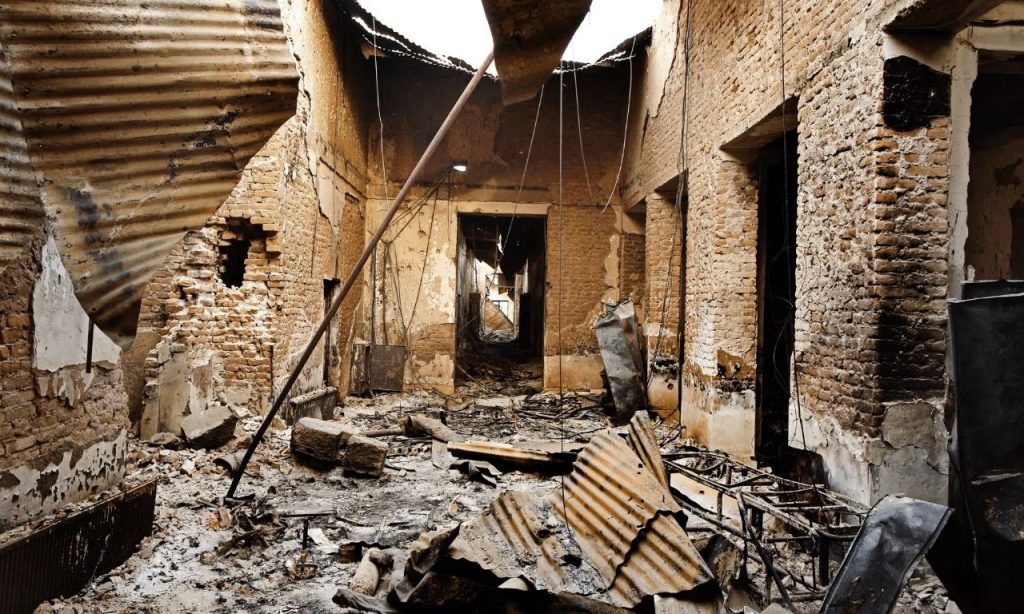
In a recently released report, MSF said the hospital’s main building was repeatedly bombed during the early hours of October 3, 2015. The strikes killed 42 patients, including 14 MSF staff members, and four patient caretakers.
The facility — which housed emergency, intensive care, laboratory, radiology, mental health, and physiotherapy units — was completely destroyed, depriving thousands of people of life-saving medical care at the height of the fighting in Kunduz.
Eyewitnesses described horrific scenes, saying patients burned in their beds while others were shot as they tried to flee the flames.
Dr. Sayed Hamed Hashimi, one of the surviving surgeons, returned to the site two weeks later and recalled: “Everything was burned… time had stopped.”
MSF had shared the hospital’s exact GPS coordinates with the U.S. Department of Defense, Afghanistan’s Ministries of Interior and Defense, and U.S. military officials in Kabul prior to the attack.
Following the incident, MSF called for an independent investigation by the International Humanitarian Fact-Finding Commission, but neither the U.S. nor Afghanistan governments granted authorization, preventing the probe from taking place.
In November 2015, MSF released its internal report, describing the strike as a “grave violation of international humanitarian law.”
Ten years on, no individual or institution has been held accountable for what the organization and global rights groups have described a war crime.