Key Outcomes of Recent Anti-Taliban Meeting in Islamabad
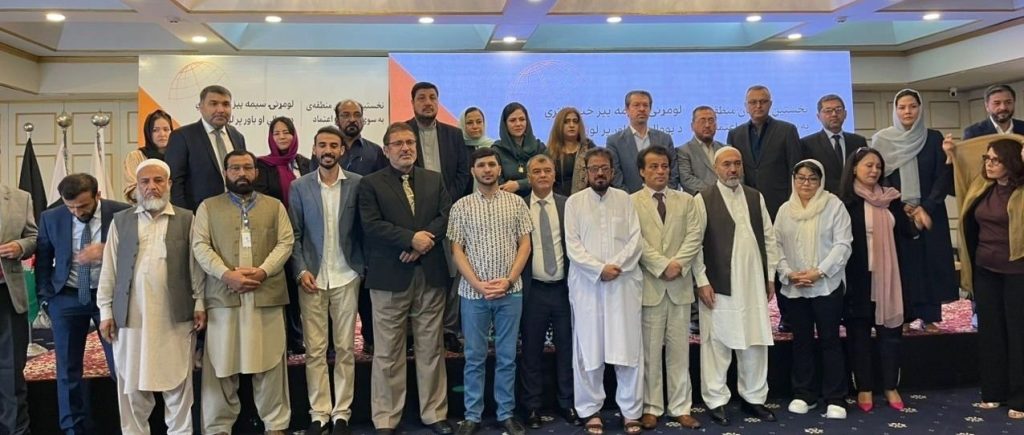
DID Press: The recent meeting of anti-Taliban opposition groups in Islamabad, although overshadowed by news of internet shutdown in Afghanistan, sent significant messages to Taliban government. Held on October 8–9 under the title “Towards Unity and Trust,” the event was hosted by the South Asia Strategic Stability Institute and supported by an organization led by Fawzia Koofi, a former Afghanistan parliament member. Despite the relatively low-profile of the attendees, the fact that the meeting took place on Pakistani soil raises important questions about Islamabad’s motives.
Pakistan’s Objectives in Hosting Taliban Opponents
For the past two decades, Pakistan has supported the Taliban, hoping that the new Kabul government would align with Islamabad’s interests. However, after taking power, the Taliban adopted a more independent foreign policy, including opening relations with India, a significant blow to Pakistan’s expectations. Additionally, Pakistan has used accusations of the Taliban supporting the Tehrik-i-Taliban Pakistan (TTP) as leverage to pressure Kabul. Given that the Taliban have refused to comply with Pakistan’s demands, Islamabad appears to be leveraging a new strategy: hosting Taliban opponents to demonstrate its influence, effectively “showing the wolf to the Taliban.”
Guest List and Message of the Meeting
The meeting was attended by figures such as Nasir Ahmad Andesha, Mustafa Mastoor, Fawzia Koofi, and Hussain Yasa. The modest profile of the invitees indicates that Pakistan is cautiously engaging in this arena, opting for a symbolic gesture rather than a major push. The event was hosted by a relatively low-key think tank with the slogan “Promoting Peace and Trust,” signaling that Islamabad is still tentatively exploring this new tool, though it holds the potential for expansion in the future.
Opposition’s Distrust of Pakistan
The anti-Taliban opposition is a mix of civil society activists, former women’s rights leaders, and politicians who were forced to leave the country after the fall of the Republic. Most of these individuals view Pakistan as a primary driver of the current crisis in Afghanistan, making it difficult for them to trust Islamabad. Some invited attendees even chose to abstain from the meeting. Strong remarks, such as those from Ghafor Liwal, Afghanistan’s former ambassador to Iran, who called Pakistan “a source of pollution and threat,” reflect deep-seated mistrust towards the host.
Content of the Meeting and Preliminary Decisions
The closed-door meeting revealed little information, but media reports suggest that discussions focused on the threats posed by Taliban rule, as well as strategies for political, civil, and even armed resistance to the group. Topics also included halting the expulsion of Afghan refugees, fostering regional trust, and creating a coordination mechanism among opposition groups. At the end of the meeting, participants proposed that the Islamabad process become a continuous initiative, with plans for establishing a special political office for coordination. While the hosts agreed to the creation of an “Islamabad process,” no final decision has been made regarding the establishment of an office.
The Possibility of a New Front
One of the most noteworthy aspects of the meeting was the proposal for armed resistance alongside political efforts. This could be the precursor to the formation of a new faction in Afghanistan, distinct from the National Resistance Front or the Freedom Front, potentially with Pakistan’s backing. If such a scenario materializes, it would complicate Afghanistan’s security and political landscape even further.
Conclusion
At this stage, Pakistan is using this limited meeting to send a clear message to the Taliban: Islamabad still has the ability to organize opposition to the Kabul government. The establishment of the “Islamabad process” suggests that similar meetings will likely occur annually.
If tensions between Kabul and Islamabad escalate, this process could evolve into a platform for forming a new armed front. However, what has transpired so far is less about concrete action and more about signaling Pakistan’s potential capabilities. On the other hand, the Taliban undoubtedly have their own specific tools to counter such pressures.
In summary, Islamabad meeting can be seen as the beginning of a new game—a game where the first outcome is the establishment of the “Islamabad process,” and the second is the potential emergence of a new armed front against the Taliban.
By Mohsen Mowahed | DID Press Agency