Moscow Quad Meeting to Form Regional Front against US Return to Afghanistan
DID Press: National Interest reported that as Donald Trump places the recapture of Bagram Airbase at the center of his foreign policy, Russia, China, Iran, and Pakistan convened a four-party meeting in Moscow to discuss the implications of a renewed U.S. presence in Afghanistan — a gathering that analysts describe as the beginning of a regional coalition to counter Washington’s new strategy.
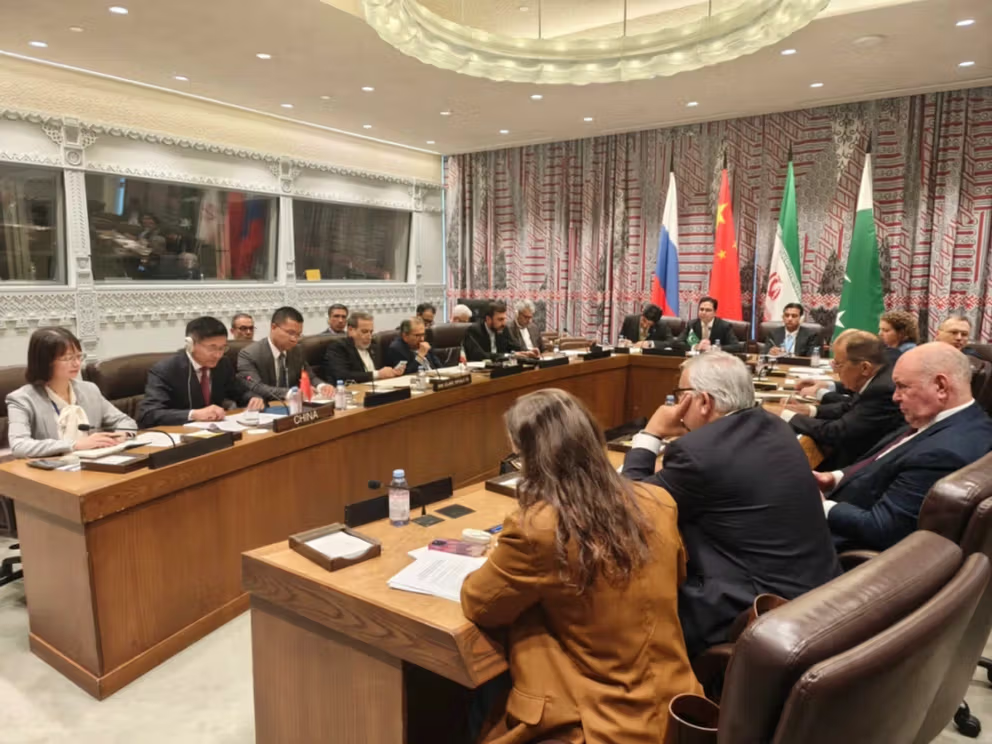
According to the magazine, the Moscow meeting took place amid growing U.S. signals of a potential military return to Afghanistan, a move that would destabilize the fragile regional balance of power. The participating countries sought to form a unified stance against any redeployment of foreign troops on Afghanistan soil.
While the Taliban government has so far avoided open confrontation with Washington, it has described the return of U.S. forces to Bagram as a “red line.” Analysts argue that Washington’s motive is not Afghanistan itself but rather to reassert strategic influence in Central and South Asia — particularly as a counterbalance to China, Iran, and Russia.
National Interest writes that America’s potential return to Bagram represents more than a military comeback — it marks a bid to re-establish U.S. power projection in a region that has become the new arena of competition among global powers.
In response, regional states are seeking mechanisms to pressure the Taliban to align its decisions with regional interests. Granting the Taliban formal participation in the “Moscow Format” signals this effort — giving the group limited legitimacy while holding it accountable for future decisions regarding cooperation with Washington.
However, experts warn that building a regional bloc against U.S. policy will be difficult given the divergent relations each country maintains with Washington and their mutual economic and security dependencies.
Despite these challenges, Moscow meeting marks a rare attempt to redefine the regional security order in Central Asia. As the U.S. seeks to pivot away from the Middle East toward containing China and Russia, regional actors now recognize that ignoring Bagram means ceding strategic initiative back to Washington.
In this context, Moscow Quad represents not just a diplomatic gathering — but a strategic warning: a call for regional powers to reach a lasting consensus before the U.S. re-establishes its foothold in Afghanistan.