India Declares Official Support from Taliban, Joins Kunar Water Project
DID Press: As relations between the Taliban and Pakistan reach their lowest point in recent months, India has taken a clear stance against Islamabad, declaring support for Afghanistan’s “sovereignty and independence” and announced new cooperation on water and energy initiatives with Kabul — including participation in the construction of a dam on the Kunar River.
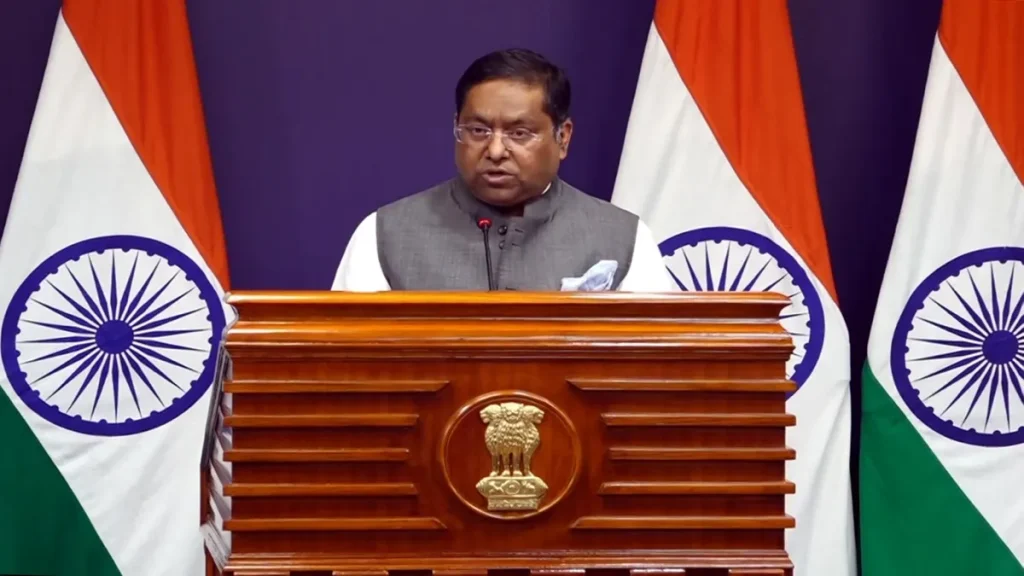
Randhir Jaiswal, spokesperson for India’s Ministry of External Affairs, said in a press briefing on Thursday (October 30) that Pakistan is angered by Afghanistan exercising authority over its territory and assumes it has the right to conduct cross-border terrorism without consequence — a situation he described as unacceptable for neighboring countries.
“India remains fully committed to Afghanistan’s sovereignty, territorial integrity, and independence,” he added.
Jaiswal referred to a recent conversation between Indian Foreign Minister S. Jaishankar and Taliban acting Foreign Minister Amir Khan Muttaqi, confirming that India would take part in the construction of a dam on the Kunar River. According to him, “New Delhi has long-standing expertise in water-resource management and is ready to participate in Afghanistan’s hydropower projects, including the Salma Dam in Herat.”
He also confirmed that India secured a six-month exemption from U.S. economic sanctions related to operations at Iran’s Chabahar Port — sanctions imposed during the administration of US president Donald Trump.
Meanwhile, Pakistan’s Mint Mirror newspaper reported that Afghanistan’s planned dams and diversion structures on the Kunar and Kabul rivers can reduce water flow into Pakistan by as much as 16%. The report warns that reduced water supply during April–June can severely affect agriculture in Sindh and southern Punjab.
According to the newspaper, India has offered a $1 billion package to the Taliban for water-resource and infrastructure projects — a move viewed in Islamabad as a political effort to expand Indian influence in the region. Pakistani authorities have warned that any attempt by Afghanistan to alter or restrict shared water flows would be considered a “hostile water act.”
In contrast, Afghan analysts believe that due to financial constraints, weak infrastructure, and political instability, the implementation of these large-scale projects in the short term remains unlikely.
At the same time, Pakistan’s Defense Minister Khawaja Muhammad Asif accused India of waging a “low-intensity war from Afghanistan soil” against Pakistan in an interview with Al-Arabiya. He claimed that Amir Khan Muttaqi’s recent visit to New Delhi signals direct Indian involvement in Taliban-Pakistan negotiations and stated, “We have evidence showing India is behind these talks, and we will present it if needed.”
Islamabad’s sharp rhetoric comes as the second round of negotiations between the Taliban and Pakistan in Istanbul ended without result, though talks resumed again through Qatari and Turkish mediation.
Given the wide differences between the parties and their mutually unrealistic demands, analysts believe the current round of negotiations is unlikely to achieve meaningful progress.