Durand Line: 130-Year-Old Border Still Shaping South Asia’s Politics and Security
The Durand Line, signed on November 12, 1893, between Amir Abdul Rahman Khan of Afghanistan and Sir Henry Mortimer Durand of the British Empire, remains one of South Asia’s most enduring and controversial borders. Intended to define spheres of influence between Afghanistan and British India, the line stretches roughly 2,640 kilometers from northeast to northwest across present-day Afghanistan and Pakistan.
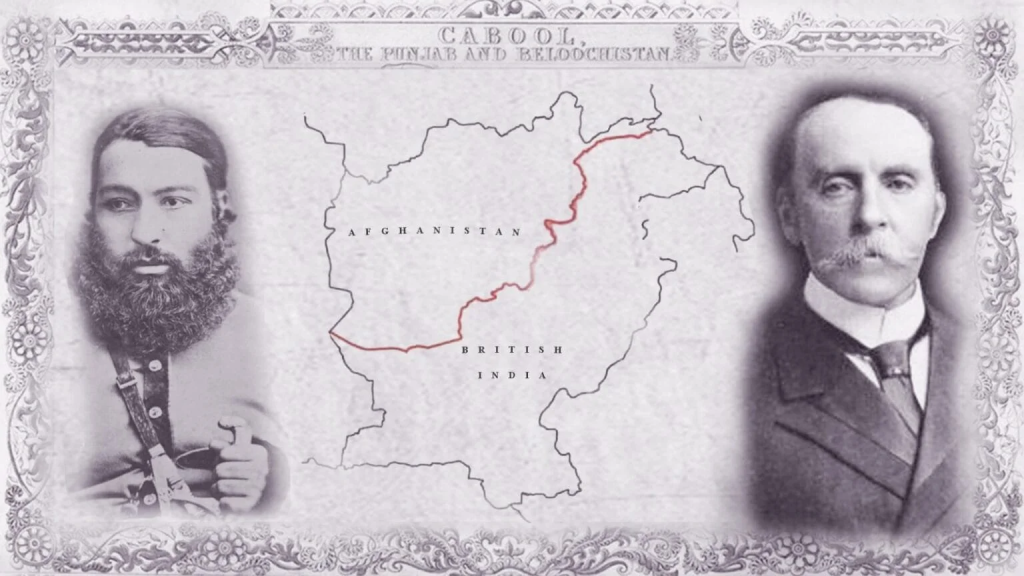
While the Durand Line formally delineated territory, its design prioritized military and geographic considerations over the cultural and ethnic realities of the region. Most notably, it divided the Pashtun tribes, creating long-lasting social and political repercussions that continue to affect both countries today.
Historical and Political Disputes
After Pakistan’s independence in 1947, Islamabad recognized the Durand Line as its official border with Afghanistan, insisting that the matter was settled. Kabul, however, has never accepted the line as a legitimate international boundary, arguing it was imposed by the British Empire. Afghan officials contend that the agreement’s legal inheritance was not transferred to Pakistan after India’s partition, and that dividing Pashtun tribes across two states remains illegitimate. This fundamental disagreement has kept the Durand Line at the center of regional political tensions for more than a century.
Ethnic Dimensions
The line has deep ethnic implications. Pashtuns, a major group in both Afghanistan and Pakistan, were split by the border, disrupting historic trade, migration, and familial ties. Many communities along the line continue to view it as an artificial boundary and refuse to accept its legitimacy. This local resistance has not only challenged the political authority of the border but also created conditions in which armed groups have gained influence.
Security and Geopolitical Challenges
The Durand Line’s rugged, mountainous terrain has complicated security management. Cross-border movements of militants, smuggling, and illicit trade are frequent, making control difficult. Pakistani officials have long accused the Afghan side of providing sanctuary to groups such as the Pakistani Taliban, which have launched attacks across the border.
Regional dynamics further complicate the situation. The involvement of external actors such as India and China, refugee flows, and broader geopolitical rivalries amplify the challenges for both Kabul and Islamabad. These factors combine to make the border not only a local security issue but also a flashpoint for wider regional instability.
Legal Controversies
The legitimacy of the Durand Line remains a key legal point of contention. Afghanistan rejects the historical validity of the 1893 agreement, describing it as a product of imperial imposition. Pakistan, in contrast, upholds the line’s legitimacy, integrating it into domestic law and border management. The resulting legal stalemate, coupled with weak border oversight and the difficulty of controlling remote mountainous areas, has provided opportunities for armed groups and imposed high economic and security costs on both nations.
Toward a Sustainable Solution
Analysts say that resolving the Durand Line dispute requires a combination of political, legal, social, and security measures. Bilateral dialogue between Afghanistan and Pakistan, supported by regional and international actors, is considered essential. Equally important is recognizing the rights and identities of local communities, promoting their participation in border management, and respecting cultural traditions—steps that could reduce resistance and enhance the line’s legitimacy.
Applying international legal frameworks for boundary demarcation and investing in social and economic development in border regions could further reduce incentives for militancy and instability. Experts also recommend prioritizing joint security cooperation over simply erecting physical barriers, which can improve monitoring and control while fostering trust between the two governments.
Enduring Significance
Over 130 years since its inception, the Durand Line remains a symbol of South Asia’s historical, political, and ethnic complexities. It demonstrates how borders drawn without regard for local identities and cultural realities can become long-term sources of conflict. The line continues to influence political relations, ethnic cohesion, and security dynamics in Afghanistan and Pakistan, making it a persistent challenge for regional stability.
Resolving this dispute, analysts say, will require a careful combination of political negotiation, historical justice, shared management, and sustainable development. Only through such a comprehensive approach can the two countries hope to reduce tensions and foster long-term peace along one of the region’s most contentious borders.
By Mohsen Mowahed