Afghanistan Turns to Alternative Trade Corridors to Boost Leverage Over Pakistan
DID Press: The visit of Nooruddin Azizi, Taliban caretaker government’s Minister of Industry and Commerce, to Iran’s Sistan and Baluchestan province — and his focus on expanding transit through Chabahar — signals a coordinated strategy by Kabul to replace trade routes traditionally controlled by Pakistan. Chabahar offers Afghanistan the shortest and most cost-effective access to open waters, linking the country directly to markets in India, the Persian Gulf, East Africa, and beyond.
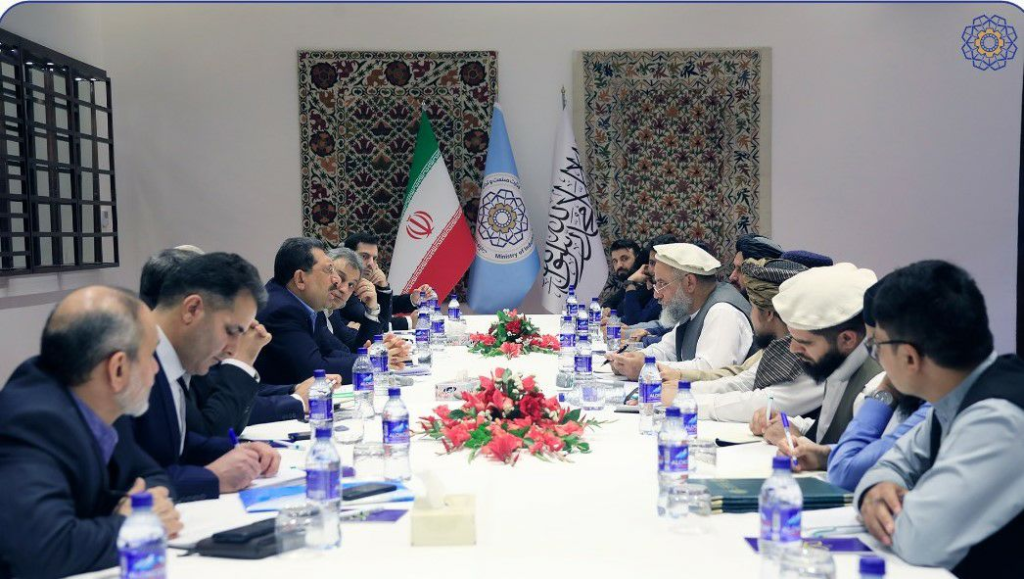
A New Phase in Afghanistan’s Regional Economic Policy
Recent developments in Afghanistan’s trade and transit policy suggest that Kabul has entered a fundamentally new phase in its regional economic strategy — one in which its historic dependency on Pakistan is neither sustainable nor aligned with Afghanistan’s long-term interests. For decades, Pakistan leveraged its geography as Afghanistan’s primary maritime gateway, employing political pressure by closing borders or slowing commercial flows whenever tensions rose.
Now, recognizing the high cost of this dependence, the Taliban have activated alternative corridors that not only diversify Afghanistan’s trade routes but also significantly weaken Islamabad’s leverage.
Taliban officials have repeatedly said in recent months that trade with Pakistan will only continue if Islamabad provides credible guarantees — including assurance of open routes, no sudden restrictions, and the removal of informal barriers. This stance reflects Kabul’s resolve to no longer expose its commerce to the political decisions of a neighboring state. Frequent border closures and rising costs for Afghan traders had placed the economy in a vulnerable position, prompting the shift toward transit diversification. This strategic pivot has moved Afghanistan from a defensive posture to a more proactive and influential role.
Chabahar and Central Asia: New Pathways Toward Economic Independence
At the center of this shift lies the port of Chabahar — a geographically and economically strategic route for Afghanistan. Minister Azizi’s trip to Iran and emphasis on expanding transit through Chabahar indicate that Kabul is actively working to replace Pakistan-controlled corridors. Chabahar’s position offers direct, reliable access to global markets in India, the Gulf, and East Africa.
Trade between Iran and Afghanistan soared to 3.36 billion USD last year, underscoring not only political cooperation but also growing economic interdependence. While the bulk of this figure consists of Iranian exports to Afghanistan, Taliban officials hope that a strengthened Chabahar corridor will also enable greater Afghan exports—particularly minerals, agricultural goods, and raw materials.
Alongside Chabahar, Afghanistan has simultaneously activated multiple corridors through Central Asia. Uzbekistan, Turkmenistan, and Tajikistan now serve not merely as political partners but as key links in Afghanistan’s emerging transit network. Central Asia’s railways, highways, and northern trade corridors connect Afghanistan to China, Russia, the Caucasus, and Europe. These routes diversify Afghanistan’s geopolitical options and shield its trade from the political volatility of South Asia.
The ongoing construction of a second land crossing at the Milak border—with a capacity of 1,000 vehicles per day—is a major step in this direction. The opening of a temporary dirt road to ease commercial traffic, formation of joint technical teams with Iran, and progress on border infrastructure indicate a coordinated push by Kabul and Tehran to turn Milak into one of the region’s largest trade gateways. These developments go beyond replacing Pakistan; they are shaping a new architecture of regional cooperation for Afghanistan.
Kabul’s Growing Bargaining Power Against Islamabad
For years, Pakistan used trade routes as political leverage, shutting down border crossings during periods of tension and leaving thousands of Afghan trucks stranded. But the dynamics have now shifted. With alternative routes in place, the Taliban can enter negotiations with Pakistan from a stronger position.
Kabul is no longer without options when Pakistan restricts access. If Torkham or Chaman is closed, transit through Iran and Central Asia can continue. Islamabad now understands that political pressure risks diminishing Pakistan’s long-held economic role — a role it invested heavily to maintain.
Replacing Pakistan’s trade routes is not merely an economic adjustment — it is a recalibration of regional power. Pakistan may now be compelled to cooperate more consistently, while the Taliban, for the first time, possess tools to neutralize pressure and even apply counter-leverage.
Toward a More Independent Afghanistan Economy
Ultimately, alternative corridors are not just detours — they are foundational steps toward Afghanistan’s economic independence. If supported by sustained infrastructure development and stable regional partnerships, these routes could transform Afghanistan from a dependent economy into a capable regional actor — one less vulnerable to political pressure and more influential in regional dynamics.
By Sulaiman Saber – DID Press Agency