Qosh Tepa Canal Sparks Fear of Water Crisis in Central Asia
DID Press: As work on the Qosh Tepa Canal accelerated in northern Afghanistan, warnings are increasing about the project’s impact on Central Asia’s water security. Regional media reported that diverting part of the Amu Darya River may push Turkmenistan and western Uzbekistan into severe water shortages and trigger new waves of migration.
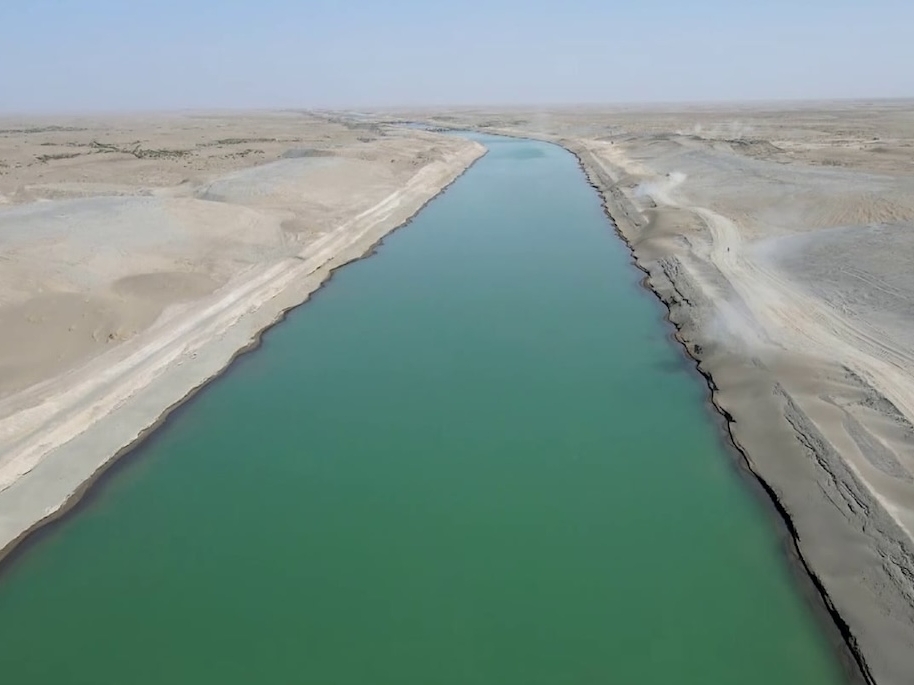
According to regional reports, Afghanistan’s major irrigation project known as the Qosh Tepa Canal is pushing Central Asia’s water future into a new phase of tension and challenge. The project, which began in March 2022, aims to irrigate about 550,000 hectares of arid land in northern Afghanistan. To achieve this, more than 15% of the Amu Darya’s water will be diverted into Afghanistan’s internal channels.
The first section of the canal, 108 kilometers long, was completed in 2023, and the second phase is now underway. According to the Kazakh publication “InBusiness”, completion of this canal could lead to a severe water crisis in Turkmenistan and the western regions of Uzbekistan.
Meanwhile, Ravshan Nazarov, a professor at the Russian Economic University in Tashkent, warned that if Russia does not intervene to help resolve Central Asia’s water crisis, the region may face a massive wave of migration. He argued that transferring Siberian river water to Central Asia through Kazakhstan is the only sustainable solution to prevent a humanitarian disaster.
According to UN FAO statistics, Turkmenistan—with a population of seven million—consumes 53 cubic kilometers of water annually, an amount even greater than the combined water consumption of Kazakhstan and Uzbekistan. Experts attribute this excessive use to deteriorating irrigation networks, extensive evaporation, and the lack of concrete canals. Similar issues have been reported in Kyrgyzstan since 2020.
InBusiness concludes that the current trajectory, combined with projects like the Qosh Tepa Canal, is pushing Central Asia’s water crisis toward an irreversible point, and that transferring Siberian water remains the only long-term solution for all regional republics.