Bin Salman-Trump Meeting Signals Saudi Push for Defense Pact and Strategic Guarantees
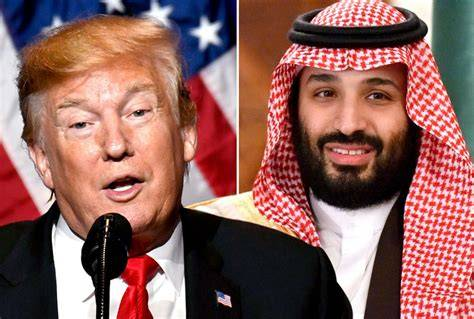
DID Press: Saudi Crown Prince Mohammed bin Salman’s visit to the United States and his high-profile meeting with President Donald Trump is more than a diplomatic engagement—it represents the intersection of Saudi ambitions and the strategic goals of the Trump administration. In Washington, Saudi Arabia’s most ambitious proposals meet the administration’s transactional approach to foreign policy.
Framework: Reshaping Riyadh–Washington Ties
After years of tension following the murder of journalist Jamal Khashoggi, bin Salman’s visit takes place at a moment when the Trump administration aims to architect a “new Middle East” centered on Saudi Arabia. The ceremonial reception, including a formal White House banquet, signals Washington’s effort to revive the strategic alliance between the two nations. This trip is widely seen as a high-stakes negotiation to redefine bilateral relations.
From the White House perspective, Saudi Arabia is the missing link in a broader normalization plan with Israel—without Riyadh, the initiative lacks geopolitical weight. Conversely, Riyadh seeks to leverage the visit to consolidate regional influence, secure long-term security guarantees, and advance key economic and political projects.
Security Agreement: Bin Salman’s Top Priority
The central focus of the visit appears to be the pursuit of a comprehensive “defense pact,” akin to NATO, to guarantee Saudi Arabia’s long-term security against regional threats. Bin Salman has long sought to elevate Saudi Arabia from a “second-tier U.S. ally” to a “security partner with binding agreements.” Such a deal would strengthen the crown prince’s domestic position and allow him to pursue the 2030 economic and political vision without fear of external threats.
Washington, however, remains cautious—concerns include military and financial implications as well as Israeli apprehensions about shifting regional power balances. Yet the Trump administration, seeking a major foreign policy achievement, may lean toward some form of security assurances, even if they fall short of a formal defense treaty.
Palestine: A Sensitive Constraint
The Palestinian issue remains one of the most complex variables. Following the recent two-year Gaza conflict, Riyadh has linked any normalization with Israel to guarantees for an independent Palestinian state. This stance conflicts directly with Trump’s strongly pro-Israel approach. While Trump seeks to persuade Saudi Arabia to accept his plan—which sidelines Palestinian statehood—bin Salman understands that without addressing this historical issue, any agreement would lack domestic legitimacy and the new Middle East initiative could stall.
Arms Competition: F-35s and Israeli Concerns
Saudi requests to purchase F-35 fighter jets, exclusive to Israel in the region, represent another contentious issue. Although Trump reportedly favors the sale, Israel strongly opposes it, warning that it would undermine its air superiority. Granting Riyadh’s request could trigger similar demands from Turkey, Qatar, and the UAE, complicating Washington’s regional arms strategy. Conversely, rejection might push Saudi Arabia toward missile development and closer military cooperation with China and Pakistan.
Technology Competition: Chips, AI, and U.S. Constraints
As Saudi Arabia seeks to become a technology hub—particularly in AI and advanced semiconductors—it requires close U.S. cooperation. Yet U.S. restrictions on technology exports to China and concerns over Riyadh’s ties with Beijing limit access to advanced chips. Bin Salman aims to secure “technology guarantees” from Washington, while the U.S. must decide whether to keep Saudi Arabia within its tech ecosystem or risk ceding the sector to China. This issue will be a sensitive negotiating point, as any concession could influence U.S.-China strategic competition.
Civil Nuclear Energy: Washington’s Red Line
Saudi Arabia seeks civilian nuclear technology, including domestic enrichment capabilities, but faces strong U.S. opposition. Riyadh has also sought assistance from Pakistan and China, but no project can proceed without Washington’s approval. Reports indicate that, rather than insisting on domestic enrichment, Saudi Arabia may seek a “nuclear umbrella” or other guarantees—a lower-cost, more politically feasible option for both sides.
Conclusion
Mohammed bin Salman’s visit to Washington intersects three dimensions: security, economic, and geopolitical. Saudi Arabia seeks to become an independent yet U.S.-supported actor, while Trump aims to shape a regional architecture that limits Chinese influence and advances normalization with Israel.
Not all demands are expected to be met. Disagreements over Palestine, F-35 sales, and uranium enrichment are likely to persist. However, if the two sides reach practical agreements on economic and security issues, the visit could trigger significant shifts in Middle Eastern dynamics, potentially reshaping the region’s political and security architecture for years to come.
By: Mohsen Mowahed