How Trump Turned WH Tragedy into Tool for Targeting Immigrants
DID Press: Stark contradiction in Washington’s approach becomes even more evident when considering that Lakanwal was not an ordinary migrant, but an individual trained by and cooperating with U.S. intelligence agencies. This reality raises a crucial question: How can a product of an American security institution become the pretext for condemning an entire nation?
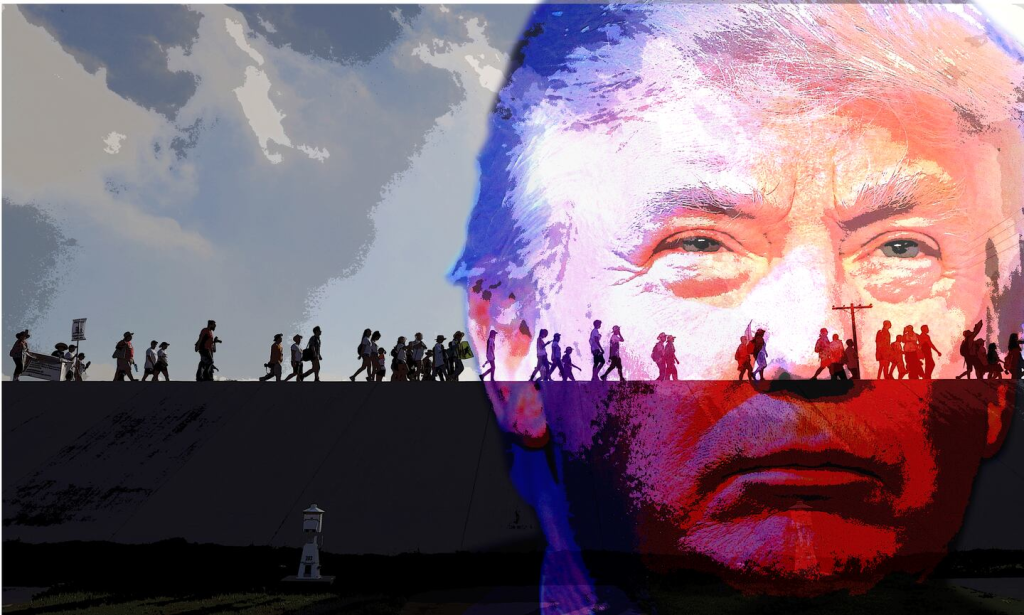
The incident last Wednesday near the White House—where Rahmanullah Lakanwal, an Afghan national, violently attacked and injured several National Guard members—has once again pushed the complex dynamics of U.S.–Afghanistan relations into political and media circles.
But beyond a security episode, the event has been seized upon as an opportunity to revive exclusionary and racially charged narratives within the Trump administration. Responding sharply, the U.S. president labeled Afghanistan “a hellhole on earth” and ordered the immediate suspension of Afghan refugee admissions as well as a visa ban for Afghan nationals.
This decision comes despite the attacker’s decade-long record of cooperation with the CIA—an element that continues to fuel deeper questions among analysts about the motives behind the incident.
The contradiction is blatant: Lakanwal was not a random migrant, but someone shaped by the very intelligence apparatus now using his act as a justification for punitive policies.
By weaponizing this tragedy, U.S. officials have placed the entire Afghan immigrant community under systematic suspicion. This stands in sharp contrast to UN data indicating that more than 70 percent of Afghan migrants in the United States are peaceful, law-abiding individuals who lost their homes and livelihoods in wars driven by Washington’s own interventionist policies.
Historical amnesia and denial of responsibility lie at the heart of current U.S. policy. The same government that turned Afghanistan into a battleground of imperial strategy for two decades now deploys populist rhetoric to portray the victims of those policies as threats to its national security. After years of destabilizing interventions in Afghanistan, Iraq, and Libya—leaving destruction and chaos in their wake—Washington is now closing its doors to the refugees created by those very actions.
As civil-rights theorist Michelle Alexander argues, “Modern racism masks itself in the language of law and national security.” Her definition fits Trump’s policies precisely.
Of course, violence and terror—whether in Washington or Kabul—must be unequivocally condemned. The difference lies in the response: US military actions in Iraq, Afghanistan, or Libya are brushed off as “strategic errors,” while the act of a single Afghan attacker is framed as evidence of a collective threat. This blatant double standard exposes the instrumental nature of U.S. human-rights rhetoric.
History shows that societies which use their immigrants as scapegoats eventually find themselves facing the harshness of the walls they build.
By Sayed Mohammad Mousavi – DID Press Agency