DID Press: Abdulqadir Mumin — once a “mullah imam” in UK who preached in London and Leicester mosques — has now become the leader of the ISIS branch in Somalia, a faction operating from the Cal-Miskaad mountains. According to analysts, this group functions as the financial and operational heart of ISIS’s resurgence in Africa and beyond. Despite U.S. airstrikes and pressure from local forces, Mumin remains alive, at large, and in command of an intact financial and operational network.
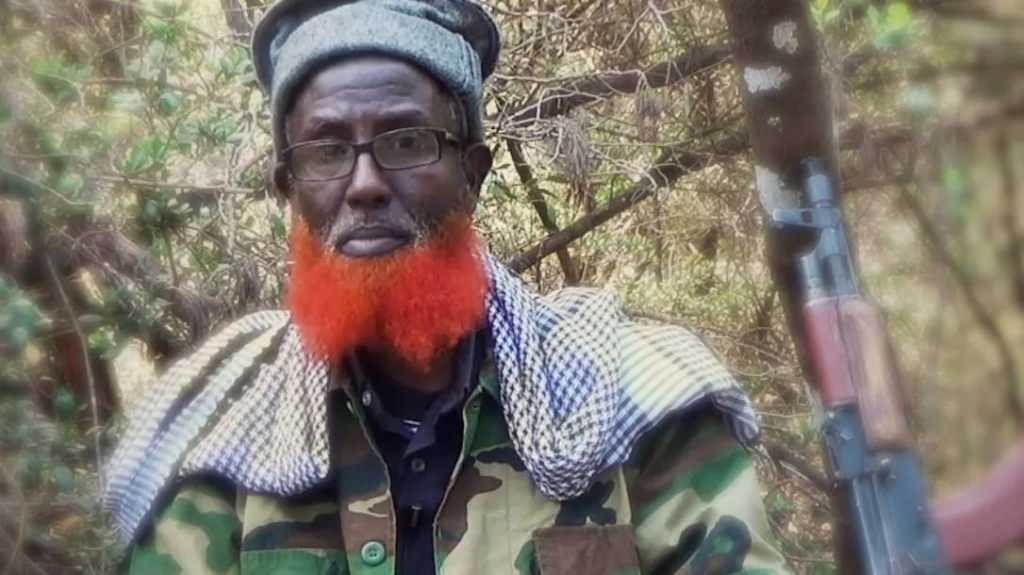
Born in Somalia’s Puntland region in the 1950s, Mumin later migrated to Europe — first to Sweden and then the UK — where he preached in mosques during the early 2000s. Due to his extremist views, he was monitored by British security agencies.
In 2010, under growing security pressure, he returned to Somalia, initially joining al-Shabaab before publicly pledging allegiance to ISIS on 22 October 2015 and founding the Somali affiliate of the group.
Though initially small, ISIS-Somalia rapidly expanded under Mumin’s leadership, recruiting both local and foreign fighters. Estimates indicate the group grew to around 1,200 fighters, becoming one of ISIS’s key financial and logistical hubs.
Experts say the group operates not only in Somalia but also funnels money, weapons, and fighters to ISIS branches across Africa and beyond.
The United States designated Mumin as a “Specially Designated Global Terrorist” in 2016.
On 31 May 2024, a U.S. airstrike near Bosaso targeted Mumin; three ISIS members were killed, but his death was never confirmed.
Despite joint regional and U.S. operations in late November 2025 — including air and ground assaults on ISIS bases in the Baalade Valley and the Cal-Miskaad mountains — Somali and Puntland officials say Mumin remains alive, moving between caves and hideouts.
Reports indicate that although much of the group’s manpower and financial infrastructure has been destroyed, roughly 200 fighters remain loyal to him. They face shortages of food, medicine, and ammunition, but still pose a serious threat.
Experts warn that Mumin’s survival — and the resilience of his inner network despite severe losses — shows that ISIS is attempting a new, decentralized form of reorganization: dark financial channels, dispersed cells, alliances with local armed groups, and exploitation of regional weaknesses. Countering such a threat requires more than military action — it demands intelligence cooperation, cutting off financial lifelines, and rebuilding local governance.
Conclusion
Mumin’s journey — from preaching in London mosques to commanding a transnational terrorist network in Somalia’s mountains — illustrates that ISIS is not dead or dismantled but adapting to new realities and transforming into a diffuse global threat. His continued survival despite repeated strikes is a stark warning: dismantling ISIS requires targeting not only its fighters but also its financial, logistical, and ideological infrastructure.