Afghan Migrant Women in Iran: From Social Exclusion to Grassroots Education Initiatives
DID Press: The 26th session of “Afghan Migrants in Iran: Status Assessment” examined the lived experiences of Afghan migrant women, with a particular focus on the emergence and evolution of self-managed schools as spaces for literacy, identity formation, and social activism. The discussion highlighted how this grassroots educational movement, which began in the 1990s, achieved notable successes but now faces institutional stagnation and structural constraints.
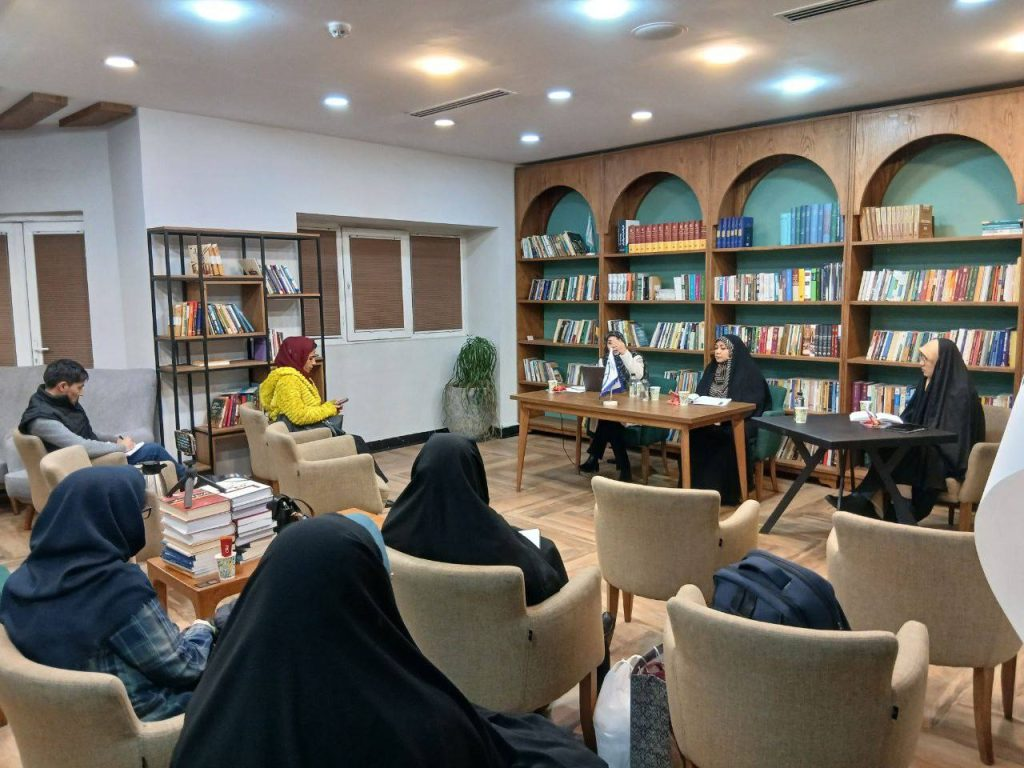
The session was held on Monday, 15 December, at the House of Thinkers in Tehran and was moderated by Narges Esmaeili under the title “The Afghan Migrant Woman: Who Is She? What Has She Experienced?”
Social and educational activist Marzieh Vaezi, a sociology graduate from the University of Tehran, traced the origins of self-managed schools to a period when Afghan children were expelled from public schools and effectively denied access to formal education. She explained that Afghan women—many with only high school diplomas or equivalent qualifications—established informal schools with minimal resources and in the face of frequent resistance from authorities. At the height of this movement, approximately 300 self-managed schools operated in Tehran, some educating between 1,000 and 2,000 students. These institutions played a significant role in cultivating a generation of female teachers, administrators, and social activists, many of whom later gained admission to Iranian universities.
Vaezi identified two key factors behind women’s central role in these initiatives: men’s primary involvement in external labor to support household livelihoods, and comparatively greater tolerance by authorities toward women educators. Despite these achievements, she noted that many educated Afghan women today encounter severe employment restrictions. She emphasized that academic attainment has not translated into professional or social participation, citing barriers that prevent qualified graduates from practicing medicine, teaching, or fully entering the workforce. According to Vaezi, the absence of mechanisms for social integration has limited the long-term impact of educational gains.
Education analyst Fatemeh Behrouz-Fakhr addressed the challenges facing Afghan migrant students beyond formal school enrollment, emphasizing uncertainty and the inability to envision a stable future. She highlighted the psychological strain caused by insecure residency status and the constant risk of educational disruption, which undermines long-term planning and personal development. By recounting the case of a young girl whose father was unable to enroll her in any recognized school, Behrouz-Fakhr illustrated how educational exclusion erodes trust in both family and society, describing this condition as a form of “incomplete citizenship.”
Behrouz-Fakhr further noted that under economic pressure, many migrant families prioritize educational opportunities for boys, who are perceived to have greater prospects for employment. As a result, Afghan girls face layered forms of exclusion, including structural barriers and intra-family discrimination, significantly constraining their educational advancement and social mobility.
The session concluded that while grassroots educational initiatives have played a crucial role in addressing educational deprivation among Afghan migrants, sustainable progress requires institutional reforms, inclusive policies, and mechanisms that link education to social participation and legal recognition.