DID Press: The unprecedented escalation of US pressure on Venezuela, including moves toward what appears to be a near-total maritime blockade, is not merely a regional crisis in Latin America. It reflects a broader strategy by the Trump administration to reshape regional and global power balances—particularly in the Middle East—by turning Venezuela’s oil into a critical geopolitical lever.
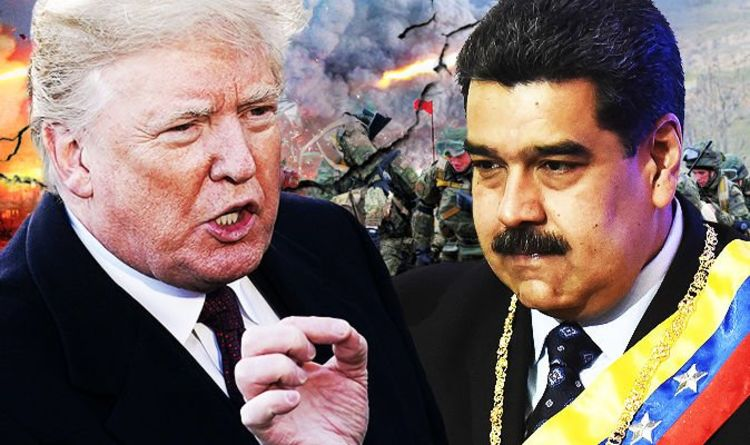
In recent weeks, Washington has sharply intensified political, economic and security pressure on Caracas, reviving speculation about coercive options and signaling a return to hard-power tools. A closer look suggests that US policy toward Venezuela goes well beyond the removal of President Nicolás Maduro and pursues multiple objectives simultaneously.
At the regional level, the first goal is to reassert US dominance in what it considers its traditional “backyard,” clearing the Caribbean and South America of governments and influences hostile to Washington. From this perspective, Venezuela is not an isolated case, and countries such as Cuba could face similar pressure in the future.
Globally, Trump’s approach signals an unambiguous return to regime-change politics. Unlike previous administrations that pursued such goals under the banner of democracy or human rights, the Trump administration has moved directly toward coercive outcomes, sending a clear warning to other states that resist US policies.
Pressure on Venezuela, therefore, is not only about Maduro but also serves as a strategic message to other global actors that Washington is prepared to use hard power to impose its will. Trump’s explicit interest in Venezuela’s vast oil reserves—the largest proven reserves in the world—further underscores the economic dimension of this strategy.
This approach, seen both in Trump’s policies and earlier in Russia’s actions under Vladimir Putin, points to a broader erosion of the post–Cold War order and a return to classical power politics—an evolution that could also encourage other major powers, including China, to adopt similar tactics in disputes such as Taiwan.
Beyond economics, Venezuela’s significance for Washington is closely linked to the Middle East. Control over Venezuelan oil would give the United States a vital geopolitical hedge in the event of a major crisis or conflict in the Persian Gulf, providing an alternative tool to stabilize global energy markets.
One of the key constraints on US military action against Iran has long been concern over energy exports and oil market disruption. Securing access to Venezuelan oil could reduce this strategic limitation and grant Washington greater freedom of maneuver in the Middle East.
Whether Washington’s maximum-pressure campaign against Venezuela succeeds or fails, its consequences are likely to extend well beyond Latin America. The fallout will inevitably affect the Middle East and the Persian Gulf, turning Venezuela from a local crisis into a significant variable in West Asia’s broader geopolitical equation.
International Desk — DID Press Agency