India Pledges Millions to Support Afghanistan’s Health System
DID Press: Acting Minister of Public Health of the Taliban administration announced after a week-long visit to India that New Delhi has committed millions of dollars in financial, pharmaceutical, and medical equipment assistance to support Afghanistan’s health system— the aid alongside a new UN project, can help ease mounting pressure on the country’s healthcare sector.
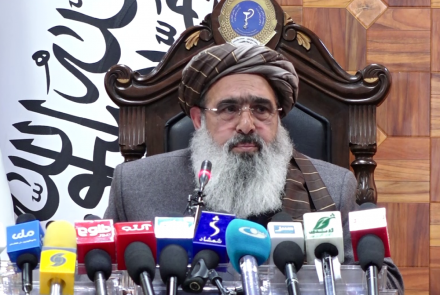
Noor Jalal Jalali, Acting Minister of Public Health, said at a press conference in Kabul following his return from India that New Delhi had pledged wide-ranging support in the fields of medicine and medical equipment. He described India’s cooperation as “valuable and reliable,” adding that the visit paved the way for important agreements to strengthen Afghanistan’s healthcare capacity.
According to Jalali, Indian officials agreed to a package of new assistance that includes vaccines worth $5 million, a radiotherapy machine for cancer patients valued at $3 million, 15 tons of anti-cancer medicines worth $1 million, and a CT scanner worth $1.3 million.
Additional areas of cooperation include the establishment of a thalassemia treatment center with a budget of $500,000, training programs to enhance the skills of medical personnel, the donation of 70,000 medical ampoules by an Afghan investor, the creation of a research center and an institute of traditional medicine in Kabul, and the export of high-quality medicines to help meet Afghanistan’s pharmaceutical market needs.
The acting minister said these measures form part of a four-phase plan aimed at achieving “self-sufficiency in cancer treatment,” stressing that Afghanistan’s pharmaceutical market should not be dependent on a single country.
He also warned that drug hoarding will be met with legal action, noting that authorities have so far identified 20 types of stockpiled medicines.
Meanwhile, the United Nations High Commissioner for Refugees (UNHCR) announced the launch of a major health project to address the urgent needs of returnees and displaced families in Afghanistan.
According to UNHCR, around 2.5 million migrants have returned to the country from neighboring states since the beginning of 2025, many of whom are living in difficult conditions with limited access to healthcare services.
The two-year project, supported by a $3 million U.S. grant to the Afghanistan Humanitarian Trust Fund and managed by the Islamic Development Bank, will include the construction of three comprehensive health centers in vulnerable areas, aimed at improving access to basic healthcare for returnees and host communities.
The combination of India’s new assistance and the launch of the UN-backed project could help reduce the heavy burden on Afghanistan’s healthcare system, which continues to face shortages of resources, rising patient numbers, and deep structural challenges. However, experts stress that sustaining these gains will require long-term investment and fundamental reforms in the country’s health sector.