DID Press: Mohamed Ali Ahmed Al-Haddad, Chief of Staff of the Libyan Army, died on Tuesday, (December 23, 2025), following the crash of a jet shortly after departing Ankara, Turkey. The news was confirmed by Abdulhamid Dbeibeh, Prime Minister of Libya’s internationally recognized Government of National Unity. Four other individuals were on board the aircraft.
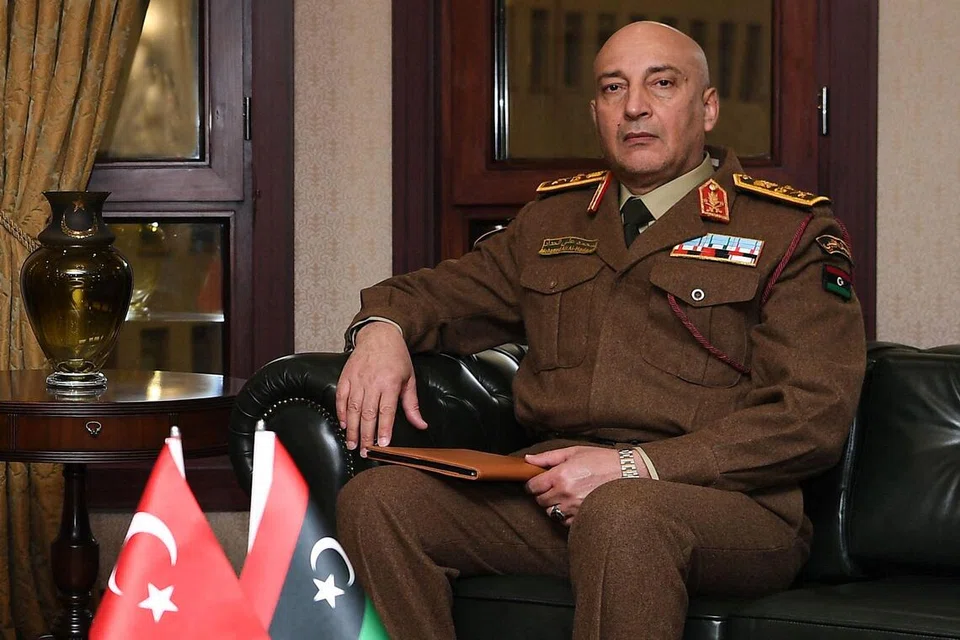
Dbeibeh described the incident as “tragic and painful,” noting that it occurred while the delegation was returning from an official visit to Ankara. He added that the crash is a significant loss for the Libyan nation, its military institutions, and the people. Among the passengers were the commander of Libya’s ground forces, the head of the military industries organization, a senior staff advisor, and a photographer from the Chief of Staff’s office.
According to Turkey’s Interior Minister Ali Yerlikaya, the Dassault Falcon 50 jet took off from Ankara’s Esenboğa Airport at 17:10 GMT en route to Tripoli. Contact with the aircraft was lost at 17:52 GMT. The wreckage was later found near the village of Kesikçavak in the Haymana district of Ankara province. The pilot had requested an emergency landing in the Haymana airspace before the crash, but no further communication was received.
Turkish authorities said the cause of the crash is still under investigation. The Ministry of Defense had previously confirmed Al-Haddad’s official visit, during which he met with Turkish Defense Minister Yaşar Güler and his counterparts, including Selçuk Bayraktaroglu, along with other senior Turkish military officials.
The crash occurred just one day after the Turkish Parliament approved a two-year extension of Turkey’s military mission in Libya. Turkey, a NATO member, has provided political and military support to the internationally recognized government in Tripoli, sending troops in 2020 for training and assistance, and signing maritime boundary and energy exploration agreements with Tripoli despite opposition from Egypt and Greece.
Recently, Turkey has adjusted its approach under the “One Libya” policy, increasing engagement with Libya’s eastern faction alongside ongoing support for Tripoli.