Why Khalilzad Still Visiting Afghanistan
DID Press: Former US special envoy for Afghanistan peace process, Zalmay Khalilzad, visited Kabul on December 28, 2025, meeting with Taliban Foreign Minister Amir Khan Muttaqi. His continued presence in Afghanistan has once again raised questions among the public: why does a diplomat without an official government position still play a role in one of the region’s most sensitive foreign policy matters?
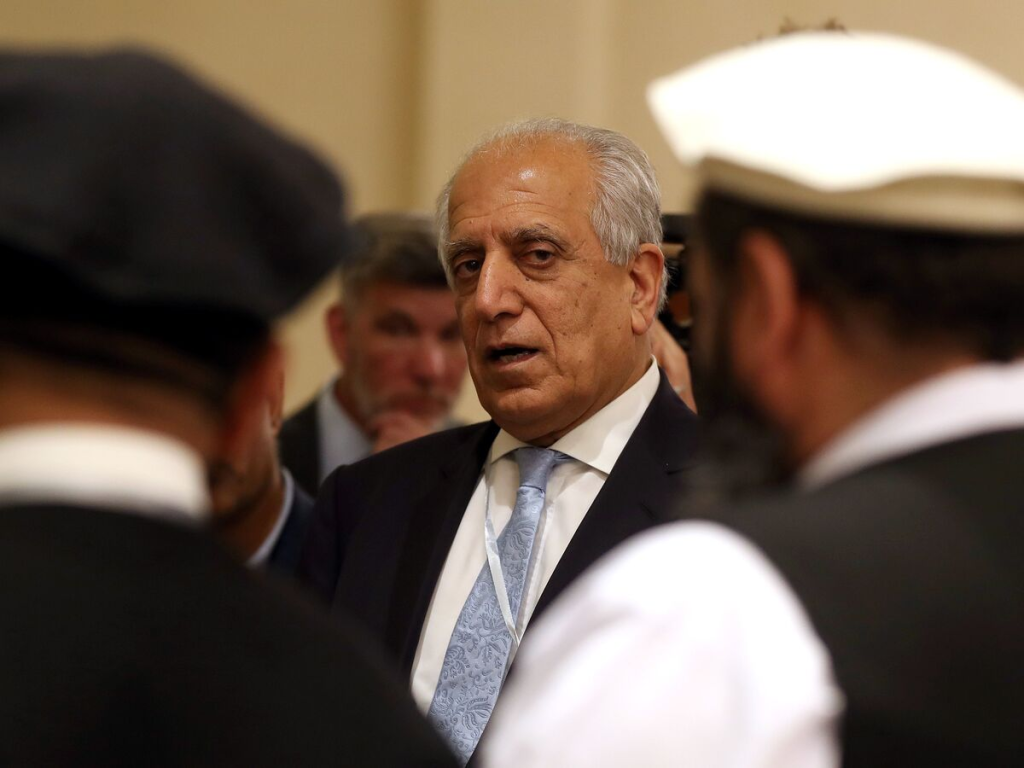
The answer lies not in formal titles but in the complex reality of U.S.-Taliban relations. Khalilzad remains a controversial figure in Afghanistan. He was the architect of the Doha Agreement and the U.S. troop withdrawal, a deal that ended a long war but effectively paved the way for the Taliban’s return to power. Although his official role was expected to end after 2021, his ongoing visits highlight that his true value lies in his extensive networks, negotiation experience, and deep understanding of both the Taliban and Washington’s decision-making apparatus.
The recent visit took place amid a complete freeze in formal U.S.-Taliban relations. The U.S. does not recognize the Taliban government, has no active embassy in Afghanistan, and maintains sanctions. Nevertheless, on-the-ground realities — from security threats to humanitarian and economic crises — make minimal engagement unavoidable. In this context, official diplomacy gives way to “shadow diplomacy”: informal talks that carry no legal commitment but allow for message delivery and crisis management.
Khalilzad plays precisely this role. He is neither an official U.S. representative nor a spokesperson for its policies, yet he can convey messages, assessments, and warnings. Through such channels, Washington can discuss regional security, extremist threats, the status of American citizens, humanitarian aid, and even economic matters without paying the political cost of formally recognizing the Taliban. The Taliban, in turn, use these visits to signal that they are not isolated and remain relevant in regional and international affairs.
However, this informal interaction is not without consequences. Critics warn that repeated meetings with figures like Khalilzad, even unofficially, grant the Taliban a form of practical legitimacy—without requiring meaningful changes in policies, particularly regarding women’s rights, education, and political participation. In this sense, Khalilzad’s visits may reinforce the status quo more than promote reform.
For the U.S., cutting off all contact with the Taliban risks further instability, increased security threats, and worsening humanitarian crises. Using intermediaries like Khalilzad provides a means to maintain minimal influence and indirect oversight, even if this approach is ethically and politically contentious.
Ultimately, the reason Khalilzad continues to visit Afghanistan can be summarized simply: neither the U.S. can fully ignore Afghanistan, nor can the Taliban navigate their international isolation without some form of engagement. Khalilzad has become a symbol of this intermediate state — a situation that is neither full peace nor complete isolation, but rather a continuation of minimal, cautious engagement amid uncertainty and mutual distrust.
By Ehsanullah Ghori – DID Press Agency