Mar-a-Lago: Stage for Tactical Netanyahu–Trump Alliance amid Dual Crises
DID Press: Israeli PM Benjamin Netanyahu’s visit to the United States and his meeting with US President Donald Trump at Mar-a-Lago came at a time when both leaders are facing mounting domestic political pressure and significant foreign policy challenges. While Gaza, Iran and Lebanon were officially cited as the main topics of discussion, reports suggest the meeting carried broader political messages that warrant closer scrutiny.
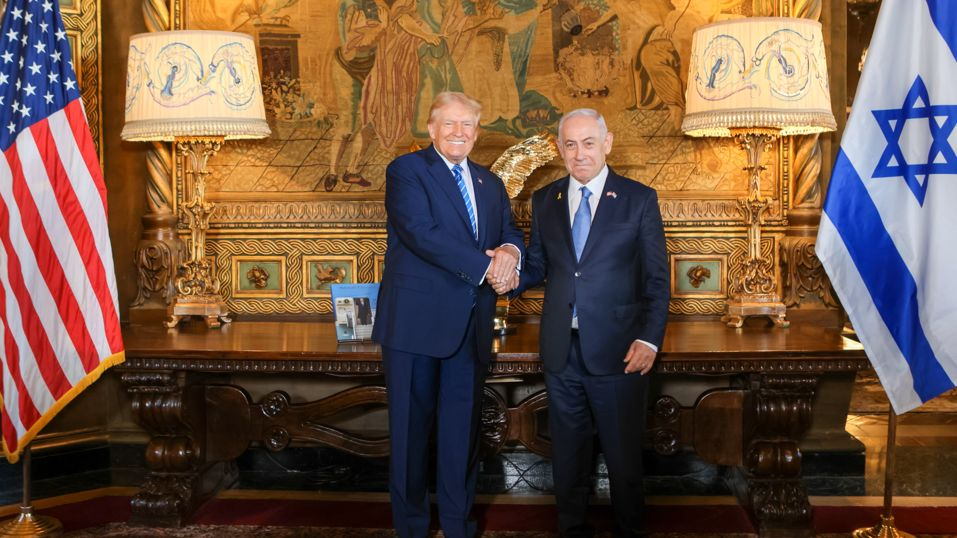
Display of unity masks underlying rifts
Netanyahu and Trump sought to project an image of close alignment. Trump said there were “very few differences” between the two sides on Gaza’s future. However, U.S. proposals for a “Palestinian technocratic government” and the deployment of an international force to stabilize Gaza reportedly face resistance from Netanyahu, who has consistently rejected any arrangement that would reduce Israel’s control over the enclave. This fundamental disagreement appeared to be concealed behind diplomatic gestures and public smiles.
Renewed threats against Iran: strategy or political theater?
Standing alongside Netanyahu, Trump again threatened Iran, saying that if Tehran rebuilt its nuclear facilities, the United States would “have to destroy them again.” The remarks followed U.S. strikes earlier this year on three Iranian nuclear sites. Analysts question whether such statements reflect a coherent strategy or are primarily political messaging aimed at domestic and regional audiences.
Given Trump’s well-known reliance on high-profile rhetoric — often described by critics as loud but lacking substance — many observers view the threats less as part of a structured policy and more as instruments of pressure and political signaling.
Awarding the ‘Israel Prize’: domestic politics wrapped in diplomacy
In a highly unusual move, Netanyahu announced that Trump will receive the “Israel Prize,” an honor that has never before been awarded to a non-Israeli. Analysts see the gesture less as a cultural recognition and more as a calculated political move, aimed at showcasing Trump’s backing as a shield against Netanyahu’s domestic critics.
Domestic politics overshadow diplomacy
Both leaders are under intense internal pressure: Trump is approaching a critical election period, while Netanyahu faces sustained protests and political challenges at home. As a result, analysts say the meeting focused more on shaping public perception and reinforcing political bases than on substantive policy coordination.
Gaza remains at an impasse
Trump reiterated his demand for the “complete disarmament of Hamas,” arguing that without it, a second phase of the Gaza agreement would be impossible. However, critics note that the demand was not accompanied by a practical mechanism for implementation. Netanyahu, meanwhile, continues to insist on maintaining Israeli security control over Gaza, a stance that effectively delays reconstruction efforts and prospects for long-term stability.
Conclusion
Rather than a strategic effort to resolve Middle East crises, Netanyahu–Trump meeting appeared largely as a bilateral political performance. Repeated threats against Iran, symbolic gestures such as the Israel Prize, and hardline positions on Gaza with little practical grounding suggest the encounter primarily served the domestic political needs of both leaders. Multiple sources indicate the meeting produced no tangible outcomes beyond a symbolic — and largely performative — reaffirmation of an alliance between two leaders navigating deep political challenges at home.