US Strike on Venezuela Sparks Global Outcry, Questions Over Oil
DID Press: Large-scale U.S. attack on Venezuela in the early hours of January 3, 2026, marked one of the first major military operations of the new year, signaling what could become an escalation of global and regional crises throughout 2026. Multiple explosions in Caracas, military aircraft over the capital, and Donald Trump’s claim that President Nicolás Maduro had been “detained and taken out of the country” triggered worldwide reaction.
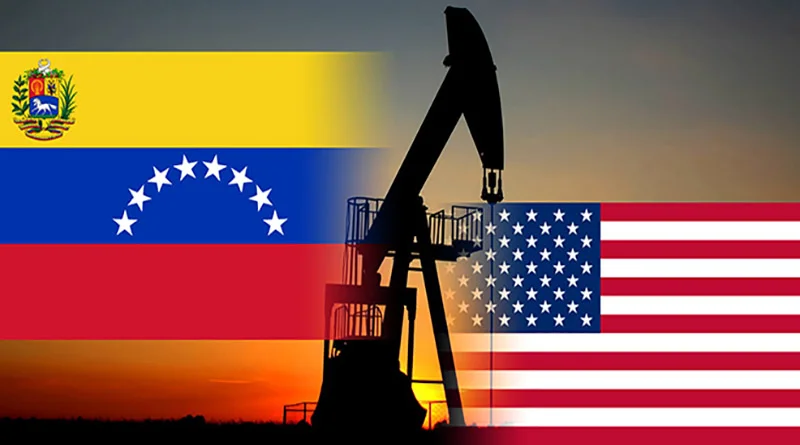
According to outlets including CBS News, the operation was carried out by U.S. special forces, raising serious questions about Washington’s real objectives, the legitimacy of the action, and its broader regional consequences.
1. Washington’s objectives: power projection and political engineering
a) Demonstrating strength amid domestic pressures
Facing mounting political and security challenges at home, Trump may have sought to rebuild his image through the use of force abroad — particularly against a state long labeled an “enemy” in U.S. political discourse, an approach with precedent in American foreign policy.
b) Removing an unwanted government
Trump’s assertion that Maduro had been “detained and removed” indicates that the operation aimed directly at regime change — an action lacking international legitimacy and clearly violating the principle of non-interference.
c) Energy control and geopolitical leverage
Home to some of the world’s largest oil reserves, Venezuela has drawn closer in recent years to China, Russia, and Iran — developments that worried Washington. The attack can be seen as an attempt to reassert U.S. influence in its traditional strategic backyard.
2. Immediate consequences: instability and global reaction
a) Security shock in Caracas
Media including DW and Sky News reported at least seven explosions across the capital, with fires breaking out at several military locations, pushing the country into a state of emergency.
b) Strong response from Caracas
The Venezuelan government denounced the strikes as “military aggression” and a violation of national sovereignty, alleging that both civilian and military sites in several states were hit.
c) International condemnation
Iran, several Latin American countries, and a number of international organizations condemned the attack. According to Al Jazeera, many governments labeled the move “dangerous” and “destabilizing.”
3. Strategic implications: crisis escalation and a new disorder
a) Regional destabilization
The attack risks triggering a new wave of instability across Latin America, where global power competition has intensified in recent years.
b) Erosion of international order
Acting unilaterally without UN Security Council authorization again exposed weaknesses in the international system, echoing comparisons to the 2003 Iraq invasion and further undermining trust in international law.
c) Economic and humanitarian fallout
Communication disruptions, civilian displacement, and potential new sanctions could push Venezuela’s already fragile economy toward deeper collapse.
4. Conclusion
Based on reporting from credible media, the U.S. strike appears less a security necessity than a politically charged operation with clear energy-driven undertones. With the world’s largest proven oil reserves, Venezuela has long been at the center of geopolitical rivalry — and this operation cannot be separated from that context.
By personally announcing Maduro’s “detention,” Trump sought to control the narrative — one marked by ambiguity, lack of transparency, and apparent violations of international law. The attack not only intensifies Venezuela’s internal crisis but also threatens regional energy dynamics and an already fragile global order, with repercussions likely to extend far beyond Latin America.