Balochistan Under Attack: What’s Next for Pakistan’s Strategic Province?
DID Press: A new wave of coordinated attacks by Baloch separatists on 12 cities in Balochistan, including Quetta, Nushki, Mastung, Tump, Dalbandin, and Gwadar, has once again drawn the attention of regional and security analysts to this strategically important province. The operation, dubbed “Black Storm 2.0”, involved multiple bombings, heavy shootings, suicide attacks, and direct clashes between security forces and insurgents. The consequences of these attacks are not only security-related but have profound political and economic implications for Pakistan and the region.
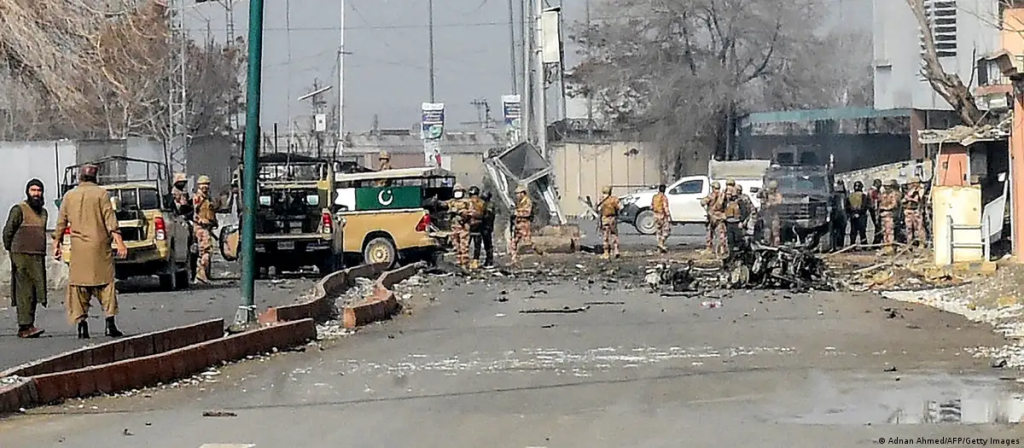
Despite its abundant natural resources and strategic location by the Arabian Sea and its border with Iran and Afghanistan, Balochistan has long struggled with security and economic issues. The region’s history of separatism and the presence of armed Baloch groups highlights deep-seated dissatisfaction rooted in economic deprivation, weak central government presence, and historical discriminatory policies. The recent attacks, occurring simultaneously in 12 key cities, demonstrate the operational capacity of the Baloch separatists and their ability to coordinate between various groups, challenging the central government’s ability to manage security crises.
One immediate consequence of these attacks is the disruption of vital infrastructure in the province. The suspension of railway services and the occupation or destruction of security posts and centers have disrupted local economies, transportation, and the movement of goods and people, exposing weaknesses in security and protection systems against coordinated attacks. This situation could fuel growing economic and social discontent and escalate future uprisings, as local communities are often on the frontlines of the instability.
The political ramifications of these attacks are also significant. Balochistan holds strategic importance for Pakistan, especially with the Gwadar Port, a critical hub for China’s Belt and Road Initiative (BRI), and an essential link in global trade. Coordinated attacks in these regions could disrupt foreign investment projects and regional cooperation, weakening Pakistan’s image as a country with stable security. Additionally, the relatively slow response and silence from Pakistan’s official authorities so far could exacerbate domestic political and social discontent, calling into question the legitimacy of the central government.
From a security perspective, these attacks show that insurgent groups have developed advanced tactics and regional coordination, exploiting weaknesses in protection systems. If the Pakistani government fails to respond swiftly and effectively to these attacks, there’s a risk of unrest spreading to other areas, causing higher civilian and security casualties. This situation could pave the way for external interventions or the influence of cross-border groups, ultimately threatening the stability of Balochistan and all of Pakistan.
Looking ahead, Balochistan’s future hinges on three key factors: First, improving the operational capacity and responsiveness of security forces through the use of modern technologies and precise intelligence management; second, addressing the economic and social issues of the region’s people and alleviating historical grievances; third, strengthening the political process and engaging in dialogue with local groups to find peaceful solutions and reduce the appeal of rebellion and violence.
Ultimately, the simultaneous attacks on 12 cities in Balochistan are not just a security crisis; they serve as a test for the central government of Pakistan and regional policymakers. The future of Balochistan and the legitimacy of the Pakistani government largely depend on their ability to manage the crisis, reduce economic and social discontent, and establish long-term stability in this sensitive region. Failure to do so could lead to further instability, increased insurgent activity, and diminished foreign investment, turning Balochistan into a highly sensitive and volatile region in South Asia.
By sulaiman Saber — DID Press Agency