Returnees Struggling in Bamiyan: New Homes but Lack of Basic Services
DID Press: Despite receiving new shelters in Bamyan province, returning refugees are still suffering from lack of basic services and limited access to water, schools, and jobs.
Nematullah, sitting in a simple home beneath the snow-covered hills of Bamyan, expressed happiness about finally finding a place for a “peaceful life” after months of uncertainty.
He is one of millions of returnees from Iran and Pakistan, but despite receiving a new home in his own country, many of his fellow countrymen still lack even the most basic services.
After receiving a house built with funding from the UNHCR and land provided by the Taliban, he told AFP: “We no longer have the stress of paying rent at the end of the month.”
Nematullah, originally from the poor, mountainous districts of Bamyan, worked in construction in Iran for five years, while his wife, Marzia, was a tailor.
According to the International Organization for Migration (IOM), over five million have returned to Afghanistan since September 2023.
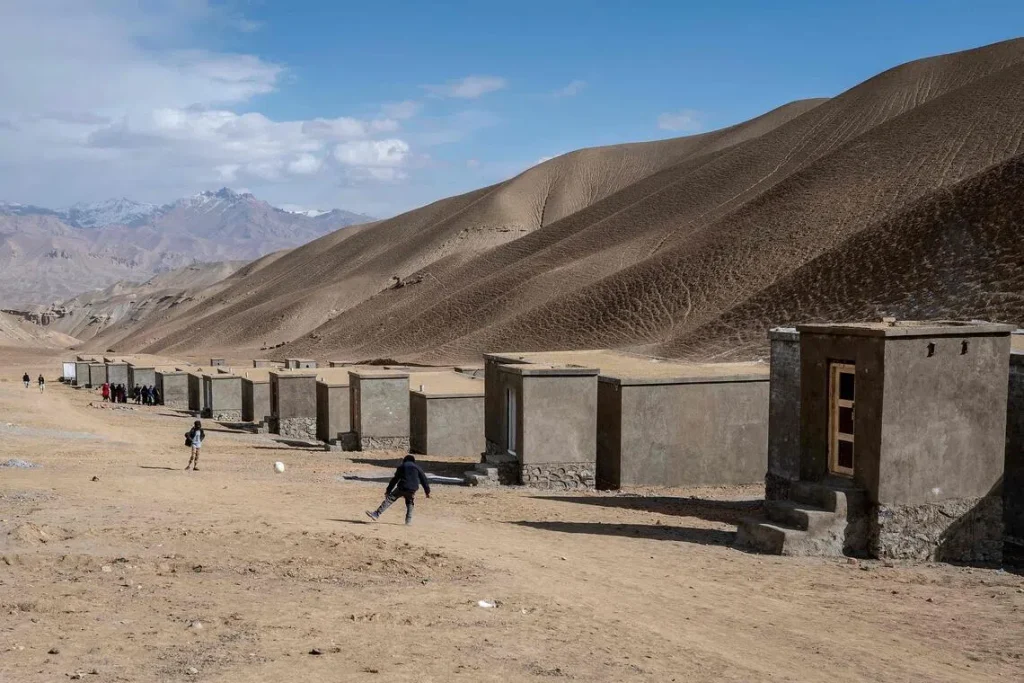
Nematullah’s family is one of 30 families that have received 540 square feet homes in Bamyan. Each family contributed to the construction of their home and received wages from UNHCR.
Despite the houses lacking plumbing and being far from stores, schools, and hospitals, Arifa Ebrahimi, one of the new residents, said: “I am happy because this house is mine, even if it lacks all the basic facilities.”
Arifa, a single mother of four, who fears homelessness after leaving her husband, showed reporters the two newly built rooms and an empty corridor that was supposed to be a kitchen. The new houses only have simple outside toilets, and there is no room for even a small shower.
Ajay Singh, UNHCR project manager, said that the design of the houses came from local authorities, and families can build their own bathrooms.
Currently, there is no piped water or well in the area, and the 10 liters of drinking water supplied every three days by tanker costs more than in Kabul.
Fazel Omar Rahmani, head of the department for migrants and returnees in Bamyan, said plans are in place to expand the water network, but for now, these families must provide their own water.
Rahmani also mentioned plans to build schools and clinics, adding: “A direct order has been issued from Hibatullah Akhundzada,” but without specifying a timeline for these projects.
Meanwhile, Nematullah must walk two hours along a rough, unpaved road between the dry mountains to catch a vehicle to the labor market. According to a survey by IOM, only 11% of adults have found full-time jobs after returning to Afghanistan. Arifa also has to walk four kilometers to the nearest school once the winter holidays end.