Islamic Revolution Reshaped Lifestyles, Raised Self-Reliant Generations
DID Press: Islamic Revolution fundamentally redefined lifestyles and delivered the first decisive blow to what many describe as a long-standing “historical passivity.” From the perspective of neighboring societies, its greatest achievement was the upbringing of generations who shaped their way of life not according to imposed Eastern or Western models, but on the basis of spiritual self-confidence. The revolution taught Muslims across the region that there is no inherent contradiction between religious faith and modernity, and that it is possible to preserve religious roots while reaching the highest levels of knowledge and modern governance.
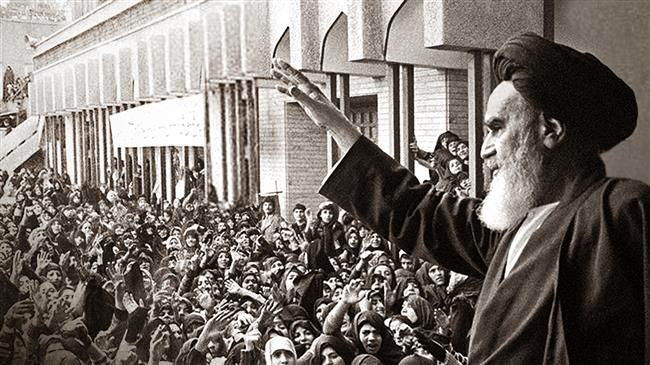
As an Afghan journalist observing Iran from a conflict-scarred and long-suffering neighboring country, the 1979 Islamic Revolution appears not merely as a domestic political event, but as the starting point of a profound transformation in the region’s “human quality.” For societies like Afghanistan, which have endured decades of identity crises and foreign intervention, the concept of “human-building” within the Islamic Revolution carries meaning beyond slogans—it signifies the birth of individuals who learned how to stand on their own amid devastation.
By redefining lifestyle patterns, the Islamic Revolution challenged entrenched passivity and replaced dependency with agency. In the eyes of neighboring observers, its most enduring legacy lies in nurturing a generation that rejected externally imposed templates and instead embraced a model rooted in moral self-belief. This shift demonstrated that faith and progress are not mutually exclusive, but can coexist in a framework that values both spirituality and scientific advancement.
The revolution also redirected lifestyles away from luxury-driven dependency toward a form of active simplicity. From an Afghan viewpoint, witnessing Iranian youth emerge from hardship to become leaders in science and technology illustrates how the revolution’s human-development ethos replaced despair with determination.
At the heart of this transformation was the principle of “We can.” This spirit did not remain confined within Iran’s borders. The emergence of self-reliant generations in Iran conveyed a powerful message to Afghan youth and others in the region: independence is costly, but achievable.
Observing Iranian scientists working in advanced laboratories or managing crises without reliance on international assistance reflects the practical outcome of this educational and moral framework. This generation proposed a new definition of welfare—one in which service to society is an integral part of daily life rather than a marginal activity.
From a neighboring journalist’s perspective, the “human product” of the Islamic Revolution is someone who views the suffering of others as their own. The shift toward transnational responsibility stands out as one of the revolution’s most notable achievements. The involvement of individuals shaped by this ethos in migration support, solidarity with refugees, and resistance to extremism underscores an identity defined through connection to the broader Islamic community.
Today, despite economic and media pressures, new generations in Iran continue to carry the legacy of self-confidence. They have demonstrated that the lifestyle inspired by the Islamic Revolution remains dynamic—capable of preserving its identity amid modern cultural challenges and even serving as a reference point for young people in cities such as Kabul, Baghdad, and Beirut.
By transforming the “dependent individual” into a “self-reliant individual,” the Islamic Revolution altered the trajectory of the region’s history. For Afghanistan, this experience offers a critical lesson: meaningful change does not originate from foreign powers, but from the intellectual and moral transformation of people who believe in their own dignity.
The revolution’s lasting legacy lies not only in institutions, but in the hearts and resolve of generations who have learned to balance idealism with realism—and to persist without surrender.
By Waezi — DID Press Agency