Islamic Revolution of Iran: Beacon Fueled by Culture of Ahl al-Bayt (AS)
DID Press: The role of Ashura culture in shaping the discourse of the Islamic Revolution is both central and undeniable. Concepts such as “هیهات منا الذله” (I would never submit to humiliation), “Reform of the Ummah,” and the preference for dying with dignity over living in humiliation became societal assets through mosques, gatherings, and the traditional clerical network in decades leading up to the revolution. These concepts formed a shared language between the leadership of the revolution and the masses, enabling widespread mobilization.
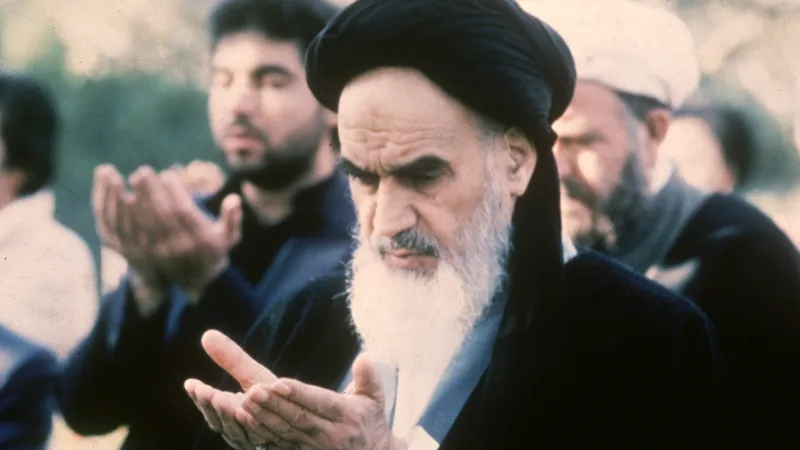
The Iranian Islamic Revolution cannot be merely viewed as a political power shift or a reaction to the failure of a ruling system. More than anything, this revolution emerged from a “cultural-ideological system” that finds its roots in the culture of Ahl al-Bayt (AS); a culture that has, throughout the history of Shia Islam, carried messages of justice, resistance, and human dignity. From this perspective, the Islamic Revolution can be seen as a light that emerged from this culture and paved a new path for the Iranian society and parts of the Islamic world.
The culture of Ahl al-Bayt, unlike isolated or ritualistic interpretations of religion, has always had a social and responsible approach to faith. In this culture, religiosity is not about withdrawing from society, but about actively standing against oppression and injustice. The teachings of Imam Ali (AS) regarding justice, sensitivity towards the plight of the underprivileged, the responsibility of rulers, and the uprising of Imam Hussein (AS) against a corrupt system form the core of this culture. The Islamic Revolution finds its meaning in this context—a revolution that brought religion from the periphery to the center of social and political life.
The role of Ashura culture in forming the Islamic Revolution’s discourse is both pivotal and undeniable. Concepts such as “«هیهات منا الذله»,” “Reform of the Ummah,” and prioritizing death with dignity over a life of humiliation were instrumental in shaping the movement. These concepts, transmitted through traditional religious networks, created a shared language between the revolution’s leaders and the people, facilitating large-scale mobilization.
One distinguishing feature of the Islamic Revolution compared to many contemporary political movements is the close connection between ethics and politics, a link that stems from the culture of Ahl al-Bayt. In this framework, power is not the ultimate goal but a tool to achieve justice and preserve human dignity. This view was instrumental in garnering public trust in religious leadership and elevating Shia clerical authority from a purely jurisprudential role to a historically influential one. This societal trust would not have been conceivable without the cultural backing of Shia Islam and the symbolic capital of Ahl al-Bayt.
Describing the Islamic Revolution as a “light” is significant as this revolution did not present itself as a ready-made model for all societies, but as an inspiring example. A light shows the way, but each society must chart its path based on its own circumstances. From this viewpoint, the impact of the Islamic Revolution on Shia and even non-Shia societies in the region has been more of an inspiration than a mere imitation; an inspiration drawn from the possibility of combining religion, people, and politics in the face of oppression and tyranny.
On a transnational level, the Islamic Revolution led to the revival of Shia identity and redefined its role in regional equations. A culture that had previously been defined largely on the fringes of power became a dynamic and influential force. This transformation, whether in the form of the resistance discourse or the rising political consciousness in Shia societies, demonstrated that the culture of Ahl al-Bayt has the potential to become a civilizational force.
In conclusion, it can be said that the Islamic Revolution is not an event detached from the history of Shia Islam but a contemporary link in a long chain that began with the teachings of Ahl al-Bayt. The light kindled in 1979 was nourished by the cultural oil that had been stored in the collective memory of the Shia for centuries; a light whose role, whether welcomed or opposed, cannot be ignored in understanding the religious and political transformations in the region.
By Ehsanollah Samim — DID Press Agency