DID Press: UEFA and Real Madrid have emerged in a rare alignment following the collapse of the European Super League project, forming what observers describe as a common front against the financial dominance of the English Premier League.
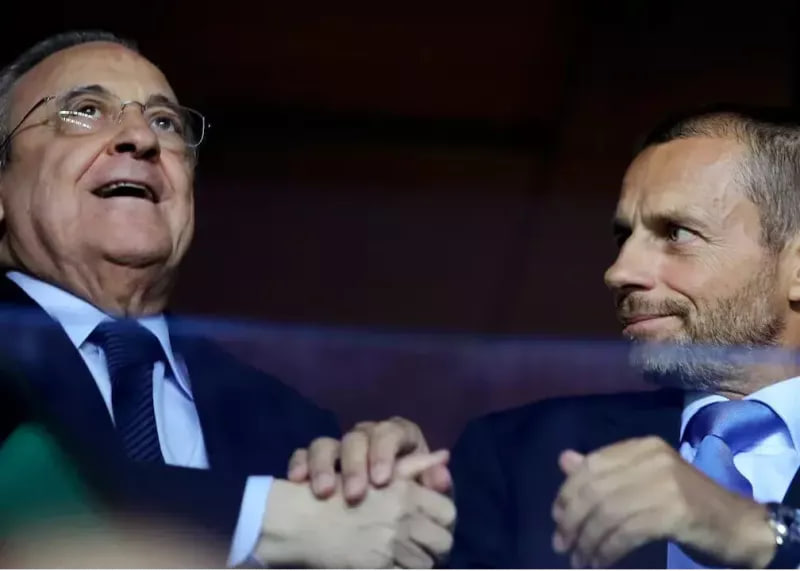
Both view the Premier League’s spending power and comparatively flexible regulatory framework as factors that have disrupted competitive balance in European football.
In recent years, UEFA has introduced a revised Financial Fair Play (FFP) system imposing stricter cost-control measures on clubs. Under the new framework, teams were granted a three-year transition period to align their spending with revenue-based caps: 90% of revenue in 2023, 80% in 2024, and 70% by 2025.
Some clubs, including Aston Villa, have reportedly faced challenges in meeting these thresholds and have been compelled to implement additional financial restrictions.
Meanwhile, Manchester City’s ongoing case in England continues to draw attention. The club was charged three years ago with 115 alleged breaches of Premier League financial regulations. Although a final verdict has yet to be issued, the case remains one of the most significant financial investigations in English football. Pending a ruling, the club has continued player acquisitions and maintained competitive success.
UEFA previously fined Manchester City for breaching its financial regulations, though an earlier European ban was overturned. In response, European football’s governing body has since strengthened its regulatory mechanisms to prevent similar cases.
UEFA officials argue that meaningful cost control can only be achieved through clearly defined limits on wages, transfer spending and agent fees. A dedicated working group established in 2023 is tasked with overseeing the implementation and enforcement of the new financial sustainability rules.