DID Press: Last night’s suicide attack on a border forces base in Mamond, Bajaur, which left at least 13 people dead—including nine security personnel and three civilians, among them a six-year-old child—once again demonstrated that the security crisis in Khyber Pakhtunkhwa has entered a protracted and increasingly complex phase. Tehrik-i-Taliban Pakistan (TTP) claimed responsibility for the attack – a group that has rebuilt its structure and significantly expanded the scope of its operations over the past two years.
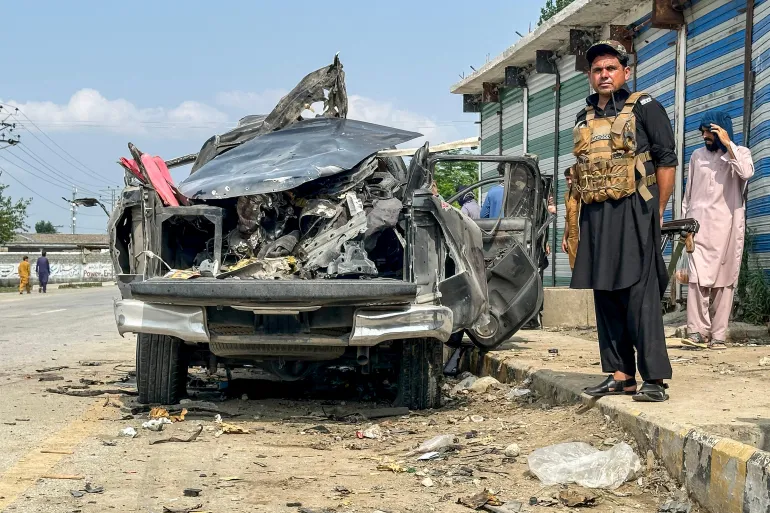
Bajaur, as one of the sensitive border regions, has long been a crossroads of security, ethnic, and ideological rivalries. Targeting a compound that previously functioned as a religious seminary and later as a militant hideout—before being taken over by government forces—also carries symbolic weight. The TTP appears intent on demonstrating that even locations wrested from its control remain within its operational reach. The complete destruction of the base and the need to extract personnel from beneath the rubble underscore both the destructive power of the attack and relative shortcomings in preventive intelligence.
This attack cannot be analyzed in isolation from Pakistan’s broader political and security context. In recent months, the central government has faced a series of challenges, including a deep economic crisis, internal political tensions, and a rise in militant attacks in border areas. Under such circumstances, sustaining the focus and cohesion required for a durable counterinsurgency strategy becomes increasingly difficult. Each major attack not only inflicts human casualties but also erodes public confidence in the state’s ability to provide security.
Strategically, TTP appears to be pursuing a form of low-cost attritional warfare: targeted attacks against checkpoints, security convoys, and state infrastructure that, while requiring relatively limited operational resources, impose significant psychological and political costs on the government. The reported firing of “Al-Farooq” rockets during the attack—although without causing additional casualties—suggests an effort to project multi-layered capabilities and generate broader fear. This combination of a suicide operation and rocket fire may indicate either a tactical shift or, at the very least, a diversification of the group’s operational tools.
At the regional level, the equation has grown more complicated. Developments in Afghanistan following the Taliban’s return to power have reshaped the security environment along the shared border.
Although officials in Kabul and Islamabad maintain differing positions regarding the presence and activities of the TTP, the ground reality indicates that the long and rugged frontier remains a serious challenge to containing militant movements. This situation renders bilateral security cooperation an unavoidable necessity, even as political mistrust hinders the establishment of an effective and sustainable mechanism.
The human dimension of the attack cannot be overlooked. Killing civilians once again highlights how asymmetric conflicts disproportionately affect ordinary citizens. Such incidents risk deepening the divide between local communities and the state—particularly if residents of border areas feel that their security has become a battleground between the government and armed groups. Managing public opinion, compensating losses, and supporting victims’ families are integral components of an effective security response.
Ultimately, Bajaur attack serves as a stark warning to Pakistan’s security establishment. Reliance solely on military operations, absent a comprehensive political, economic, and social strategy, is unlikely to halt the cycle of violence. Strengthening preventive intelligence, improving coordination among security institutions, promoting economic development in marginalized regions, and creating effective channels for local community participation are complementary elements of a sustainable strategy.
If current trends continue, Khyber Pakhtunkhwa risks once again becoming a center of chronic instability—a development that would affect not only Pakistan’s internal security but also the broader regional security landscape. Last night’s attack is less a temporary incident than a sign of a new phase in the confrontation between the Pakistani state and the TTP—one whose trajectory will depend largely on the quality of strategic decisions made in Islamabad in the months ahead.
By Ehsanullah Samim – DID Press Agency