Kazakhstan Highlights Afghanistan’s Strategic Role as Transit Route to Indian Ports
DID Press: Kazakhstan’s special envoy for Afghanistan underscored the strategic and substantive importance of Central Asian meetings focused on coordinating regional positions toward Afghanistan, stressing the need for a unified approach.
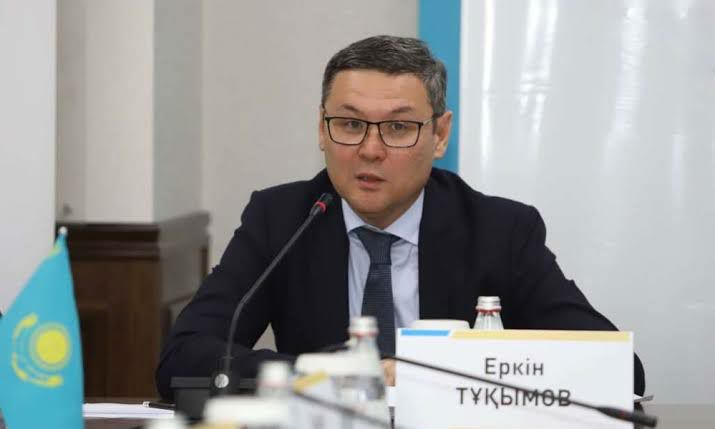
Yerkin Tokumov said these gatherings aim to help Central Asian countries form a cohesive stance, covering a broad agenda from trade and economic ties to transit issues. “Above all, we must coordinate our approach toward Afghanistan,” he said.
Tokumov noted that Kazakhstan, like the international community, does not formally recognize the Taliban government that assumed power in 2021. Nevertheless, Astana continues engagement with Afghanistan in trade, economic, and humanitarian domains.
Emphasizing the importance of humanitarian assistance, he added that Kazakhstan has consistently provided aid—including wheat, tents, and emergency food supplies—to Afghanistan.
Economically, Tokumov described Afghanistan, with a population of roughly 45 million, as a growing potential market and highlighted its role as a transit corridor for landlocked Kazakhstan to access the Indian Ocean and Indian ports.
He pointed out that the lack of an efficient rail network in Afghanistan remains a major challenge for regional connectivity, noting that only a short line between Termez and Mazar-i-Sharif is currently operational. “Without railways, real connectivity cannot be achieved,” he said.
Tokumov further emphasized regional market potential, noting that India and Pakistan together account for nearly two billion people, with Afghanistan adding another 45 million—all within a one- to two-hour flight from Central Asia.
He remarked on a shift in Kazakhstan’s perspective toward Afghanistan: while previously viewed mainly through the lens of threats, the country is now seen as presenting opportunities alongside risks, which must be carefully weighed.
The envoy dismissed notions of competition among Central Asian states over Afghanistan as “artificial,” stressing that the focus is on collaborative discussions regarding engagement with the country.