Europe’s Ramadan Economy: Profit vs. Prejudice
DID Press: As Ramadan begins, public spaces across Europe increasingly take on the atmosphere of the holy month. Muslim and non-Muslim residents alike are targeted with waves of advertising—from discounted food and decorations to charity campaigns, prayer-time apps, devotional content, and Qur’an recitations. This trend shows that “Ramadan economy” is no longer confined to small migrant shops but has become embedded in European capitalism. Neighborhoods such as Barbès in Paris, Neukölln in Berlin, and Whitechapel in London experience a seasonal boom that rivals the economic scale of Christmas—and in some cases surpasses markets in Muslim-majority countries.
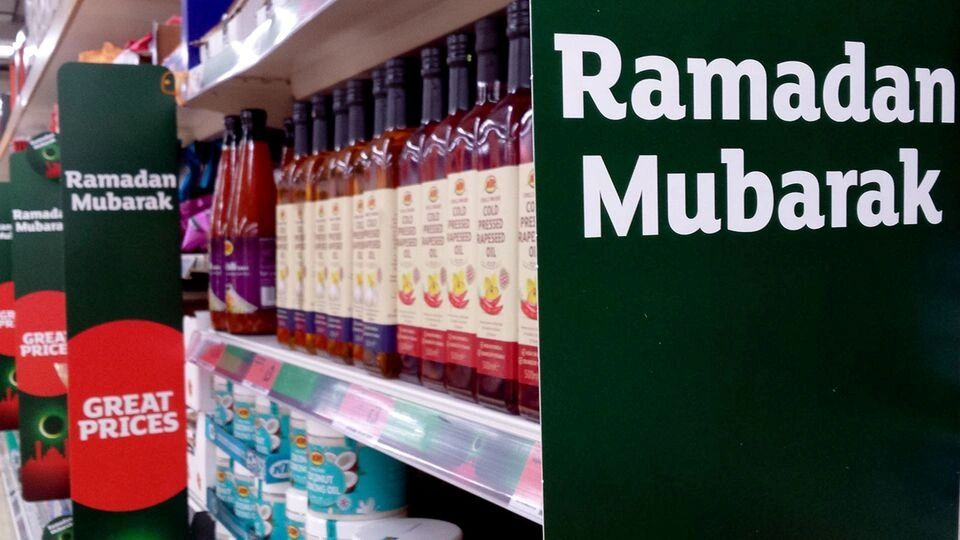
This gradual integration unfolded in several historical phases. First, the social presence of Muslims consolidated between the 1960s and 1990s, creating demand for a distinct consumer market. Next, waves of Islamic revivalism expanded demand for halal food, paving the way for “halal” to become a formal commercial label. A third phase revealed a sharp contradiction: as Islamophobia intensified, the commercial exploitation of Ramadan also accelerated. This duality reflects tension between two logics of capitalism—global capitalism, which treats Muslims as profitable consumers, and nationalist capitalism, which frames them as cultural and economic threats.
Two intellectual traditions help explain this phenomenon. Sayed Qutb viewed capitalism not merely as an economic system but as a rival worldview that empties human life of spiritual meaning; he presented Islam as a “third way” balancing individual and society. By contrast, Maxime Rodinson argued that Islam is not inherently incompatible with capitalism. Citing the Prophet Muhammad’s mercantile background and financial institutions such as waqf and mudaraba, Rodinson maintained that Islamic societies possess the structural capacity for capitalist development, and that underdevelopment stems from historical and structural factors rather than religion. The economic trajectories of European Muslim communities align more closely with Rodinson’s analysis than with Qutb’s critique.
By the 1990s, marketing firms recognized the vast potential of the “ethnic market.” French economic studies showed that the previously “invisible” Ramadan economy had become a tangible market. With industrialized meat production and the need for standardization, halal shifted from a locally grounded trust relationship into a certified commercial brand. This coincided with Islamic revivalism among younger European Muslims, who increasingly framed religious identity as a conscious choice rather than inherited tradition—driving demand for visible markers such as halal consumption. European capitalism rapidly adapted to this demand.
Major multinationals such as Nestlé and Carrefour entered the halal market in earnest from the 1980s and 2000s onward. Through religious certification regimes, halal products became mainstreamed in large retail chains, reducing reliance on small local vendors. Research by Institut Montaigne estimates the halal market in France at over €5.7 billion annually, projected to reach €12 billion by 2025. Across Europe, the halal market reached an estimated $93 billion in 2025, growing at an annual rate of 7.8%.
Technology has further accelerated this integration. Food-delivery platforms see surging demand at iftar, while apps such as Muslim Pro and HalalTrip embed Ramadan into the platform economy. The convergence of religiosity and commerce has effectively turned Ramadan into a full-fledged economic season.
This commercialization, however, stands in stark contrast to the rise of Islamophobia in Europe. Reports in 2024 recorded a 25% increase in discrimination against Muslims. The paradox reflects the clash between global capitalism’s reliance on cultural diversity and nationalist currents that portray Muslims as threats to national identity.
Halal products increasingly become targets of political attacks, while Muslims are trapped in a binary of the “good consumer” versus the “bad Muslim.”
Ultimately, Europe’s Ramadan economy exposes a core fracture in contemporary capitalism: a global market that profits from Muslim identities versus nationalist politics that problematize those same identities. This dynamic simultaneously vindicates Rodinson’s thesis and Qutb’s anxieties—Islam can be integrated into the market, but at a cost: the depoliticization of Muslim presence and the reduction of citizenship to consumer status.
Source: Al Jazeera