Iran–US Talks: Deal or Confrontation?
DID Press: On the eve of the third round of talks between the Islamic Republic of Iran and the US, Abdul Latif Nazari, Deputy Minister of Economy in the Taliban administration, published an analytical note on his Facebook page on Wednesday, Feb. 25, examining the geopolitical and security dimensions of the negotiations.
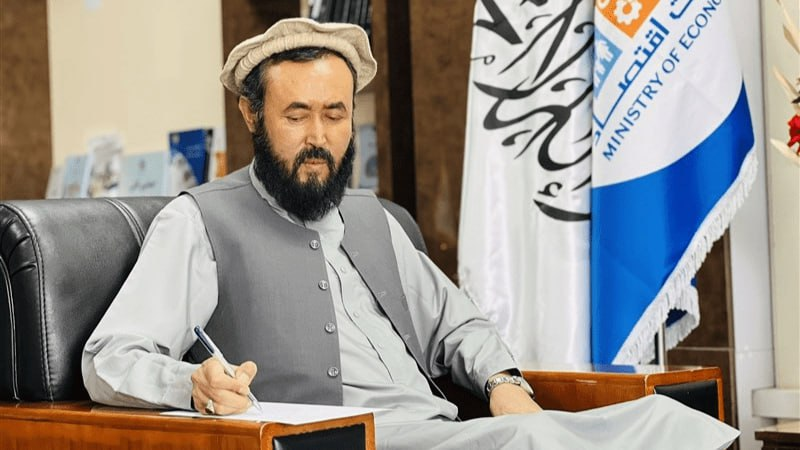
What follows is the full text of his commentary.
“The third round of negotiations between Iran and the United States will be held tomorrow. According to realism and neorealism in international relations, the negotiating table is not only a tool for agreement and peace but also one of the most effective arenas of warfare—one in which there are no missiles, drones or bombs, yet the targeted state is gradually carved up at an empty table of concessions. Palestine has been caught in this trap for decades and has lost 85 percent of its territory in exchange for agreements the other side has never honored.
“For this reason, there is full coordination between diplomatic teams and the security–military establishment of states. The Iran–US confrontation is not merely about several political files such as the nuclear issue, human rights or Iran’s regional influence. The core objective of the United States and its Western allies is to contain Iran—with its vast resources, strategic geopolitical position and civilizational capacity—and to turn it into a managed state rather than an independent actor in the secular international system. The dispute is therefore not over dossiers; it is over identity and independence. The United States and the West do not want an independent Iran in the region; they seek to place the Islamic Republic within a framework of domination and containment. The key question is whether Washington can contain Iran.
“US research institutions and intelligence bodies assess that Iran possesses one of the region’s largest and most diverse missile arsenals, including hypersonic-capable systems that can challenge missile defence systems such as Arrow missile system and Iron Dome. During the 12-day war, despite interceptions, hundreds of Iranian missiles reportedly struck their targets, inflicting severe damage on Israeli military infrastructure; only around one-third of Iran’s ballistic missiles were intercepted. Israel’s small geography, dense population and concentration of critical facilities make it highly vulnerable to Iran’s missile firepower. This is why Israel views Iran’s missile programme as an existential threat.
“Independent international think tanks assess that if Iran and the United States fail to reach an agreement and hostilities erupt, any strike on Iranian territory would carry the risk of direct retaliation with hundreds of ballistic missiles capable of targeting Israeli bases, cities and vital infrastructure, potentially paralyzing them. This equation also constrains Washington, as Iran has built a network of underground ‘missile cities’ over the past two decades that could alter the region’s geopolitical balance. From Tehran’s perspective, missiles are part of Iran’s defensive doctrine and non-negotiable. Under defensive realism, restricting missiles would amount to stripping Iran of its deterrence against adversaries’ air superiority.
“Iran has achieved self-sufficiency in missile production and indigenous technological capacity that sanctions cannot eliminate. For the United States and Israel, Iran’s missiles are a threat to be contained; for Iran, they are a guarantee of survival and independence. Their strategic importance also lies in the fact that if diplomacy fails and conflict begins, Tehran could target all US bases in the region as well as the oil facilities of countries cooperating with Washington.”
“In conclusion, beyond these factors, the United States—due to high costs, lessons from the protracted war in Ukraine, the experience of failure in Afghanistan, and the need to preserve readiness for challenges involving China and Latin America—prefers to pursue a diplomatic settlement with Iran. If negotiations fail, Washington would favour short, limited military operations and avoid a prolonged war with Tehran. A US–Iran war would trigger new regional bloc formations, risk a wider regional conflict, and undermine stability across West Asia.”