Khamenei’s Blood and the Revival of Political Islam
1
DID Press: Ayatollah Sayed Ali Khamenei can undoubtedly be regarded—after Ayatollah Sayed Ruhollah Khomeini, and in some respects even more than him—as the most significant architect of the discourse of political Islam in contemporary Iran.
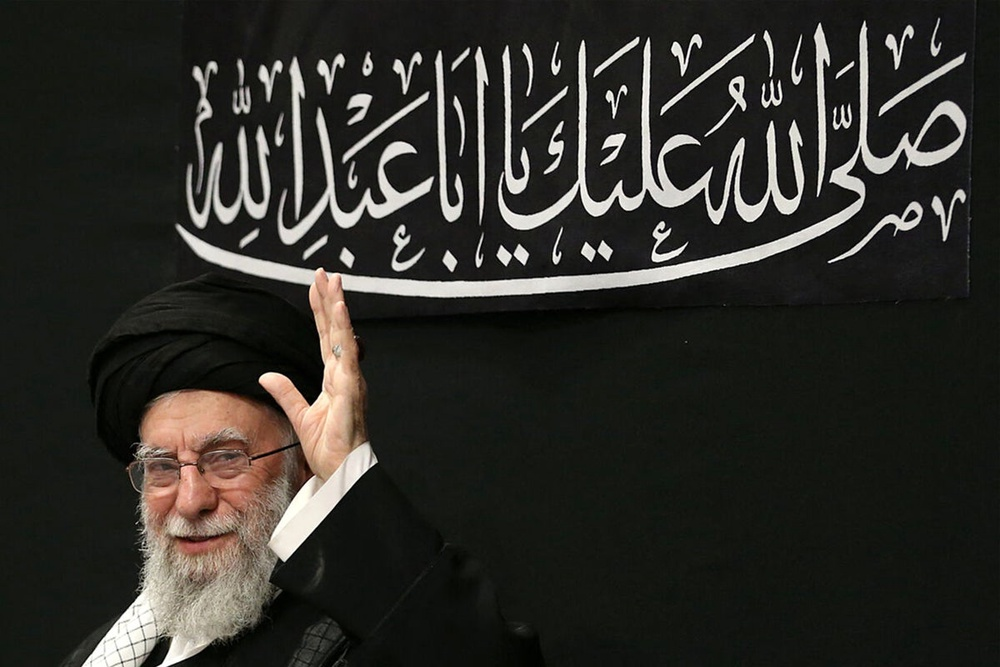
Years before the 1979 revolution, he was already among the clerics and preachers popular with activist youth. He spoke at the renowned Hosseini Yeh Ershad and maintained close ties with intellectual figures such as Ali Shariati and Morteza Motahari. His speeches were grounded in socio-political interpretations of the Quran and Islamic concepts.
In his youth, Khamenei translated works by the Sunni political Islam theorist Sayed Qutb. In middle age, he himself emerged as a theorist of Shiite political Islam. Over nearly four decades as Iran’s leader, he developed and institutionalized a Shiite interpretation of political Islam, giving it a structured theoretical and institutional framework.
2
A political reading of the concept of “martyrdom”—and its transformation into a strategy of struggle—was first advanced by thinkers like Shariati and the organization People’s Mojahedin Organization of Iran. After the revolution, particularly during the Iran–Iraq War, Ayatollah Khomeini reinforced and consolidated this concept, turning it into a driving force of wartime mobilization.
Yet it was Khamenei who expanded this discourse and translated it into enduring structures. Contemporary political-style religious eulogies and a new generation of urban Shiite rituals emerged from an approach he steadily and consciously promoted. No figure played a greater role than Khamenei in shaping the model of modern religious eulogy culture and its related currents, including new waves of devotional poetry and contemporary religious music.
3
The strategy of martyrdom and the doctrine of Ashura formed the central axis of Khamenei’s thought, behavior, and governing model. Without understanding these two concepts, his decisions and positions cannot be fully explained.
Unlike many theorists who remain confined to intellectual circles, Khamenei had the opportunity not only to shape discourse but also to cultivate and organize a generation of followers, witnessing during his lifetime the translation of theory into institutions.
Fate, the author argues, appeared to align the final piece of his life’s narrative with this strategy of martyrdom and the mythology of Ashura: a death framed as martyrdom in an enemy attack—during Ramadan, while fasting, and alongside members of his family. Few other scenarios, the essay suggests, could have matched so closely the template of martyrdom embedded in political Islam.
Such a dramatic tableau—with all its elements, even the celebration of opponents—provides rich material for poets, religious chanters, and elegy reciters, offering years of narrative inspiration to mobilize supporters of political Islam.
4
In this interpretation, the United States and Israel—viewed by Islamists as the principal adversaries of political Islam—have, through such an act, inadvertently delivered the most valuable gift possible to that movement.
At a moment when political Islam was facing decline amid mounting crises and challenges, the author argues, Khamenei’s martyrdom has injected new life into its veins. The historical treasury of Islamism—and of Shiism more broadly—now possesses a new mythic figure whose life and death simultaneously evoke the two foundational Shiite archetypes: Ali ibn Abi Talib and Hussain ibn Ali.
In Shiite historical memory, the image is now cast of a militant leader who governed for decades and ultimately stood against global powers until his death as a martyr.
At the same time, the Islamic belief in the continuing presence and living legacy of martyrs ensures that this image will endure, becoming a lasting source of inspiration for supporters.
Had Western powers fully understood the concept of martyrdom—particularly in its Shiite interpretation—despite extensive Western academic studies of Ashura, the author contends, they might have better grasped the symbolic force that a “Martyr Ayatollah Khamenei” could generate.
In any case, the essay concludes, whatever the outcome of the war between Iran and the United States and Israel, the blood of the Ayatollah has opened a new chapter in the history of Islamism.
By Mohsen Hesam Mazaheri | DID News Agency