DID Press: Tensions in the region escalated sharply after fresh threats by US President Donald Trump to target Iranian power plants, prompting strong warnings from Iran’s military leadership and heightened regional military activity centered on the strategic Strait of Hormuz.
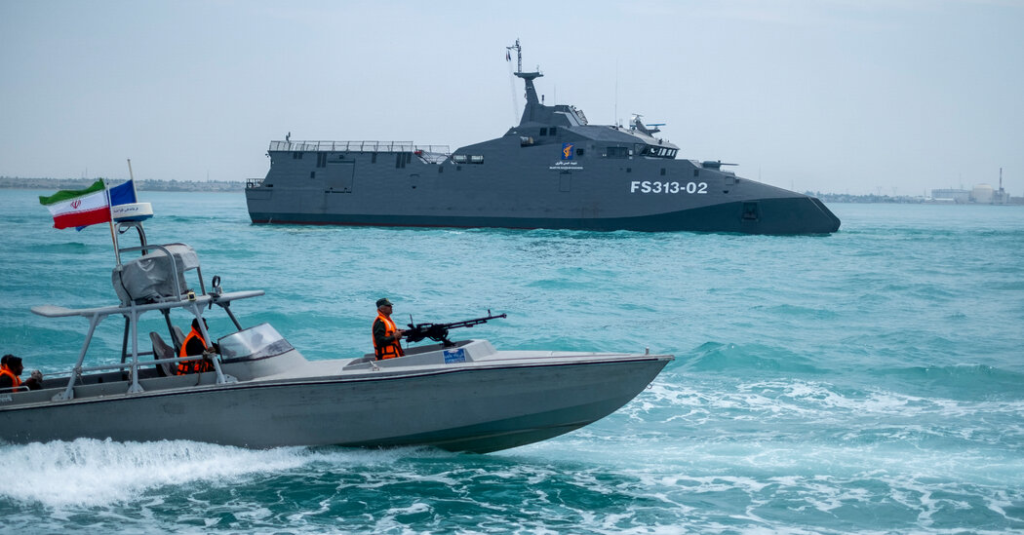
A spokesperson for the central headquarters of Islamic Revolutionary Guard Corps (IRGC) described Washington’s statements as a continuation of “aggressive and destabilizing behavior.” The official stressed that the Strait of Hormuz has not been fully closed but remains under what was termed “smart control” by Iran, allowing non-hostile maritime traffic to pass under defined regulations.
The statement warned that if U.S. threats against Iranian power infrastructure are carried out, Tehran could implement immediate retaliatory measures. These include the potential full closure of the Strait of Hormuz until damaged facilities are restored, large-scale strikes against energy, electricity, and information technology infrastructure in Israel, and targeting facilities in countries hosting U.S. military bases.
The declaration emphasized that Iran does not seek to initiate war but would launch sustained retaliatory operations against U.S. and allied interests in the region if its critical infrastructure is attacked.
Separately, the military wing of the Iraqi group Harakat Hezbollah al-Nujaba warned that power facilities across the region are within range of its missiles and drones, framing its response to U.S. threats as “an eye for an eye.”
Meanwhile, Hezbollah reportedly carried out 63 operations against Israeli positions within 24 hours—described by local sources as the highest daily number since the start of the conflict, including during the 2024 fighting.
On the diplomatic front, British Prime Minister Keir Starmer and President Trump held a phone call to discuss the latest Middle East developments, particularly the need to ensure the reopening of the Strait of Hormuz. The U.K. government stated that both leaders view the waterway as vital for global energy market stability and agreed to continue consultations in the near future.
Britain has recently declined a U.S. request to join a military coalition related to the Strait of Hormuz situation. Iranian authorities, for their part, maintain that the waterway remains open to vessels from all nations except those considered hostile to Iran.