DID Press: Forty days into conflict that US President Donald Trump described as “a short war to destroy an entire civilization,” Washington has been compelled to accept Tehran’s ten-point plan as the basis for negotiations. This historic reversal, regardless of whether the two-week ceasefire leads to lasting peace, is already being viewed as a full-scale strategic defeat for the White House—one whose implications extend far beyond the battlefield, encompassing political, diplomatic, and psychological dimensions.
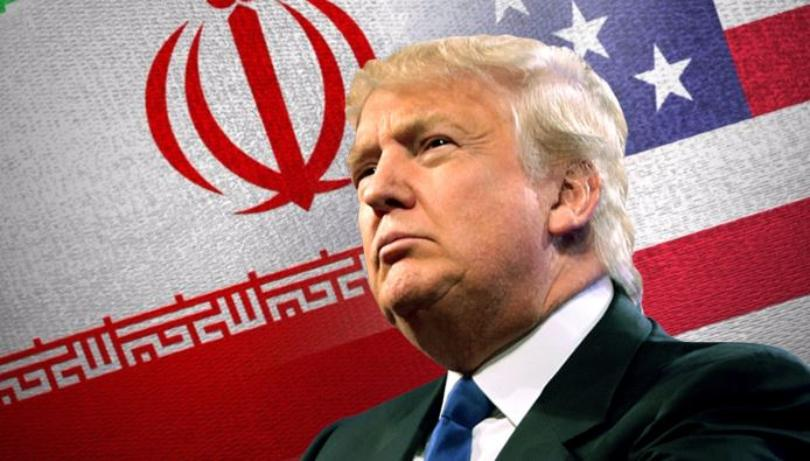
Trump had previously warned that any disruption of the Strait of Hormuz would be met with attacks on Iran’s civilian infrastructure. Yet after forty days, no such attacks occurred, and the United States, without achieving any tangible military gains, was forced to agree to the guarantee of safe passage for oil and gas—while Iran retained full control over the strait. Iranian state media described the outcome as a “humiliating retreat,” a phrase widely echoed in regional media.
Tehran’s ten-point plan is not a routine proposal but a list of Iran’s maximal strategic demands: lifting all primary and secondary sanctions, ending UN Security Council and IAEA resolutions, payment of reparations, withdrawal of U.S. combat forces from the region, and even halting hostilities against Lebanon’s resistance. In conventional diplomacy, such conditions are typically announced by the victorious party after a decisive military win—not by a country under bombardment. Yet Iran dictated the terms, and Trump described them as a “workable basis”—a choice of words that alone signals who holds the upper hand.
Trump had set a deadline for reopening the Strait of Hormuz, which media outlets described as the final ultimatum. Iran not only ignored this deadline but effectively demonstrated that U.S. ultimatums carry no operational weight. The Iranian Supreme National Security Council stated unequivocally that it attached no importance to any deadlines issued by the adversary. Ultimately, it was Trump who accepted the ceasefire two hours before his deadline expired—a reversal of the roles of “ultimatum-giver” and “ultimatum-taker,” a clear marker of defeat.
One of the most striking aspects of this episode is the relative silence and caution from the White House. While Tehran confidently announced the start of negotiations in Islamabad, Washington has yet to confirm in-person talks, stating only that the matter is under review. This gap between Iran’s narrative of victory and Washington’s narrative of uncertainty alone illustrates the power imbalance at the negotiating table: the victor announces; the defeated hesitates.
Global markets are often ruthless analysts of political developments. Following the ceasefire announcement, U.S. crude oil prices dropped over 17 percent to around $92 per barrel—a sharp decline interpreted not as a temporary truce but as a geopolitical victory for Iran. Meanwhile, U.S. stock futures rose, indicating that investors saw the end of hostilities as beneficial to them, rather than as an achievement for the Trump administration.
Trump’s defeat is not a classical military loss, marked by territorial conquest or a formal surrender. It is a “defeat of will” and a “strategic humiliation.” The president, who once threatened to annihilate an entire civilization, was ultimately forced to accept ten conditions, including the withdrawal of U.S. forces from the region and payment of reparations.
What is clear at this moment is the image of a retreating Trump, a victorious Iran on the ground, and a silent U.S. faced with a plan that, a month ago, would have been considered an insult, but which is now described as a “workable basis.” That single phrase encapsulates the entire story of his defeat.
By Sayed Baqer Waezi — DID News Agency