DID Press: Despite unprecedented talks between Tehran and Washington in Islamabad, developments on the ground in the Red Sea and Ansarullah’s control over the Bab al-Mandab Strait indicate that regional power dynamics cannot be determined at the negotiating table alone. The Axis of Resistance, relying on its deterrence capabilities, has sent a clear message to the United States: energy security cannot be guaranteed without accounting for Iran and its allies.
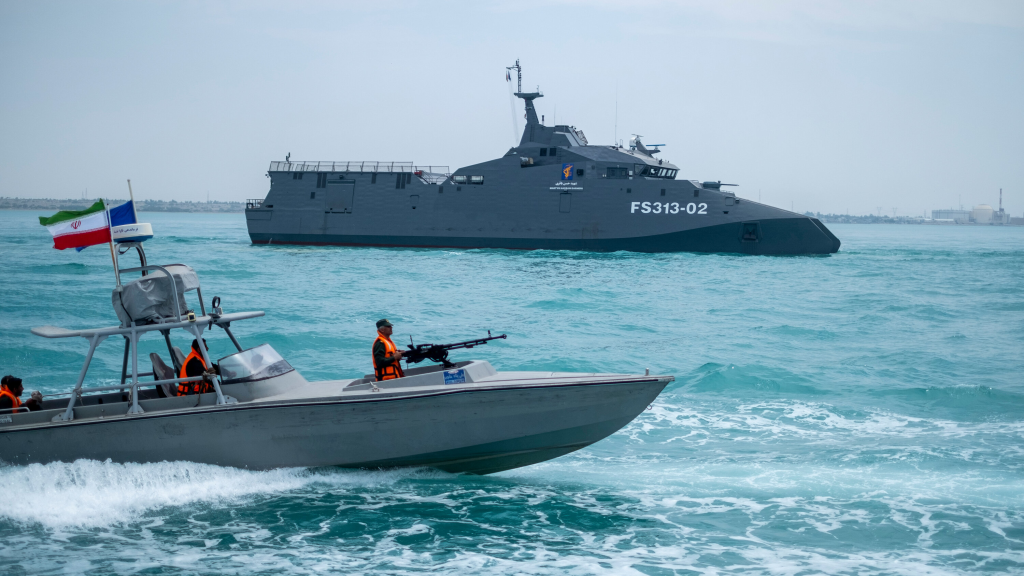
The 21-hour Tehran–Washington talks in Islamabad—described as the highest-level dialogue between the two countries in half a century—ended while one of the main points of dispute remains the Strait of Hormuz. The United States is demanding full reopening of the waterway as a condition for a ceasefire, while Iran insists that any change in Hormuz’s status must be part of an agreement that guarantees Tehran’s security and military interests.
The Times noted that continued ambiguity over maritime freedom has raised concerns about another strategic chokepoint: Bab al-Mandab, now under the control of Yemen’s Ansarullah movement.
In this context, Ali Akbar Velayati, adviser to the Supreme Leader, stated that Bab al-Mandab holds the same strategic importance for the Axis of Resistance as Hormuz, warning that if Washington repeats past mistakes, energy flows could be disrupted “with a single move.”
At the same time, major shipping companies such as Maersk have rerouted their vessels away from Bab al-Mandab and the Suez Canal, reflecting the direct impact of Ansarullah’s threats on global energy security. The Times emphasized that Ansarullah’s control of the strait has further complicated the crisis.
According to data from the U.S. Energy Information Administration, oil transit through Bab al-Mandab—previously reaching 9.3 million barrels per day in 2023—fell to 4.1 million barrels per day in 2024 following Ansarullah attacks. Analysts such as Emily Holland have described the situation as “highly disruptive,” noting that even the potential risk of targeting ships is enough to unsettle insurance and shipping markets.
Despite the Gaza ceasefire in October 2025, security threats in Bab al-Mandab remain in place, and oil flows have not returned to normal due to Ansarullah’s continued deterrence posture.
Politically, Iranian sources told Reuters that in the event of escalation, Bab al-Mandab could be used as a pressure lever similar to Hormuz. Meanwhile, Saudi Arabia—due to instability in Hormuz—has significantly increased its oil exports via the Red Sea, meaning any disruption in Bab al-Mandab would have major global economic consequences.
Although Iranian advisers are present in Sana’a, the International Institute for Strategic Studies (IISS) stresses that relations between Tehran and Ansarullah are based on independent decision-making, even if their regional objectives largely align. Holland also noted that Ansarullah is part of the Axis of Resistance but maintains its own priorities.
Crude oil prices rising to around $115 per barrel amid tensions in Hormuz have served as a warning to many analysts, highlighting that ignoring Iran’s role in global energy security carries significant costs for the West.