The Largest Funeral ceremony in History; Iran’s New Formation of Soft Power
DID Press: In a six-day period across five cities — Tehran, Qom, Najaf, Karbala and Mashhad — the funeral ceremonies for the Martyred leader of the Islamic Revolution, Ayatollah Sayyed Ali Khamenei, were held with the participation of tens of millions of Iranians, Shia Muslims and supporters across the world. Iranian officials described the event as “the largest funeral ceremony in world history,” while regional and Western media outlets including The Guardian, The Daily Telegraph, Reuters, Al Jazeera and Deutsche Welle analyzed the gatherings as an unprecedented display of Iran’s soft power and a renewed source of social and symbolic influence.
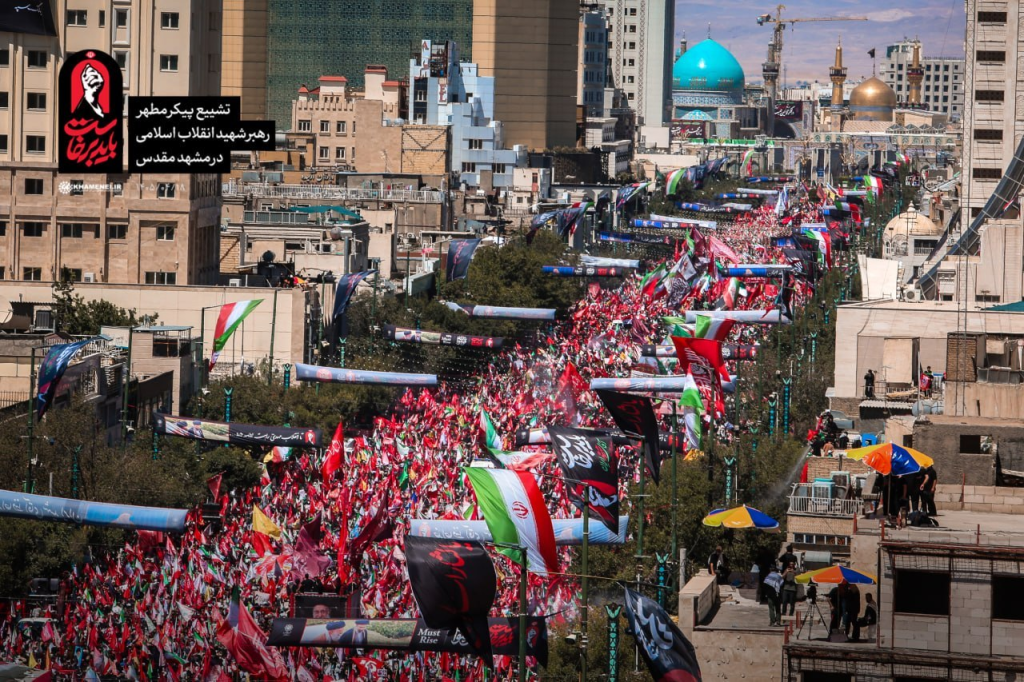
41 to 43 million participants across five cities
Iranian official sources have estimated the total number of participants in the farewell and funeral ceremonies at approximately 41 to 43 million people, based on a combination of field data and statistical assessments.
The figures were reportedly calculated using several indicators, including:
- Public transportation movement data to ceremony locations in Tehran, Qom, Mashhad and Iraqi cities
- The number of active mobile phones in Tehran’s prayer hall and funeral routes
- Average attendance duration of around two and a half hours during the ceremonies
- Crowd density calculations along the Tehran route from Revolution Square to Azadi Square
- The area covered by crowds along the route from Jamkaran Mosque to the Shrine of Hazrat Masoumeh in Qom
- The length and density of crowds along the route from Mashhad airport to the Imam Reza Shrine
- Official Iraqi government figures reporting around 10 million participants in Najaf and Karbala
Officials overseeing the process have stated that even the most conservative estimates place the ceremony among the largest public gatherings of the modern era. Analysts have compared it with major historical funerals, including those of Mahatma Gandhi, Gamal Abdel Nasser, Ayatollah Ruhollah Khomeini, Princess Diana and Pope John Paul II, arguing that none matched the reported scale, geographical reach and cross-border participation of the recent ceremonies.
Tehran; millions march from Revolution Square to Azadi Square
In Tehran, two days of farewell ceremonies at the Grand Prayer Hall of Imam Khomeini and the main funeral procession transformed the capital into a scene of massive public participation.
The Guardian reported the presence of “millions of people” who joined the farewell march stretching from Revolution Square to Azadi Square. The newspaper described the gathering as a significant public display in a country that had experienced political tensions and protests in previous months.
Qom; a sea of mourners from Jamkaran to the shrine
In Qom, the route between Jamkaran Mosque and the Shrine of Hazrat Masoumeh became filled with mourners, creating one of the largest religious and political gatherings in the city’s history.
Regional and international media outlets described the scenes as a continuation of a nationwide wave of mourning following the Tehran ceremonies.
Najaf and Karbala; a major cross-border gathering
In Iraq, the cities of Najaf and Karbala witnessed large-scale funeral gatherings. Iranian and Iraqi sources reported the participation of millions of people, highlighting the regional dimension of the ceremonies.
Observers described the presence of large crowds in two neighboring Iraqi cities as an indication of Iran’s religious and political influence beyond its borders, particularly among Shia communities.
Mashhad; a sea of black and red
In Mashhad, streets leading to the Imam Reza Shrine were filled with massive crowds. Reports described the scene as a “sea of black and red,” with black representing mourning and red symbolizing the emotional and political messages expressed by participants.
Due to the unprecedented density of the crowd, the coffin of the leader of the Islamic Revolution was eventually transferred to the shrine by helicopter instead of following the planned ground route.
International media coverage
The Guardian: The British newspaper described the Tehran gathering as a “remarkable turn” and highlighted what it called a display of social mobilization and organizational capacity, while also noting the depth of religious and national sentiments among participants.
Al Jazeera: The network described the ceremonies as “historic” and “symbolic,” emphasizing both the scale of participation and the timing of the events during the first days of Muharram and amid heightened regional tensions.
Deutsche Welle: The German broadcaster characterized the funeral as a “display of power,” suggesting that Iranian authorities sought to demonstrate internal cohesion and political stability during a sensitive period.
Reuters: The international news agency focused on themes of collective mourning and calls for retaliation, reporting on emotional expressions among participants in Tehran and Mashhad.
A new form of symbolic power
Political and social observers view the funeral ceremonies for the martyr leader of the Islamic Revolution as part of a broader period of public mobilization in Iran.
According to these analyses, the gatherings demonstrated the ability of the Iranian state and society to mobilize large numbers of people around national, religious and political symbols, creating a new form of symbolic and soft power.
However, analysts also raise a strategic question: whether this social and symbolic capital can be preserved and transformed into a foundation for long-term development, stability and increased national influence.
The answer to this question, they argue, could play an important role in shaping Iran’s political and social trajectory in the coming months and years.
#We_Must_Rise