DID Press: The 40th International Islamic Unity Conference has opened in Tehran under the slogan “Islamic Unity in the Thought of the Martyred Leader.”
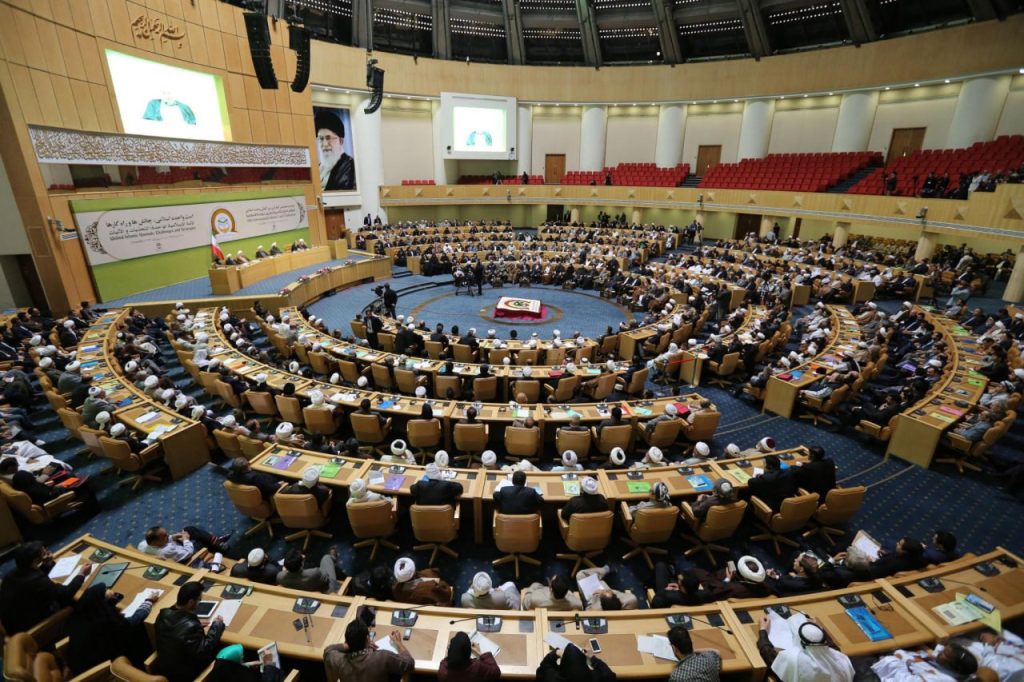
Iranian officials and religious leaders said unity remains a pillar of dignity, independence and security in the Islamic world, while warning that the recent war showed that the U.S. military presence in the region contributes to instability rather than security.
The conference has brought together hundreds of domestic and international guests from 40 countries. Its programs will continue until August 30 in Tehran, Qom and Mashhad. Specialized meetings are also being held in various provinces, while scholars from Iran and abroad will examine eight key themes related to Islamic unity through webinars.
Iranian President Masoud Pezeshkian, speaking at the opening ceremony, referred to the ideas of the “martyred leader,” Ayatollah Seyyed Ali Khamenei, saying that Islamic unity should not be viewed as a temporary political strategy but as a fundamental principle for the strength and authority of the Muslim world.
He warned that differences of opinion, when they turn into conflict and hostility, weaken the Muslim community from within and create opportunities for outside powers to exert influence.Pezeshkian also referred to the deaths of Iran’s Islamic leader, military commanders and scientists during the recent war, describing the events as a major loss for the Islamic world and saying they had increased the responsibility to preserve the path of unity.
Meanwhile, Hojjatoleslam Hamid Shahriari, secretary-general of the World Forum for Proximity of Islamic Schools of Thought, described the recent conflict as a “civilizational war.” He said the death of the martyred leader marked a turning point that, like the uprising of Imam Hussein, could influence the future course of the Muslim world.
Shahriari criticized the U.S. military presence in the region, saying it has been “security-destroying and opportunity-destroying” rather than a source of stability. He said regional countries had witnessed during the recent crisis that U.S. bases were evacuated during the conflict, leaving countries in the region to face the situation alone.
The secretary-general said regional countries increasingly believe that lasting security must be ensured by the countries of the region themselves. He added that U.S. military bases were established primarily to serve Washington’s interests, rather than to guarantee security in the Persian Gulf or support regional resistance movements.
Shahriari also described improving relations and expanding cooperation among regional countries as signs of growing maturity in efforts to promote Islamic unity, saying that the discourse of rapprochement among Islamic schools of thought had gained ground over sectarian extremism.
The 40th International Islamic Unity Conference will continue with its main sessions in Tehran, Qom and Mashhad, alongside specialized meetings and academic programs across the country, focusing on ways to strengthen Islamic unity and cooperation among Muslim nations.