DID Press: The history of Islam is a history of competing wills—a history of figures who prepared themselves through faith, understanding and decision-making before confronting their adversaries on the battlefield. The Quran speaks of Abraham and Nimrod, Moses and Pharaoh, Saul and Goliath, and the Prophet Muhammad, to teach that material power is not the only force shaping major historical developments; faith, insight, organization, patience and human determination can also alter the course of history.
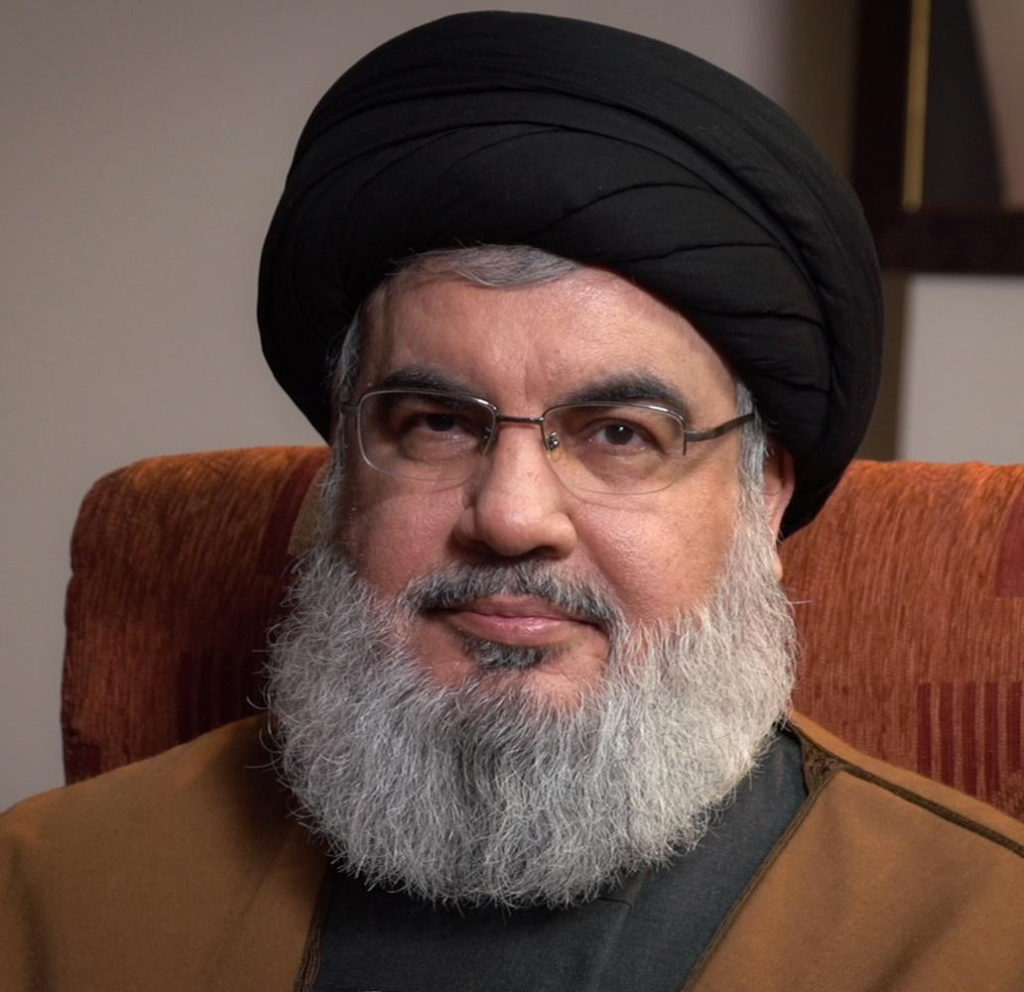
In the contemporary history of the region, Sayed Hassan Nasrallah can be studied within this historical framework. He led Lebanon’s Hezbollah for more than three decades, during which the organization evolved from an armed movement in Lebanon into an important political, social and military actor in Lebanon and the wider region. Nasrallah became Hezbollah’s secretary-general after the assassination of Sayyed Abbas al-Musawi in 1992 and remained in the position until his death in an Israeli strike on Beirut in September 2024.
To understand Nasrallah, it is not enough to look only at the battlefield. Before managing warfare, he sought to build the capacity for resistance—developing people, organizing society and turning faith into determination and determination into strategy.
He understood that no movement could survive for long without understanding its environment, its adversary and its own society. Lebanon is a diverse and complex country in which Shia and Sunni Muslims, Christians and various political and social groups live alongside one another. Hezbollah therefore expanded its presence beyond military activities into the political and social spheres, establishing networks of social, medical and educational services.
This experience offers an important strategic lesson: sustainable resistance is not built solely with weapons; it is built with people.
An informed population, a socially responsible community, a well-trained generation and an organization capable of making decisions under difficult circumstances are among the key elements of strategic power.
In 2000, the withdrawal of Israeli forces from most of southern Lebanon marked one of the major turning points of Nasrallah’s leadership. The 2006 war subsequently further elevated Hezbollah’s position in regional calculations.
From this perspective, Nasrallah’s experience offers another lesson: the power of an actor should not be measured solely by the size of its weapons arsenal. Social capacity, organizational cohesion, strategic depth and the ability to withstand pressure must also be considered.
The same logic can be observed in developments in Palestine. From Izz ad-Din al-Qassam and Sheikh Ahmed Yassin to subsequent generations of Palestinian leaders, a historical continuum of resistance, sacrifice and efforts to preserve Palestinian identity has emerged. Following the outbreak of the Gaza war in October 2023, Hezbollah also entered direct hostilities with Israel in support of the Palestinians, making the Lebanon front one of the major fronts of the regional conflict.
In the religious discourse of resistance, Ashura and Karbala also hold a prominent place as symbols of standing against oppression. Yet the strategic message of Karbala should not be reduced solely to martyrdom; for later generations, Karbala also represents responsibility, insight, loyalty, conscious choice and accepting the cost of defending one’s values.
From this perspective, Nasrallah’s leadership can be examined through four main dimensions:
First, faith and identity: Leadership without a durable worldview can erode during times of crisis.
Second, knowledge and understanding: Understanding geography, society, the adversary, opportunities and threats is a prerequisite for any strategy.
Third, organization: No historical leader can independently manage a movement for decades. Continuity requires institutions, personnel development and the transfer of experience.
Fourth, social capital: A power that cannot maintain a connection with its society can find itself isolated at a moment of crisis.
Analytical reports published after his death also emphasized his distinctive role in Hezbollah’s political, military and social structure. Yet the most important question following the death of a leader is not simply, “Who will replace him?” The deeper question is whether the ideas, experiences and structures he established can continue the movement’s course.
This is the point at which a historical figure can become a “historical experience” rather than merely an individual.
The Al-Aqsa Front faces the same question. If resistance depends solely on individuals, it can become vulnerable when commanders and leaders are lost. But if it relies on educating new generations, institution-building, social cohesion, political awareness and long-term planning, the loss of a leader does not necessarily mean the end of a movement.
From this perspective, Nasrallah’s most significant legacy for study lies not merely in his speeches or on the battlefields, but in the experience of transforming faith into organization, identity into strategy and determination into social capacity.
Today, the name of Sayyed Hassan Nasrallah represents leadership, resistance and steadfastness for supporters of the Al-Aqsa Front, while for his opponents it represents a figure whose presence and voice had a profound impact on Lebanon’s and the region’s political and security dynamics. This contrasting and multifaceted position makes the study of his life and role one that requires a historical, strategic and analytical perspective—one that goes beyond emotions and examines the different dimensions of his personality and his role in contemporary developments in Lebanon and the region.
Ultimately, if one strategic lesson is to be drawn from his life, it may be this: a leader may leave, but if ideas have been passed to a new generation, experience has been transformed into institutions, and faith has been accompanied by rationality and social responsibility, history does not stop with the departure of one person.
This may be one of the deeper messages of the history of the prophets, religious leaders and movements that have remained in the collective memory of Muslim communities: missions may begin with individuals, but they continue through educating people and building generations.
By Dr. Abdul Rauf Tawana | DID News Agency