Science at a Crossroads Between Peace and War
DID Press: Modern science is one of the most important tools for advancing peace, public welfare and sustainable development. At the same time, it can serve as an instrument of war, geopolitical rivalry, political and economic domination, and widening social inequalities.
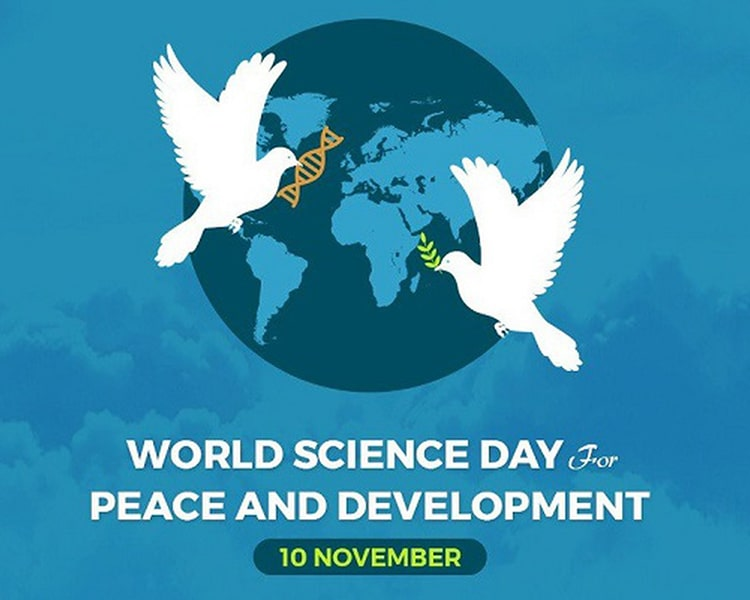
Through the expansion of empirical knowledge, technological development and the promotion of critical thinking, modern science has created vast opportunities to improve quality of life, reduce harm and address humanity’s basic needs. Advances in medicine and biotechnology have helped prevent and treat diseases, increase life expectancy and reduce mortality. Environmental innovations and the development of renewable energy have also played an important role in addressing climate change and protecting natural resources. These are among the most significant examples of science’s constructive contribution to public welfare and sustainable development.
Nevertheless, the history of science shows that many scientific and technological achievements have emerged or advanced in the context of military competition and power struggles. From this perspective, science, alongside its capacity to solve human problems, has also become a source of military power, strategic advantage and destructive capability. The development of nuclear technology, the production of chemical weapons and the expansion of advanced military technologies are prominent examples. Moreover, monopolies over knowledge and technology, the political and economic exploitation of scientific achievements, and unequal access to technological resources have reinforced global systems of domination and inequality.
The Frankfurt School explains this duality through its critique of “instrumental rationality.” Instrumental rationality focuses on selecting the most efficient means to achieve particular ends, without questioning whether those ends are ethical, humane or just. Under such circumstances, science and technology, instead of serving human liberation and improving people’s lives, can become instruments of control, domination and even destruction. From this perspective, the central problem is the dominance of efficiency and power over ethical, humanitarian and social justice considerations. The atomic bombings and the development of chemical weapons are among the historical consequences of this logic.
The relationship between science and power, however, is not limited to warfare, military competition and economic domination. Controlling the production of knowledge, restricting education and denying certain groups access to learning opportunities are also ways of exercising power over knowledge. In this context, depriving girls and women of education and restricting access to higher education in Afghanistan are clear examples of political power being used to control knowledge and undermine society’s intellectual and social capacity. Such policies distance science from its role as a force for liberation, social empowerment and sustainable development, turning it instead into an instrument for preserving a monopoly on power.
Ultimately, science in itself is neither a guarantee of peace and development nor an inherent driver of war and inequality. Its direction and consequences are determined by the prevailing ethical framework, the nature of governance, the distribution of power and the extent of public participation and equitable access to knowledge.
Science can serve peace and sustainable development only when accompanied by social justice, ethical responsibility and a fair distribution of scientific opportunities. From this perspective, the central issue goes beyond scientific advancement to encompass its humanitarian, social and political direction. Scientific progress without ethics, justice and accountability does not necessarily lead to human progress.
International Desk | DID News Agency