Pakistan’s Shift on Afghanistan’s Caretaker Government: From Full Support to Dialogue with Opponents
DID Press: The two-day conference titled “Towards Unity and Trust,” to be held in Islamabad with the participation of young leaders, political activists, and Afghanistani women representatives, is being described as more than a symbolic gathering. The event could chart a new path for dialogue, confidence-building, and regional pressure on the Taliban’s caretaker government, while simultaneously strengthening the position of Afghanistan’s opposition and civil society.
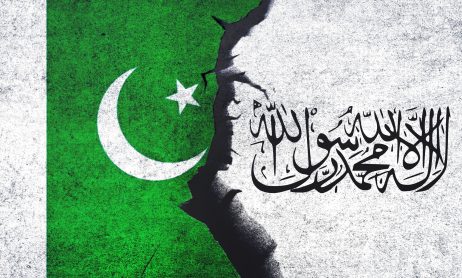
The conference, organized by the South Asia Strategic Stability Institute and the Weomen group for Afghanistan, aims to provide a platform for engagement between Afghanistan’s opposition and Pakistan. Its significance is heightened by the fact that the Resistance Front recently requested cooperation from Islamabad, making this gathering a potential response to that appeal.
Although figures such as Gulbuddin Hekmatyar are absent, well-known opposition personalities, including Nasir Ahmad Andisha, Mustafa Mastur, Fawzia Koofi, Hussain Yasa, Zahra Joya, and Mawlawi Abdullah Qarluq, will attend the gathering. The event emphasizes the role of the younger generation and women activists—a generation striving to make its voice heard in Afghanistan’s political and peace processes.
Pakistan and the Taliban: From Partnership to Distancing
Following the Taliban’s return to power in August 2021, Islamabad sought to secure regional stability through close ties with the group. However, the Afghan Taliban government’s inability to curb the Tehrik-i-Taliban Pakistan (TTP) and rising border insecurity has shifted this calculation. This situation has pushed Pakistan toward a more balanced strategy, in which Afghanistan’s opposition and civil society also play a role.
The timing of this shift, alongside China’s diplomatic efforts to expand the China-Pakistan Economic Corridor (CPEC), indicates that Pakistan is pursuing a multi-layered regional strategy and that the Taliban government is no longer its sole partner.
Focus on Women and Youth: A Clear Signal to the Taliban
Unlike previous gatherings, Islamabad Process prominently features women and young leaders. The participation of Fawzia Koofi and other female activists underscores the importance of restoring women’s rights and ensuring civil engagement. This composition signals that Islamabad is re-evaluating its policy toward Afghanistan, and the Taliban should understand that Pakistan’s support is no longer unconditional.
Messages from the Conference
To the Taliban: Pressure to control militant groups and revise domestic policies.
To the Opposition: Opportunities to voice demands and strengthen regional legitimacy.
To the International Community: Demonstrating Pakistan’s initiative in mediation.
Regionally: Reinforcing Pakistan’s role as a key player in Afghanistani affairs.
In contrast, Zalmay Khalilzad described the conference as “provocative” and warned of potential consequences, while Afghanistan women activists and civil society figures viewed it as an opportunity for trust-building and restoring women’s rights.
Conclusion
The Islamabad process/conference is not merely a political gathering; it reflects shifting power dynamics and regional pressures on the Taliban’s caretaker government. Pakistan now faces a critical juncture: either to leverage the conference as a tool for confidence-building and mediation, or reduce it to a mere instrument of pressure.
In either case, the clear message is that the Taliban government is no longer Islamabad’s sole supported actor, and Afghanistan’s opposition and civil society have gained a growing role in regional dynamics.
By Sayed Reza Mousavi