DID Press: Imam Ali bin Musa al-Reza (A.S.), the eighth Shiite Imam, was one of the most influential figures in the history of Islam, particularly in the realm of civilization-building. His blessed lifetime, which coincided with the era of Abbasid caliphate under Harun al-Rashid and his son Ma’mun, witnessed profound scientific, cultural, and social transformations in the Islamic world. His role in these developments, both through intellectual debates and the training of disciples while spreading religious knowledge, left a lasting impact on Islamic civilization.
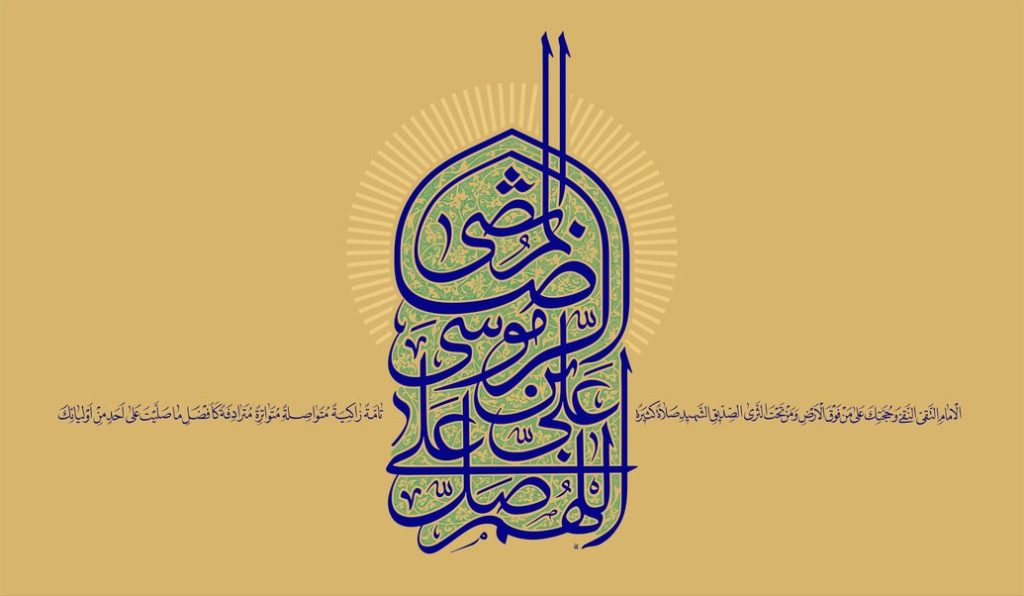
Theoretical Foundations of Building Civilization in Imam al-Reza’s Thought
Imam al-Reza (A.S.) considered Islamic civilization to be based on three core pillars: reason, revelation, and justice. In his view, a lasting and sustainable civilization must strike a balance between these three elements. “Reason” serves as the tool for understanding and discovering truths, “revelation” functions as a moral and spiritual guide, and “justice” serves as the governing principle in social relations.
This triadic approach is clearly reflected in the Imam’s intellectual debates. In discussions with scholars from various backgrounds, he consistently used reason and logic as tools for persuasion but integrated this rationalism with divine teachings, ultimately focusing on the realization of social justice. This comprehensive worldview presents a distinct theoretical framework for Islamic civilization, setting it apart from other historical civilizations.
Scientific and Intellectual Role: Leading Dialogue in Sciences
One of the most notable aspects of Imam al-Reza’s role in civilization-building was his active participation in the intellectual streams of his time. The court of Ma’mun al-Abbasi was considered an international hub for scientific debates, where Muslim, Christian, Jewish, Zoroastrian, and other religious and philosophical scholars came together. Imam al-Reza (A.S.) not only represented Islam but appeared as a well-rounded scholar with expertise in various fields, including theology, philosophy, medicine, astronomy, mathematics, and even the natural sciences.
His debates with figures like the patriarch of the Christians, the head of the Jews (Ras al-Jalut), and scholars from other religions were exemplary models of civilized scientific dialogue based on mutual respect, logical argumentation, and a shared quest for truth. This approach serves as a model for scholarly interaction in a multicultural society, one that remains inspiring today.
Imam al-Reza (A.S.) emphasized the role of reason in understanding religion and paved the way for the development of rational sciences in the Islamic world. He believed that religion and reason were not in conflict but rather complemented one another, and that Islamic civilization must be based on this harmony.
Social Approach: Justice as the Core of Civilization
Imam al-Reza (A.S.) viewed justice not merely as a legal principle but as the central pillar of Islamic civilization. During his time as the heir apparent under Ma’mun, despite political limitations, he seized various opportunities to express his views on social justice.
He believed that Islamic civilization could not be built solely on military power or economic wealth but must prioritize distributive justice, human equality, and respect for human dignity. This philosophy was reflected in his daily actions as well. He treated slaves and servants with the same respect as the elite and always emphasized the importance of upholding the rights of the marginalized and the oppressed.
Innovation in Educational Methodology
Imam al-Reza (A.S.) also introduced innovations in education that had a profound impact on the Islamic educational system. Instead of relying on rote learning, he emphasized dialogue, inquiry, and critical thinking. This educational methodology not only influenced the direct disciples of Imam al-Reza (A.S.) but also played a significant role in shaping the scientific traditions of Shia Islam.
He encouraged his students to ask challenging questions and seek rational answers, thus fostering an environment where free thought and scientific creativity could flourish. This approach laid the theoretical foundations for the development of educational and scientific centers across the Islamic world.
Transnational and Universal Impact
Imam al-Ridha’s role in Islamic civilization-building was not confined to specific geographic or ethnic boundaries. By emphasizing the universal nature of Islam, he demonstrated that Islamic civilization could be a platform for cultural exchange and interaction among diverse nations and peoples. The presence of scholars and thinkers from various races and nationalities in Imam al-Reza’s gatherings and his warm reception of them exemplifies this transnational outlook.
This global perspective of the Imam played a crucial role in shaping the pan-ethnic identity of Islamic civilization, proving that this civilization could transcend tribal and regional boundaries and create a society based on shared human values.
Enduring Legacy and Continues Impact
The scientific, cultural, and spiritual legacy of Imam al-Reza (A.S.) endures through his teachings, the religious center at thw Imam al-Reza Shrine, and the scholarly traditions that developed around his guidance. Today, his shrine in Mashhad city is one of the most important cultural, scientific, and spiritual centers in the Islamic world, attracting millions of Muslims from around the globe each year.
Conclusion
Imam al-Ridha’s role in building Islamic civilization offers a comprehensive and balanced model of leadership based on reason, revelation, and justice. This model has not only inspired Muslims during his lifetime but continues to guide contemporary societies in building sustainable, human-centered civilizations.
Sayed Reza Mousavi