Introduction
DID Press: Founded in 1945 to prevent major wars and safeguard international peace and security, the United Nations was established on principles such as respect for territorial integrity, peaceful settlement of disputes, and prohibition of force or threats. Yet, over the past eight decades, the organization has repeatedly failed to fulfill its core mission of ensuring global peace. Endless wars in the Middle East, recurring crises in Africa, unilateral military interventions by major powers, and ongoing insecurity in sensitive regions have raised serious questions about the UN’s effectiveness—and even about the need for structural reform.
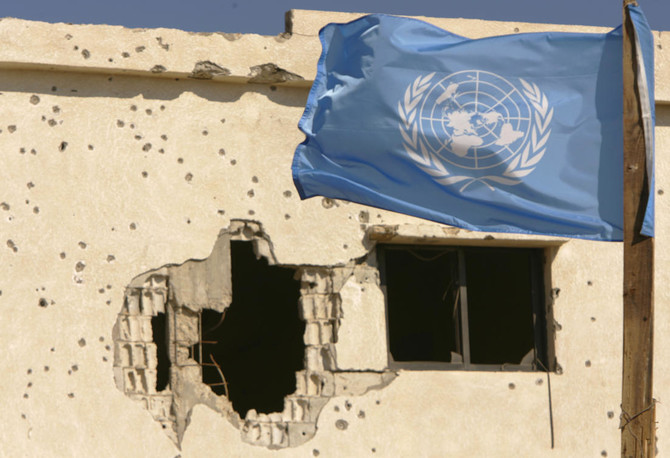
Below are some of the key factors contributing to the shortcomings of the world’s largest international body.
- Domination of Great Powers in the Security Council
The main reason for the UN’s ineffectiveness in preserving peace lies in the structure of the Security Council. As the principal decision-making body on peace and security, the Council has 15 members, including five permanent members—the United States, Russia, China, France, and the United Kingdom—who hold veto power. This privilege allows them to block any resolution that runs counter to their interests. As a result, Security Council decisions are shaped not by justice and equality, but by balance of great-power politics. The Syrian conflict, as well as the wars in Gaza and Yemen, are stark examples of repeated deadlocks created by the veto system. - Weak Enforcement Mechanisms
Even when the Council manages to adopt resolutions, they often lack binding force or sufficient enforcement. Peacekeeping operations, meanwhile, typically suffer from limited mandates, inadequate funding, and reliance on troop-contributing countries. This has led not to the resolution of conflicts but prolonged them in different forms. The Rwandan genocide (1994) and the Srebrenica massacre (1995) painfully demonstrated that UN peacekeepers are often incapable of preventing mass atrocities. Such failures have severely damaged the organization’s legitimacy in the eyes of both governments and global public opinion. - Bureaucracy and Corruption
Another challenge facing the UN is its entanglement in a maze of bureaucracy and, at times, corruption. Slow and cumbersome decision-making processes, inter-agency rivalries, and the influence of political and economic lobbies within the system all undermine the body’s capacity to respond swiftly to urgent crises. Reports of financial mismanagement and corruption in aid and reconstruction programs have further eroded trust in the organization. - Lack of Trust and Non-Compliance by States
The UN’s effectiveness depends on the cooperation of its member states. In practice, however, many countries disregard their obligations under the Charter and other treaties. Major powers, in particular, have engaged in unilateral military interventions without Security Council approval—such as the U.S.-led invasion of Iraq in 2003. At the same time, weaker states, skeptical of the UN’s impartiality, often show little willingness to comply with resolutions. This cycle of mistrust has crippled the organization’s ability to play a meaningful role in maintaining global security.
New Challenges, Old Structures
The evolution of modern conflict has underscored the UN’s inability to adapt. Its failures now extend beyond conventional wars to emerging crises such as cyber warfare, transnational terrorism, climate change, and geopolitical competition in outer space. The outdated structure of the Security Council and entrenched power imbalances within the UN have left the body increasingly incapable of addressing the challenges of the 21st century.
Reform Proposals
Experts have suggested several reforms to address these weaknesses:
Revising the veto system – either by limiting its scope or expanding permanent membership to include developing countries, thereby increasing the legitimacy of Council decisions.
Strengthening enforcement mechanisms – including the creation of rapid-reaction forces under unified command with independent funding.
Improving transparency and accountability – through streamlined bureaucracy and stricter oversight of financial resources to curb corruption.
Enhancing regional cooperation – by leveraging the capacity of regional organizations to respond to crises more quickly and effectively.
Conclusion
The UN’s inability to secure global peace stems less from the principles of its Charter than from its flawed structure, the dominance of great powers, and weak enforcement mechanisms. As the world faces more complex threats, continuing on the current path risks total collapse of the UN’s credibility. Fundamental reform of its structure and functions has become an unavoidable necessity. Without such change, the organization is destined to symbolize not global peace and security, but inefficiency and deadlock in international governance.
By Rahel Mousavi