Persian and Dari: One Language, Divided by Colonial Politics
DID Press: Persian is a language spoken across a vast region covering Iran, Afghanistan, and Tajikistan, with diverse dialectal branches such as Iranian Persian, Afghan Persian (Dari), and Tajik Persian. The differences among these varieties are mainly limited to local vocabulary, pronunciation, and occasionally writing style, while the grammatical structure and core linguistic rules remain essentially identical.
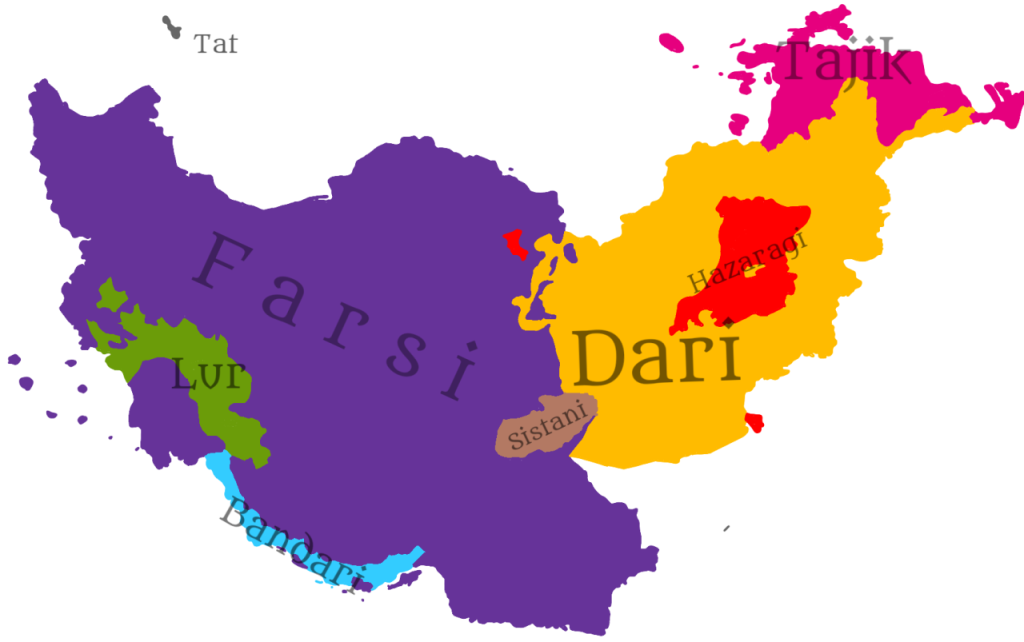
The debate over “Persian and Dari” has, in recent decades, become one of the most contentious linguistic and cultural topics in the Persian-speaking world. Recently, BBC Persian separated its Persian and Dari sections, claiming to address the needs of different audiences — a move that sparked widespread criticism from Persian-language experts and users alike. Many believe this decision stems not from linguistic realities but from colonial and divisive political agendas.
Persian is a single historical and cultural language that has evolved naturally across regions. In classical literature, this unity is clearly evident. Legendary poets such as Hafez, Saadi, Bedil, and Sanai — each representing towering peaks of Persian expression — all wrote in one common literary language. There is no linguistic justification to label Sanai’s poetry as purely “Dari” while calling Hafez’s or Saadi’s “Persian.” Such distinctions are political rather than scholarly, reflecting attempts to fragment a shared linguistic identity.
The BBC’s decision to split “Persian” and “Dari” therefore cannot be seen as a scientific or journalistic measure. It is, rather, a political act rooted in the colonial tendency of some Western institutions to divide and weaken cultural unity among Persian-speaking nations.
This artificial division could have serious cultural and social consequences. Presenting Dari as an independent language risks alienating Afghan audiences from the broader Persian literary heritage shared with Iran and Tajikistan, and could gradually erode their access to a vast corpus of historical and literary works.
Furthermore, constant exposure to such distinctions may create a narrow, artificial linguistic identity. As audiences repeatedly encounter the “Persian vs. Dari” dichotomy, their sense of belonging to a unified Persian cultural space diminishes, widening linguistic and cultural divides across the region.
Over time, this policy may also lead to the gradual drift of Afghanistan’s language standards away from those of Persian in Iran and Tajikistan. Distinct local usages and spellings may become institutionalized, weakening the coherence of Persian as a regional language of culture, science, and diplomacy.
Ultimately, such fragmentation could pave the way for increased influence of other regional languages — such as Pashto, Urdu, and English — in Afghanistan, reducing Persian to a local or secondary language.
From the perspective of linguistics and literary history, Persian and Dari are fundamentally one language, shaped by regional variations but united in grammar, vocabulary, and literary tradition. Extensive studies of both classical and modern texts show a profound overlap that makes any scientific justification for separation untenable. The real motives behind dividing Persian and Dari are therefore political — often linked to national identity building or regional manipulation — rather than linguistic.
The ongoing “Persian vs. Dari” debate, now reignited by the BBC’s divisive approach, can only be resolved through the cultural and political maturity of Persian-speaking societies. Advocates of the Persian language have long stressed the importance of linguistic unity and warn that labeling Afghan Persian as “Dari” in media and education serves no purpose but to deepen divisions among Persian speakers.
Preserving this shared heritage, promoting integrated education, and resisting artificial linguistic separations remain the only effective ways to counter such colonial and politically motivated policies.
By Rahel Mousavi – DID Press Agency