Taliban Claims of No Terror Groups in Afghanistan “Not Credible,” says UN
DID Press: A new UN report has rejected Taliban claims that Afghan territory is not being used for cross-border violence, warning that neighboring countries increasingly view Afghanistan as a source of regional insecurity.
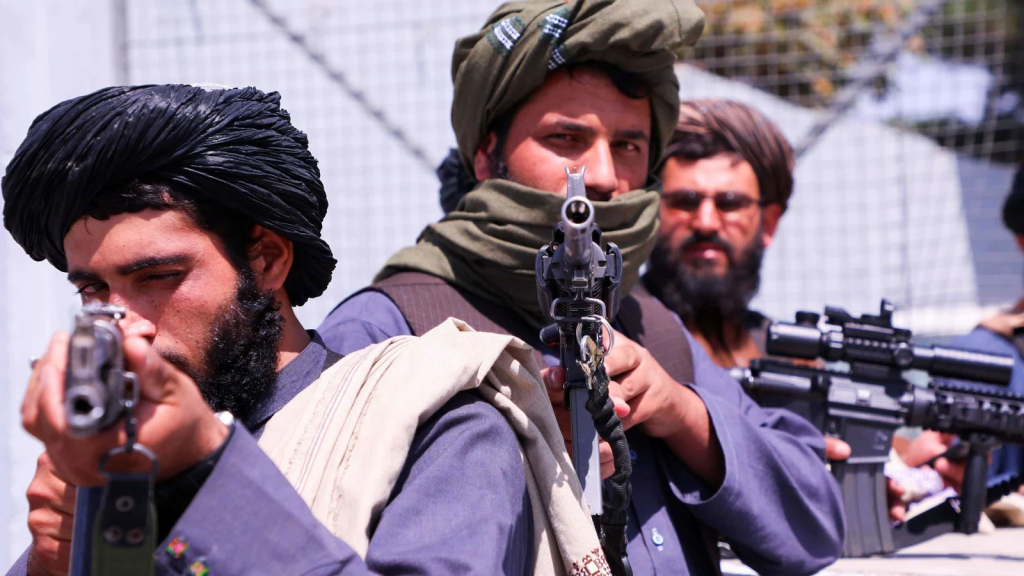
The assessment appears in the 16th report of the UN’s Analytical Support and Sanctions Monitoring Team to the Security Council, published more than four years after the Taliban returned to power in August 2021. The report said that the de facto authorities “continue to deny the existence or activity of any terrorist groups on their territory,” adding that “this claim is not credible.”
Under the 2020 Doha agreement, the Taliban committed to preventing Afghan soil from being used against other countries. However, the report says that while the Taliban have taken serious action against Islamic State Khorasan (ISIL-K), their approach toward other terrorist groups has been “markedly different.”
According to the UN, a “wide range of Member States consistently report” the presence in Afghanistan of ISIL-K, Tehreek-e-Taliban Pakistan (TTP), al-Qaeda, the East Turkistan Islamic Movement (ETIM/TIP), Jamaat Ansarullah, the Pakistani Mujahideen Alliance, and others. Some of these groups, the report says, “have used or continue to use Afghanistan to plan and prepare external attacks.”
The UN assessment finds that al-Qaeda maintains close ties with the Taliban and benefits from a “permissive environment” to train and reorganize, with a sustained presence in several provinces. ISIL-K, by contrast, is described as the Taliban’s “primary adversary.” While Taliban operations have weakened the group’s territorial control, ISIL-K remains “resilient” and continues to carry out attacks inside and outside Afghanistan.
The report identifies the Pakistani Taliban as “the most acute threat to regional stability,” saying the group enjoys “strong support from elements within the Taliban” and operates from sanctuaries in Afghanistan. It adds that Taliban authorities “continue to deny and deflect responsibility for failing to curb the TTP,” noting varying degrees of sympathy and affiliation with the group within Taliban ranks.
While some senior Taliban leaders reportedly see the TTP as a liability that damages relations with Pakistan, others continue to support it. The UN’s assessment is blunt: given longstanding ties, it is “unlikely that the Taliban will take action against the TTP,” and even if they wished to do so, “they may lack the capability.”
The report says the TTP has carried out numerous high-profile attacks from Afghan territory against Pakistan, turning the issue into the most serious immediate challenge in Kabul–Islamabad relations. The number of TTP attacks in Pakistan reportedly increased throughout 2025, with some estimates citing more than 600 attacks during the year.
Citing one unnamed Member State, the report says Mehsud family has received around three million afghanis (about $43,000) per month from the Taliban. Disputes over the TTP have sharply strained bilateral relations, leading to border clashes, civilian casualties and disruptions to trade. The closure of border crossings, the UN says, costs Afghanistan roughly $1 million a day.
The report also notes recent counterterrorism actions, including the arrest of ISIL-K spokesman Sultan Aziz Azam in Pakistan on May 16, 2025. It says ISIL-K’s capabilities have been weakened by counterterrorism operations by the current Afghan authorities and Pakistan, and that the arrest of Ozgur Altun, also known as Abu Yasir al-Turki, by Turkish and Pakistani authorities in mid-2025 may have silenced the group’s “Voice of Khorasan” outlet.
On al-Qaeda, the report adds that in March 2025, Osama Mahmoud was officially announced as the “emir” of al-Qaeda in the Indian Subcontinent (AQIS). He is reportedly from Bajaur district in Pakistan’s Khyber Pakhtunkhwa province.